

Why Are Digital Signatures More Convenient Than Handwritten Signatures?
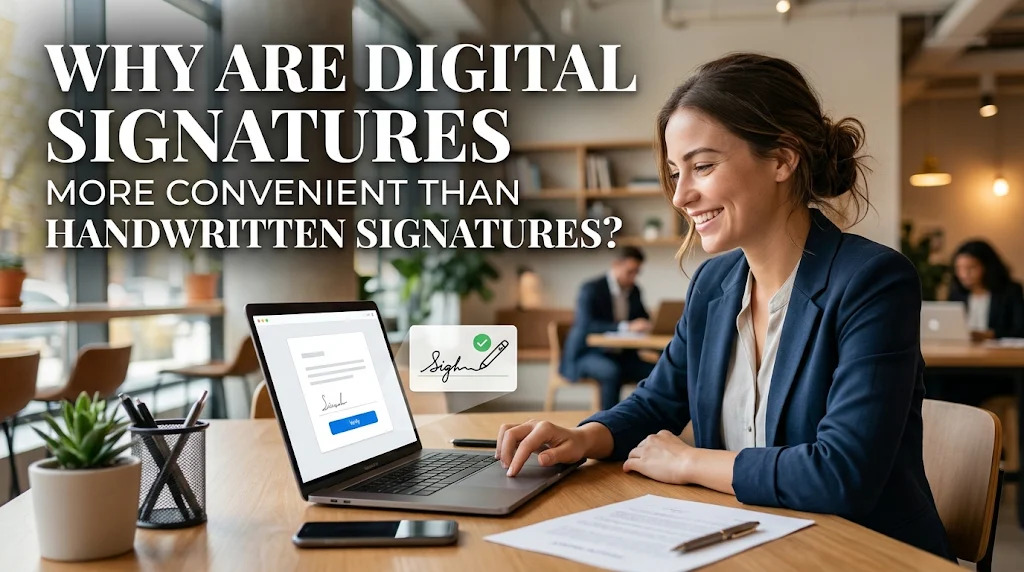
The development of digital technology has changed how individuals and organizations manage documents and complete administrative activities. Many processes that previously required printed paperwork and handwritten signatures can now be completed through electronic platforms. This shift allows businesses and individuals to handle agreements, approvals, and other documentation more flexibly.
Digital signatures are becoming a practical alternative to handwritten signatures because they offer several advantages in document management. They can simplify signing procedures, support remote transactions, and provide security features that help verify document authenticity. Although handwritten signatures remain relevant in certain situations, digital signatures offer convenience that is increasingly suitable for modern activities.
ALLOWING DOCUMENTS TO BE SIGNED FROM ANYWHERE
One of the main advantages of digital signatures is the ability to sign documents without being physically present. Traditional handwritten signatures often require individuals to meet in person or receive printed documents through delivery services. This process can become inconvenient when the parties involved live in different cities or countries.
With remote document signing, authorized individuals can review and sign documents through compatible digital platforms. For example, an employee can sign an employment agreement from home, while a business partner can approve a contract from another location. This flexibility helps reduce geographical barriers and makes administrative activities easier to coordinate.
Digital signatures are particularly useful for businesses that operate across multiple branches or collaborate with international partners. Instead of arranging physical meetings solely for document approval, companies can use digital systems to manage signing activities. As a result, location-independent signing can support more flexible business operations.
SAVING TIME AND SIMPLIFYING ADMINISTRATIVE PROCESSES
Handwritten signatures usually involve several physical steps, such as printing documents, signing them, scanning completed pages, and sending the files to other parties. When multiple people need to sign the same document, the process may take even longer because each participant must receive and return the paperwork.
Digital signatures simplify these activities by allowing documents to be prepared and signed electronically. Users can receive signing requests, review the contents, and complete the process through a digital platform. Some services also provide notifications and signing-status features that help participants monitor document progress.
This approach can be beneficial for organizations that handle large numbers of contracts, invoices, and approval forms. By reducing repetitive administrative tasks, digital document workflows can help employees manage their responsibilities more efficiently. The actual time savings will depend on the platform and the approval procedures used by each organization.
REDUCING PAPERWORK AND DOCUMENT MANAGEMENT COSTS
Using handwritten signatures often requires printed documents, office supplies, physical storage, and delivery services. These requirements can create additional expenses, especially for companies that process many documents every day. Paper-based systems may also require dedicated storage areas and additional effort to organize archived files.
Digital signatures support paperless document management by allowing documents to be created, signed, distributed, and stored electronically. Businesses can organize digital files in document management systems and provide access to authorized employees when necessary. This can reduce the need for physical archives and make document retrieval more convenient.
In addition to reducing certain administrative expenses, digital documentation can help limit unnecessary paper consumption. However, organizations should still consider the costs of digital signature subscriptions, system integration, data storage, and employee training. The financial benefits depend on how effectively the technology is incorporated into existing operations.
PROVIDING STRONGER DOCUMENT AUTHENTICATION FEATURES
A handwritten signature can help identify the person who signed a physical document, but its authenticity may be difficult to verify in some circumstances. Signature appearance can be copied or imitated, and recipients may need additional evidence to confirm whether a document is genuine.
A properly implemented cryptographic digital signature offers additional verification mechanisms. It uses cryptographic methods to connect a signature with the signed document and can help detect unauthorized changes made after signing. Digital certificates can also provide information about the identity associated with the signing credential.
Some digital signature platforms provide supporting records, such as timestamps, certificate information, and audit trails. These features can help organizations review signing activities and maintain better documentation. Nevertheless, security depends on proper implementation, private key protection, and the reliability of the certification provider. Digital signatures should therefore be verified through trusted applications rather than judged only by their visual appearance.
MAKING COLLABORATION AND DOCUMENT TRACKING EASIER
Business transactions often involve several people who need to review, approve, or sign the same document. In a paper-based process, coordinating these activities may require repeated communication and physical document exchanges. This can make it difficult to determine who has completed a particular stage of approval.
Digital signature platforms can simplify collaboration by allowing documents to be shared with designated participants. Some services provide signing order management, notifications, and status tracking so that users can see which parties have completed their responsibilities. These features can help reduce confusion during multi-stage approval processes.
Digital records can also make it easier for organizations to store and retrieve completed agreements. Authorized employees may access documents through centralized systems instead of searching through physical files. With suitable access controls and retention policies, digital document tracking can support more organized collaboration and administrative accountability.
CONCLUSION
Digital signatures are more convenient than handwritten signatures in many modern situations because they support remote signing, reduce administrative steps, minimize paperwork, and provide additional document verification features. They also make collaboration and document tracking easier, particularly for businesses that handle agreements involving multiple participants or locations.
However, digital signatures are not automatically suitable for every document or situation. Their use must consider applicable legal requirements, security standards, and the needs of the parties involved. By choosing reliable platforms and applying appropriate verification procedures, individuals and organizations can benefit from digital signatures as a practical solution for modern document management.
Recent Posts

How Does Technology Make Daily Evaluation... 21.11.2026/62 View

Apa Strategi Menghadapi Kesenjangan antara Kompetensi... 21.11.2026/63 View

Mengapa Inventaris Aset Penting bagi Kelancaran... 21.11.2026/59 View

When Should Musicians Join a Record... 21.11.2026/58 View

Daily Evaluation or Daily Planning Which... 21.11.2026/66 View
