

Why Are Education and Healthcare Subsidies Important for Society?
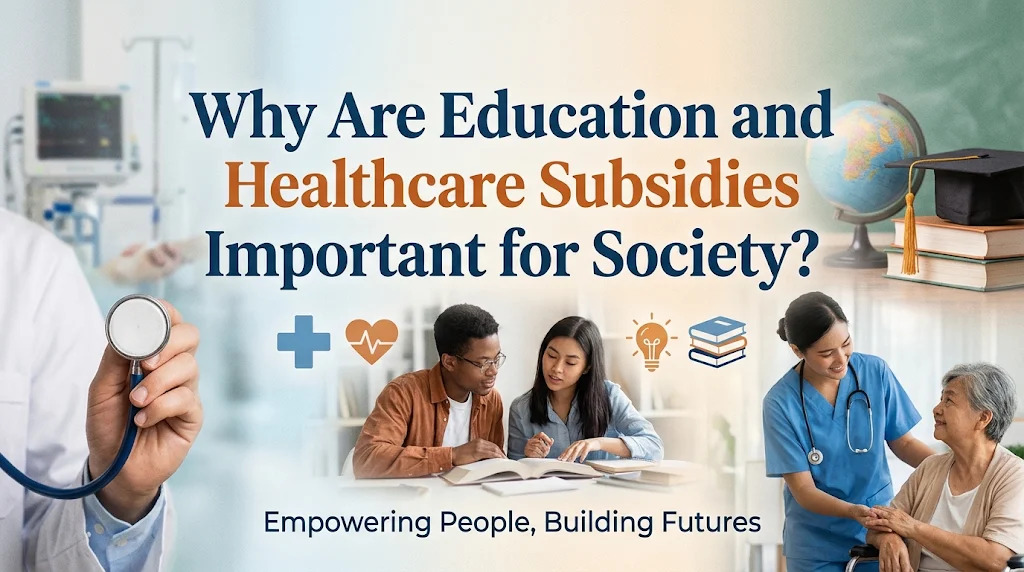
Education and healthcare are two essential sectors that influence the quality of life and long-term development of society. However, many individuals and families face financial difficulties when accessing quality education and medical services. High tuition fees, learning materials, healthcare expenses, and medical treatments can create significant financial pressure, particularly for low-income households. To address these challenges, governments provide education and healthcare subsidies that help make essential public services more accessible and affordable.
These subsidies are important because they do more than reduce individual expenses. They also contribute to human resource development, social equality, economic productivity, and national progress. By supporting education and healthcare, governments can create opportunities for people to improve their knowledge, maintain their health, and participate more actively in society. Effective implementation is therefore essential to ensure that these benefits reach the communities that need them most.
EXPANDING ACCESS TO QUALITY EDUCATION
Education subsidies help reduce financial barriers that prevent students from attending school or continuing their studies. Families with limited incomes may struggle to pay tuition fees, purchase textbooks, obtain school supplies, or cover transportation expenses. Financial support from the government can reduce these difficulties and give more students the opportunity to receive an education. This is especially important for children and young people who have academic potential but lack sufficient financial resources.
In Indonesia, education support programs include the Program Indonesia Pintar (PIP) and the Kartu Indonesia Pintar Kuliah (KIP Kuliah), which assist eligible students according to their respective requirements. These programs aim to support access to education at different levels and reduce the risk of students discontinuing their studies because of financial difficulties. When more people can access education, society gains a stronger foundation for developing knowledge, skills, and professional abilities. This can also help create a more competitive workforce in the future.
IMPROVING ACCESS TO HEALTHCARE SERVICES
Healthcare subsidies help people obtain medical services without facing excessive financial burdens. Access to healthcare is essential because untreated illnesses and delayed medical treatment can affect a person's ability to study, work, and carry out daily activities. However, healthcare expenses may become a major challenge for families with limited financial resources. Government support can help reduce these barriers and improve access to medical services.
In Indonesia, the government supports healthcare access through programs such as the National Health Insurance system (Jaminan Kesehatan Nasional or JKN), administered by BPJS Kesehatan. Eligible participants may receive government-funded contributions according to applicable regulations and program requirements. This support helps reduce the financial burden of accessing covered healthcare services. By improving access to medical treatment, preventive care, and other health services, healthcare support can contribute to healthier communities and better public welfare.
REDUCING SOCIAL AND ECONOMIC INEQUALITY
Education and healthcare subsidies can help reduce inequality by giving people from different economic backgrounds better opportunities to access essential services. Without government support, low-income families may have fewer opportunities to obtain quality education or appropriate healthcare. These disadvantages can affect their future employment opportunities, income potential, and overall quality of life. Subsidies help reduce some of these barriers by making important services more accessible.
The benefits can extend beyond individual households. When children from disadvantaged backgrounds can continue their education and communities can access healthcare, society has greater opportunities to improve living standards. Better access to education can strengthen social mobility, while improved healthcare can help people remain active and productive. However, subsidies must be distributed fairly and supported by accurate beneficiary data to ensure that assistance reaches eligible communities.
STRENGTHENING HUMAN RESOURCE QUALITY AND PRODUCTIVITY
A country's development depends significantly on the quality of its human resources. Education helps individuals develop knowledge, technical skills, critical thinking, and problem-solving abilities. Healthcare supports physical and mental well-being, allowing people to participate more effectively in educational and professional activities. When governments provide support in both sectors, they contribute to the development of a healthier and more capable population.
These improvements can influence national productivity over the long term. A well-educated workforce can adapt to technological developments, improve workplace performance, and support innovation across different industries. Meanwhile, better access to healthcare can reduce the economic consequences of preventable illnesses and help people maintain their ability to work. Therefore, education and healthcare subsidies should be viewed as important investments in human capital development, rather than simply short-term government spending.
SUPPORTING LONG-TERM ECONOMIC AND NATIONAL DEVELOPMENT
Education and healthcare subsidies can contribute to long-term economic development by improving the capabilities and well-being of society. People who receive adequate education may have better opportunities to enter the workforce, establish businesses, and develop new technologies. Access to healthcare also helps maintain a productive population that can contribute to different economic sectors. These factors can strengthen national competitiveness and support sustainable economic growth.
Furthermore, investing in education and healthcare can create benefits that continue across generations. Children who receive better educational opportunities may develop skills that improve their future economic prospects. Families with better access to healthcare may also experience greater financial security and improved living conditions. To achieve these outcomes, governments need to maintain sufficient funding, improve service quality, strengthen infrastructure, and regularly evaluate subsidy programs. Financial assistance alone is not enough without accessible schools, qualified teachers, adequate medical facilities, and competent healthcare professionals.
CONCLUSION
Education and healthcare subsidies are important for society because they improve access to essential services, reduce economic inequality, strengthen human resource quality, and support long-term national development. These programs help eligible individuals and families overcome financial barriers while creating wider benefits for communities and the economy. With accurate targeting, adequate funding, and effective public services, education and healthcare subsidies can become valuable investments in a healthier, more educated, and more productive society.
Recent Posts

Bagaimana Sistem SKS pada Program Kuliah... 22.11.2026/25 View

How Does Technology Make Daily Evaluation... 21.11.2026/64 View

Apa Strategi Menghadapi Kesenjangan antara Kompetensi... 21.11.2026/65 View

Mengapa Inventaris Aset Penting bagi Kelancaran... 21.11.2026/62 View

When Should Musicians Join a Record... 21.11.2026/61 View
