

Why Are Floods And Falling Trees Common Risks During The Transitional Season?
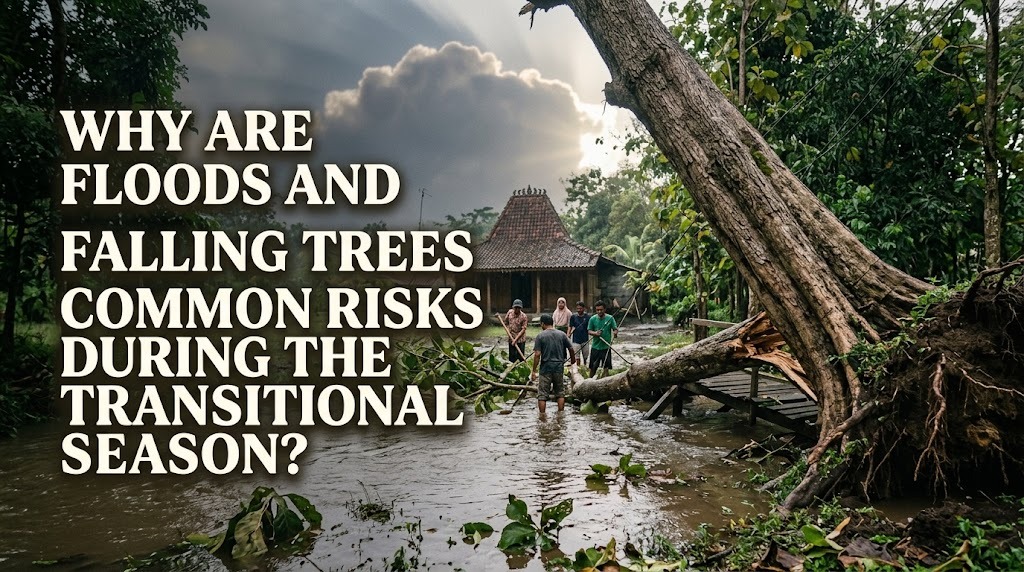
The transitional season, known as musim pancaroba in Indonesia, is the period when weather changes between the dry and rainy seasons. During this time, the weather can become unpredictable, with sudden heavy rain, strong winds, and rapid changes in temperature. These conditions can increase the risk of floods and falling trees, especially in areas with poor drainage or many large trees. Floods can damage homes, roads, and public facilities, while falling trees may injure people and damage vehicles or buildings. Understanding why these hazards occur can help communities prepare and reduce their impact.
WHY FLOODS OFTEN OCCUR DURING THE TRANSITIONAL SEASON
Flooding can occur during the transitional season because heavy rainfall may fall within a short period. When rainwater reaches the ground faster than it can soak into the soil or flow through drainage systems, water begins to collect in low-lying areas. Rivers and streams may also rise quickly when they receive large amounts of runoff from surrounding land. The risk becomes greater in densely populated areas with limited green spaces and large areas covered by concrete or asphalt. These surfaces prevent water from entering the soil easily, allowing more water to flow across the ground.
Blocked drainage channels can make the situation worse because rubbish, leaves, and sediment reduce the space available for water to flow. In some locations, deforestation and poor land management also increase surface runoff and soil erosion. Flash floods may develop rapidly, leaving residents with little time to respond. Although not every period of transitional weather causes flooding, sudden intense rain can create dangerous conditions when the surrounding environment cannot manage the water effectively. Keeping drains clear and improving water absorption are important ways to reduce flood risks.
HOW STRONG WINDS CAUSE TREES TO FALL
Strong winds are another important hazard during the transitional season. Changes in weather conditions can bring thunderstorms and powerful wind gusts that place pressure on tree trunks, branches, and leaves. When the wind pushes against a tree, the force can cause branches to break or the entire tree to lean and fall. Tall trees with large crowns may experience greater wind pressure because their leaves and branches catch more moving air. However, whether a tree falls also depends on its species, condition, root structure, and surrounding soil.
Trees are more vulnerable when they have damaged trunks, decaying roots, weak branches, or an uneven root system. Construction work, soil excavation, and pavement covering the area around a tree can also weaken its stability. If heavy rain saturates the soil, the ground may become less able to hold the roots firmly in place. When strong winds occur at the same time, the tree may be more likely to fall. Regular tree inspections and proper maintenance can help identify dangerous trees before severe weather arrives.
THE CONNECTION BETWEEN HEAVY RAIN, FLOODS, AND FALLING TREES
Heavy rain can contribute to both flooding and falling trees, making these hazards more serious when they occur together. Rainwater may saturate the soil, increasing its weight and reducing the stability of trees growing in vulnerable locations. At the same time, intense rainfall can overwhelm drainage systems and cause water to collect on roads and in residential areas. If strong winds develop during the same storm, trees with weakened roots may fall more easily. The combination of saturated soil and strong winds is particularly dangerous for trees that are already unhealthy or poorly supported.
Floodwater can also carry branches, leaves, and other debris into streets and drainage channels. This material may block water flow and make flooding worse in certain locations. Fallen trees can damage power lines, block roads, and prevent emergency vehicles from reaching affected areas. These problems may disrupt electricity, transportation, and communication services. Understanding how these hazards interact helps communities prepare for several risks at once instead of treating each event separately.
AREAS THAT FACE A HIGHER RISK
Some locations are more vulnerable to floods and falling trees during the transitional season. Low-lying neighborhoods, riverbanks, and areas with poor drainage are more likely to experience water accumulation when rainfall is intense. Urban areas with many paved surfaces may also face greater runoff because less rainwater can soak into the ground. Places near steep slopes may experience rapid runoff or landslides when heavy rain continues for a long time. The actual level of risk depends on local geography, drainage capacity, land use, and weather conditions.
Falling trees are more likely to cause serious problems near roads, schools, parking areas, homes, and power lines. Trees growing in shallow soil or locations affected by construction may be less stable. Public parks and roadside areas should be checked regularly, particularly before periods of strong winds and heavy rain. Identifying vulnerable locations in advance allows local authorities and residents to take preventive action. Proper planning can reduce damage and help people move to safer places when severe weather occurs.
THE IMPACT OF FLOODS AND FALLING TREES ON PEOPLE
Floods can damage houses, shops, roads, bridges, and agricultural land. They may also contaminate clean water supplies with sewage, rubbish, and other pollutants, increasing the risk of water-related illnesses. People may lose access to schools, workplaces, healthcare facilities, and essential services when roads become impassable. Falling trees can cause injuries, damage vehicles and buildings, and disrupt electricity when branches strike power lines. Both hazards can create financial losses and interrupt daily activities, especially when communities are not adequately prepared.
The effects can be more severe for children, older adults, people with disabilities, and residents who need assistance during evacuation. Floodwater may hide open drains, sharp objects, or strong currents, so walking or driving through it can be dangerous. Damaged electrical equipment and fallen power lines also create a risk of electric shock. People should follow official warnings and avoid entering flooded areas or approaching fallen trees near electrical cables. Safety awareness and early preparation can reduce injuries and help communities respond more effectively.
HOW TO PREVENT AND REDUCE THESE RISKS
Preventing floods begins with maintaining drainage systems, disposing of rubbish properly, and protecting areas that absorb rainwater. Planting suitable vegetation and preserving forests can help reduce erosion and improve water infiltration, although these measures cannot prevent every flood. Communities should avoid building in high-risk locations without proper assessment and should improve drainage where repeated flooding occurs. Local authorities can monitor river levels, maintain flood-control infrastructure, and provide timely weather warnings. Good environmental management helps reduce the likelihood and severity of flood damage.
To reduce falling-tree risks, trees near public spaces and buildings should be inspected by qualified professionals when warning signs appear. Dead branches, damaged trunks, and unstable trees may need appropriate maintenance or removal based on expert assessment. People should avoid standing under large trees during thunderstorms or strong winds and should park vehicles away from visibly unstable trees when possible. Residents can also prepare emergency supplies and identify safe routes before severe weather arrives. Prevention, regular maintenance, and community cooperation are essential for protecting people and property during the transitional season.
WHAT TO DO WHEN SEVERE WEATHER OCCURS
When heavy rain and strong winds are forecast, people should monitor official weather information and prepare for possible disruptions. Secure loose outdoor objects, charge essential devices, and keep important supplies in an accessible place. If flooding begins, move to higher ground when advised and stay away from fast-moving water, drainage channels, and riverbanks. Never attempt to cross a flooded road when the depth or current is uncertain. Following official evacuation instructions can help prevent injuries and save lives.
During strong winds, stay indoors and keep away from windows and trees outside. If a tree falls near a power line, do not approach it or touch nearby objects that may be energized. Report the hazard to the relevant emergency or utility service and keep other people at a safe distance. After the storm, return to affected areas only when authorities indicate that it is safe. Remaining alert before, during, and after severe weather helps reduce the risks associated with floods and falling trees.
CONCLUSION
Floods and falling trees are common risks during the transitional season because changing weather can bring intense rainfall, thunderstorms, and strong winds. Heavy rain can overwhelm drainage systems, increase surface runoff, and weaken the soil that supports trees. When saturated ground and powerful winds occur together, unstable trees may fall and cause further damage. These hazards can affect public safety, transportation, buildings, electricity, and clean water supplies. Maintaining drainage systems, inspecting trees, protecting green spaces, and following weather warnings are practical steps that can help communities reduce risks and stay safer during the transitional season.
Recent Posts

Bagaimana Sistem SKS pada Program Kuliah... 22.11.2026/54 View

How Does Technology Make Daily Evaluation... 21.11.2026/83 View

Apa Strategi Menghadapi Kesenjangan antara Kompetensi... 21.11.2026/82 View

Mengapa Inventaris Aset Penting bagi Kelancaran... 21.11.2026/78 View

When Should Musicians Join a Record... 21.11.2026/84 View
