

Why Are Forests Important In Combating Climate Change?
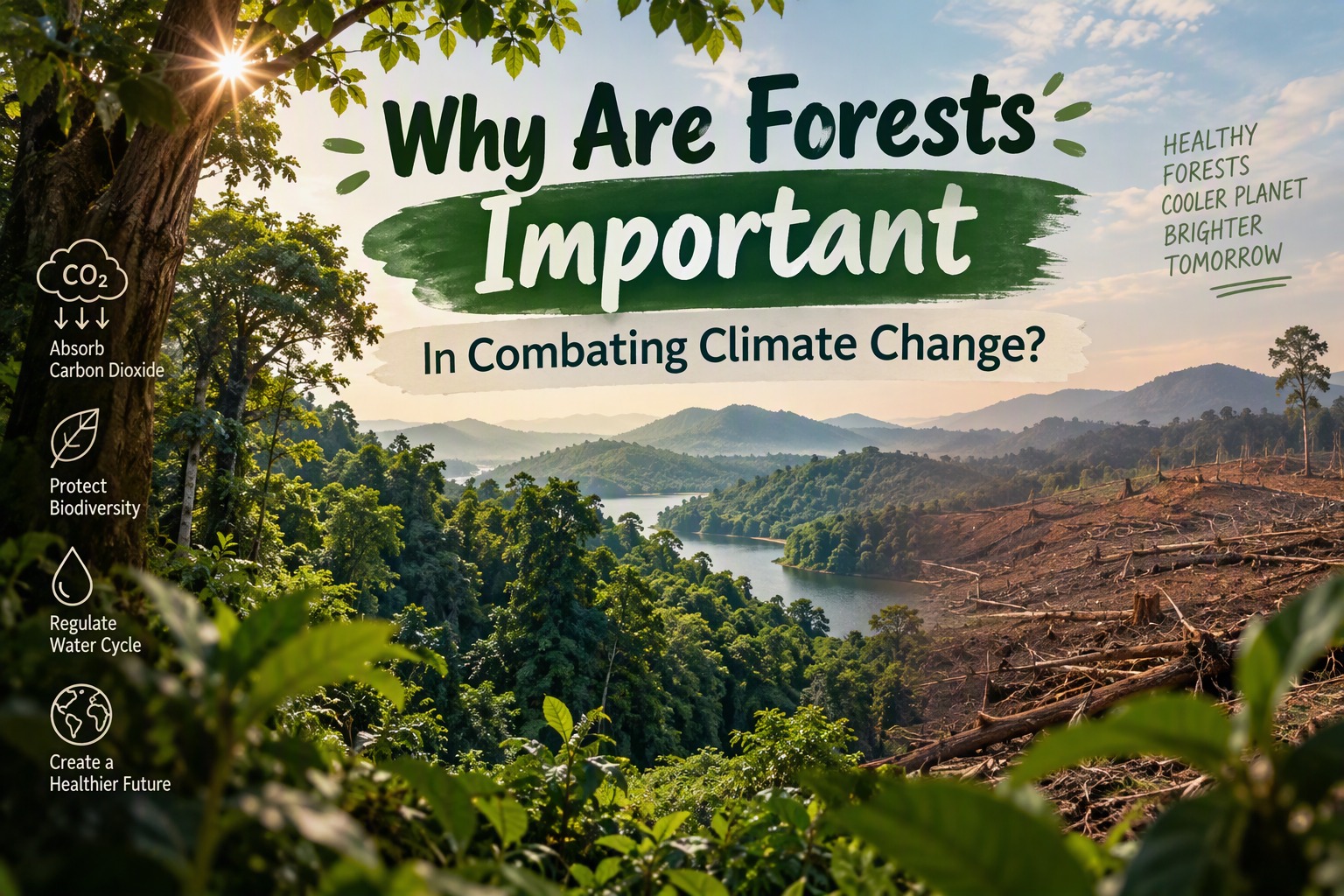
Forests play a vital role in protecting the environment and reducing the effects of climate change. They cover large areas of the Earth's surface and provide habitats for countless plants, animals, and microorganisms. More importantly, forests absorb carbon dioxide from the atmosphere and store carbon, helping regulate the global climate. However, deforestation and forest degradation weaken this natural protection and release stored carbon into the atmosphere. Understanding why forests are important in combating climate change can help people recognize the need to protect and restore these valuable ecosystems.
1. FORESTS ABSORB CARBON DIOXIDE
One of the most important ways forests help combat climate change is by absorbing carbon dioxide (CO₂) through photosynthesis. Trees use sunlight, water, and carbon dioxide to produce the energy they need to grow. During this process, they store carbon in their trunks, branches, leaves, and roots. Forest soils also hold significant amounts of carbon accumulated from roots and decomposing organic matter. By removing carbon dioxide from the atmosphere, healthy forests act as natural carbon sinks and help limit the buildup of greenhouse gases.
2. FORESTS STORE CARBON FOR LONG PERIODS
Forests do more than absorb carbon dioxide because they also store carbon in different parts of the ecosystem. Carbon storage occurs in tree trunks, roots, branches, leaves, dead wood, and soil. Older forests can contain large amounts of accumulated carbon, although storage levels vary according to forest type, age, and environmental conditions. When forests are cleared or burned, some of this stored carbon returns to the atmosphere as carbon dioxide. Protecting existing forests is therefore essential for keeping stored carbon out of the atmosphere and reducing additional greenhouse gas emissions.
3. DEFORESTATION INCREASES CLIMATE CHANGE
Deforestation is the removal of forests to make way for activities such as agriculture, mining, roads, and urban development. When trees are cut down and burned or left to decay, their stored carbon can be released into the atmosphere. Deforestation also reduces the number of trees available to absorb future carbon dioxide emissions. In addition, the destruction of forests can disturb soil, damage habitats, and change local rainfall patterns. Reducing forest loss and improving land management are important steps toward limiting global warming and protecting natural ecosystems.
4. FORESTS REGULATE TEMPERATURE AND THE WATER CYCLE
Forests help regulate local and regional climates by providing shade and releasing water vapor through a process called transpiration. This process can cool the surrounding environment and influence cloud formation and rainfall. Forests also help maintain soil moisture and reduce surface temperatures compared with many cleared areas. When large forest areas disappear, some regions may become hotter and experience changes in water availability. Protecting forests can therefore support climate regulation, although the effects vary depending on location, vegetation, and regional weather conditions.
5. FORESTS PROTECT BIODIVERSITY AND ECOSYSTEMS
Forests provide habitats for a wide range of species, including birds, mammals, insects, fungi, and plants. Biodiversity helps ecosystems function by supporting processes such as pollination, nutrient cycling, and natural pest control. Diverse and healthy ecosystems may also be better able to recover from certain environmental disturbances. Climate change can threaten forest species by changing temperatures, rainfall, and habitat conditions, while deforestation adds further pressure. Protecting forest biodiversity helps preserve ecosystem functions that support environmental stability and human well-being.
6. FORESTS REDUCE SOIL EROSION AND FLOOD RISKS
Tree roots help hold soil together, while forest vegetation reduces the direct impact of rainfall on the ground. Forest protection helps limit soil erosion and can reduce the movement of sediment into rivers and reservoirs. Forest soils and leaf litter can also improve water infiltration, helping rainwater enter the ground instead of flowing rapidly across the surface. These benefits may reduce certain local flood and landslide risks, although forests cannot prevent every flood, especially during extreme rainfall. Maintaining forest cover is an important part of broader strategies for protecting watersheds and managing climate-related hazards.
7. RESTORING FORESTS HELPS REDUCE CARBON EMISSIONS
Forest restoration involves helping damaged or degraded forest ecosystems recover their structure and ecological functions. Planting trees in suitable areas can remove carbon dioxide from the atmosphere as the trees grow. However, successful restoration requires choosing appropriate native species, protecting young trees, and maintaining the surrounding ecosystem. Natural forest regeneration can often provide important benefits for biodiversity and long-term carbon storage. Restoration should complement, rather than replace, the protection of existing forests because newly planted trees may take decades to store comparable amounts of carbon.
8. HOW CAN PEOPLE HELP PROTECT FORESTS?
Protecting forests requires cooperation between individuals, communities, businesses, and governments. People can support responsible forestry, reduce unnecessary paper waste, and choose wood and paper products from credible sustainable sources. Communities can participate in forest conservation, restore degraded areas, and help prevent illegal logging and uncontrolled fires. Governments and businesses can strengthen forest protection policies, improve land-use planning, and support local communities that depend on forests. Preventing deforestation and protecting existing forests are among the most important actions for preserving their climate benefits.
CONCLUSION
Forests are essential in combating climate change because they absorb carbon dioxide, store carbon, regulate local climates, and protect biodiversity. They also support the water cycle, reduce soil erosion, and help maintain healthy ecosystems. However, deforestation and forest degradation weaken these benefits and can release significant amounts of stored carbon. Protecting existing forests, restoring damaged landscapes, and managing forest resources sustainably can help limit climate change. Preserving forests today is an important investment in a healthier environment and a more sustainable future.
Recent Posts

Bagaimana Sistem SKS pada Program Kuliah... 22.11.2026/48 View

How Does Technology Make Daily Evaluation... 21.11.2026/76 View

Apa Strategi Menghadapi Kesenjangan antara Kompetensi... 21.11.2026/78 View

Mengapa Inventaris Aset Penting bagi Kelancaran... 21.11.2026/73 View

When Should Musicians Join a Record... 21.11.2026/78 View
