

Why Are Fuel Subsidies Important for Economic Stability?
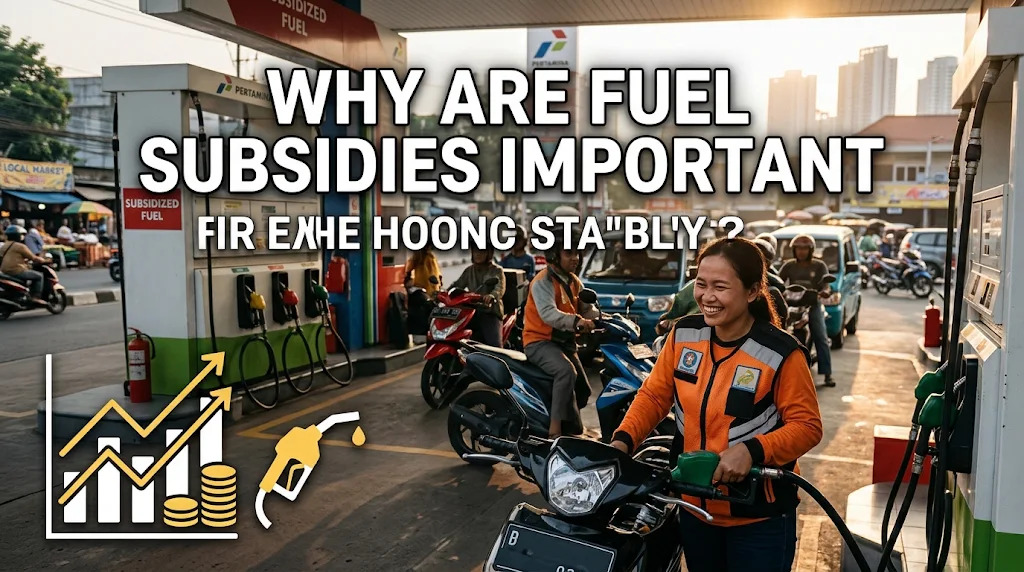
Fuel subsidies are an important government policy used to help maintain economic stability and protect people from excessive energy costs. Fuel plays a major role in transportation, manufacturing, agriculture, logistics, and many other economic activities. When fuel prices increase significantly, businesses may face higher operating expenses, while households may experience greater financial pressure. Through fuel subsidies, governments can reduce some of these costs and help maintain more stable economic conditions.
In Indonesia, fuel subsidies are particularly relevant because transportation and energy are closely connected to everyday economic activities. Changes in fuel prices can influence the cost of distributing goods, operating businesses, and providing public services. Therefore, fuel subsidies are not only intended to make certain fuel products more affordable but also to reduce broader economic pressures. However, their effectiveness depends on proper management, accurate targeting, and sustainable government spending.
PROTECTING HOUSEHOLD PURCHASING POWER
One of the main reasons fuel subsidies are important is their ability to help protect household purchasing power. Fuel is a regular expense for many families, especially those who depend on private vehicles or public transportation for their daily activities. When fuel prices rise, households may need to spend more money on transportation and reduce their spending on other necessities. Subsidies can help limit this financial pressure by keeping certain fuel products more affordable for eligible consumers.
This benefit is particularly significant for lower-income households because transportation costs can represent an important part of their monthly budgets. Affordable fuel can help people travel to work, attend school, access healthcare, and carry out other essential activities. By reducing the impact of fuel price increases, the government can help households maintain their ability to meet daily needs. Nevertheless, subsidies must be appropriately targeted to ensure that public funding benefits the communities that need it most.
CONTROLLING TRANSPORTATION AND DISTRIBUTION COSTS
Fuel prices have a direct relationship with transportation and distribution expenses. Businesses that transport food, agricultural products, construction materials, and other goods often depend on fuel to operate their vehicles. When fuel becomes more expensive, transportation companies may face higher operating costs. These additional expenses can eventually influence the prices of products and services throughout the economy.
Fuel subsidies can help reduce some of these operating pressures, particularly for eligible users and economic activities. More manageable transportation costs can support the movement of goods between production centers, distribution facilities, and retail markets. This is important for maintaining the availability of essential products in different regions. However, fuel subsidies are only one factor affecting distribution costs, since road conditions, logistics infrastructure, labor expenses, and market demand also play important roles.
SUPPORTING BUSINESS ACTIVITIES AND ECONOMIC PRODUCTIVITY
Businesses across various industries rely on fuel to maintain their operations. Transportation companies, manufacturing facilities, agricultural producers, and small enterprises may all be affected by changes in energy costs. If fuel prices increase sharply, businesses may need to adjust their budgets, reduce certain activities, or increase the prices of their products. These adjustments can influence production levels and overall economic productivity.
By reducing selected fuel expenses, government fuel subsidies can help eligible businesses manage their operating costs. This support may be especially useful for small enterprises and economic activities that depend heavily on transportation. More predictable energy expenses can also help businesses plan their operations and maintain their services. However, subsidies should be implemented carefully so that they support productive activities without creating excessive dependence on government assistance.
MAINTAINING PRICE STABILITY AND REDUCING INFLATIONARY PRESSURE
Fuel prices can influence the general price level of an economy because energy is used in many production and distribution processes. When fuel costs increase, businesses may pass some of the additional expenses on to consumers through higher prices. This can contribute to inflationary pressure, particularly when increases affect transportation, food distribution, and other essential sectors. Fuel subsidies can help reduce the immediate impact of these changes on selected products and services.
By limiting certain fuel-related expenses, subsidies may help maintain more stable prices and protect consumers from sudden cost increases. This can support economic confidence because households and businesses can manage their expenses with greater predictability. However, fuel subsidies cannot eliminate inflation because price changes are also influenced by international oil markets, exchange rates, domestic supply conditions, and monetary policy. They should therefore be combined with broader economic measures to maintain long-term price stability.
BALANCING ECONOMIC BENEFITS WITH GOVERNMENT BUDGET SUSTAINABILITY
Although fuel subsidies can provide important economic benefits, they also require substantial government funding. When global oil prices rise or currency exchange rates change, the cost of maintaining subsidies may increase. If subsidy spending becomes too large, it can place pressure on the national budget and limit funding for other important sectors. Governments must therefore balance the benefits of affordable fuel with the need to maintain sustainable public finances.
Effective fuel subsidy management requires accurate beneficiary data, transparent distribution systems, and regular policy evaluation. Targeted subsidies can help ensure that financial support reaches eligible consumers instead of being distributed inefficiently. Governments may also improve public transportation, encourage energy efficiency, and develop alternative energy sources to reduce long-term dependence on subsidized fuel. These measures can help maintain economic stability while creating a more sustainable energy system.
CONCLUSION
Fuel subsidies are important for economic stability because they can protect household purchasing power, reduce transportation expenses, support business activities, and limit certain inflationary pressures. However, these benefits must be balanced with the government's responsibility to manage public spending effectively. Through accurate targeting, transparent distribution, and sustainable energy policies, fuel subsidies can contribute to a more stable and productive economy.
Recent Posts

Bagaimana Sistem SKS pada Program Kuliah... 22.11.2026/25 View

How Does Technology Make Daily Evaluation... 21.11.2026/64 View

Apa Strategi Menghadapi Kesenjangan antara Kompetensi... 21.11.2026/65 View

Mengapa Inventaris Aset Penting bagi Kelancaran... 21.11.2026/62 View

When Should Musicians Join a Record... 21.11.2026/61 View
