

Why Are Historic Buildings Important to City History?
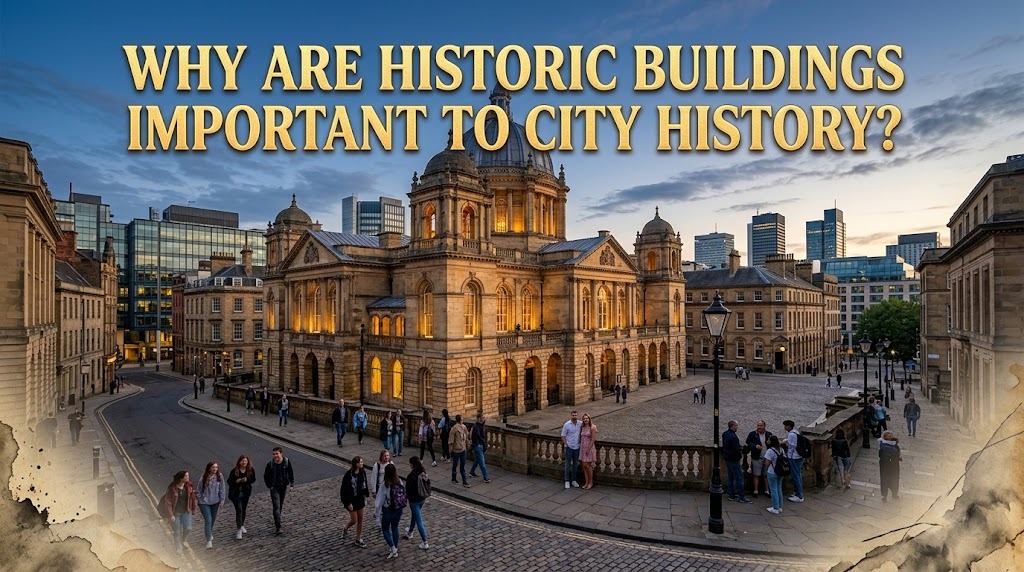
Historic buildings are important because they preserve evidence of how cities developed over time. Their architecture, materials, and original functions reveal information about past societies, cultural traditions, political systems, and economic activities. From ancient temples and royal palaces to colonial offices and traditional houses, these structures help explain how people lived and how urban environments changed across generations. Protecting historic buildings allows communities to maintain a connection with their past while developing cities for the future.
HISTORIC BUILDINGS PRESERVE THE PAST
Historic buildings serve as physical records of a city's development. Unlike written documents, they allow people to observe the architectural styles, construction techniques, and materials used during different periods. Their original designs can reveal how builders responded to local climates, available resources, and the needs of their communities. Changes made to a building over time may also show how its function and surroundings evolved. By studying these structures, historians can reconstruct important parts of a city's past.
ARCHITECTURE REFLECTS CULTURAL IDENTITY
The architectural characteristics of historic buildings often represent the cultural identity of the communities that created them. Traditional houses, religious monuments, and public buildings may incorporate distinctive decorations, construction methods, and spatial arrangements. These features can reflect local beliefs, artistic traditions, and interactions with other cultures. In cities influenced by migration and international trade, different architectural styles may exist side by side. Preserving these buildings helps maintain cultural diversity and strengthens the connection between residents and their local heritage.
HISTORIC BUILDINGS REVEAL POLITICAL CHANGES
Many historic buildings provide evidence of political events and changes in government. Former royal palaces, colonial administrative offices, courthouses, and government halls can illustrate how authority was organized during different historical periods. Their locations and designs may reveal the importance of particular districts or institutions. Some buildings were later repurposed following independence, political reform, or changes in public administration. Examining these structures helps explain how political decisions influenced the growth and organization of cities.
OLD BUILDINGS SHOW ECONOMIC DEVELOPMENT
Historic buildings also reveal how economic activities shaped urban areas. Old warehouses, railway stations, marketplaces, banks, and port facilities demonstrate the importance of trade, transportation, and industry during particular periods. Their locations often indicate where merchants gathered, goods were stored, and businesses operated. As cities expanded, these commercial districts sometimes became major centers of employment and public activity. Studying historic buildings therefore helps researchers understand the economic forces that contributed to urban growth.
HISTORIC BUILDINGS SUPPORT EDUCATION AND RESEARCH
Preserved buildings provide valuable learning opportunities for students, historians, architects, and researchers. By examining original structures, they can investigate construction techniques, historical lifestyles, and changes in urban planning. Museums and heritage centers may use historic buildings to display photographs, artifacts, and documents that explain local history. Guided visits also allow students to connect classroom lessons with physical evidence from the past. These educational experiences make city history more accessible and meaningful.
HERITAGE BUILDINGS ATTRACT TOURISM
Historic buildings can become important attractions for cultural tourism. Visitors often explore landmarks to learn about a city's history, architecture, and traditions. Their presence may support local businesses such as restaurants, souvenir shops, tour services, and accommodation providers. Heritage tourism can also create employment opportunities for local communities. However, tourism must be managed carefully to prevent overcrowding, structural damage, and the loss of historical authenticity.
PRESERVATION MAINTAINS A CITY'S CHARACTER
Protecting historic buildings helps cities retain distinctive features that distinguish them from other urban areas. When old structures are demolished without careful consideration, communities may lose valuable architectural landmarks and historical evidence. Restoration, adaptive reuse, and regular maintenance can help keep these buildings functional. For example, an unused historic warehouse may be converted into a museum, library, or cultural center while retaining important architectural details. Such approaches allow historic buildings to contribute to modern urban life without losing their heritage value.
CHALLENGES IN PROTECTING HISTORIC BUILDINGS
Historic buildings often face challenges such as deterioration, limited maintenance budgets, urban redevelopment, pollution, and natural disasters. Some structures require specialized restoration techniques because modern materials may damage their original components. Conflicts can also arise when property owners want to develop land for new housing or commercial projects. Effective preservation requires cooperation among governments, heritage experts, building owners, and local communities. Clear regulations, public awareness, and sustainable funding can help protect important structures for future generations.
CONCLUSION
Historic buildings are important to city history because they preserve cultural identity, document political and economic changes, and provide opportunities for education and tourism. They also contribute to the unique character of urban environments. Protecting these structures does not mean preventing all modernization; instead, it involves balancing development with the responsibility to preserve valuable heritage. By maintaining historic buildings, cities can continue to grow while keeping their historical stories visible and accessible.
Recent Posts

Bagaimana Sistem SKS pada Program Kuliah... 22.11.2026/50 View

How Does Technology Make Daily Evaluation... 21.11.2026/80 View

Apa Strategi Menghadapi Kesenjangan antara Kompetensi... 21.11.2026/79 View

Mengapa Inventaris Aset Penting bagi Kelancaran... 21.11.2026/75 View

When Should Musicians Join a Record... 21.11.2026/80 View
