

Why Are Islamic Arts an Important Part of the MAPSI Competition?
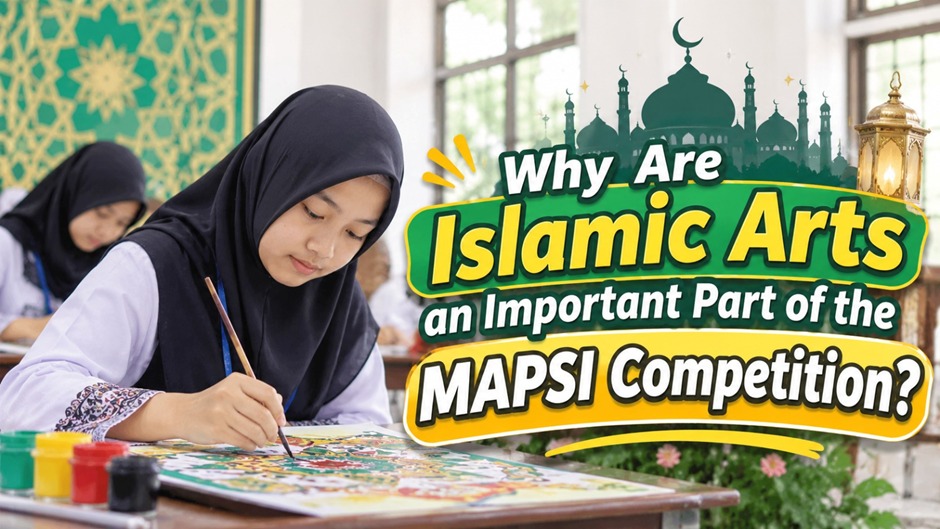
Islamic arts play an important role in introducing religious values through creativity, beauty, and cultural expression. In education, art can become an effective way for students to understand and appreciate Islamic teachings beyond classroom lessons. One event that provides opportunities to develop these abilities is the MAPSI Competition (Islamic Religious Education and Arts Competition).
Through MAPSI, students can explore their artistic talents while learning about Islamic traditions, values, and cultural heritage. Activities related to Islamic arts also encourage creativity, confidence, discipline, and appreciation for religious identity. But why are Islamic arts considered an important part of the MAPSI Competition? There are several reasons why these activities contribute to students' educational and personal development.
1. PRESERVING ISLAMIC CULTURE AND TRADITIONS
Islamic arts help introduce students to cultural traditions that have developed alongside the spread of Islam. These artistic expressions can include Quranic calligraphy, Islamic poetry, religious songs, and other creative activities inspired by Islamic teachings. Through the MAPSI Competition, students have opportunities to learn about and appreciate these artistic traditions.
Participating in Islamic art activities also encourages students to understand the cultural heritage behind different forms of expression. They can recognize how art has been used to communicate religious messages and preserve traditions across generations. Therefore, Islamic arts help maintain cultural identity while introducing students to the richness of Islamic civilization.
2. DEVELOPING STUDENTS' CREATIVITY AND TALENTS
Every student has different abilities and creative interests. Islamic arts provide opportunities for students to discover and develop talents that may not always be demonstrated through regular classroom activities. In MAPSI, artistic competition categories can help students explore their interests through creative and religious expression.
For example, students who enjoy visual arts may develop their abilities in Islamic calligraphy, while those interested in music or performance may participate in religious singing or other artistic activities, depending on the competition categories. These experiences encourage students to think creatively, practice regularly, and improve their artistic skills. As a result, MAPSI becomes a platform for developing both artistic potential and personal confidence.
3. INTRODUCING ISLAMIC VALUES THROUGH ART
Art can communicate meaningful messages in ways that are interesting and easy to understand. Islamic artistic activities often contain messages about kindness, gratitude, patience, honesty, and respect for others. These values are closely connected to the principles taught in Islamic religious education.
Through artistic performances and creative projects, students can explore how religious messages are expressed through different forms of art. They also learn that creativity can be used for positive purposes rather than entertainment alone. This makes Islamic arts an educational medium for introducing moral values and strengthening students' understanding of religious teachings.
4. BUILDING STUDENTS' CONFIDENCE AND COURAGE
Participating in artistic competitions gives students opportunities to present their abilities in front of judges, teachers, and audiences. For students who are not accustomed to performing publicly, this experience can initially feel challenging. However, regular practice and participation can gradually help them overcome nervousness.
As students become more familiar with performing, they learn to trust their abilities and express themselves more comfortably. Receiving positive feedback can also motivate them to continue improving. Through this process, MAPSI helps students develop confidence, courage, and the ability to face new challenges.
5. IMPROVING DISCIPLINE AND RESPONSIBILITY
Preparing an artistic performance requires commitment, patience, and consistent effort. Students need to understand the competition requirements, practice their skills, and manage their preparation time properly. These activities teach them that good results are achieved through dedication rather than instant success.
Students also learn to take responsibility for their roles, especially when preparing group performances. They must follow instructions, cooperate with others, and complete their assigned tasks. These habits support character development because discipline and responsibility are important qualities in both education and everyday life.
6. STRENGTHENING ISLAMIC IDENTITY AND RELIGIOUS APPRECIATION
Islamic arts can help students become more familiar with the cultural and artistic expressions associated with their religion. By learning about Islamic calligraphy, religious poetry, and other artistic traditions, students gain opportunities to appreciate the relationship between creativity and religious identity.
This appreciation can encourage students to feel more connected to their cultural heritage and religious learning. They also become more aware that Islamic teachings can inspire positive and meaningful creative activities. Through MAPSI, students can develop a stronger appreciation of Islamic identity while respecting the diversity of artistic traditions.
7. ENCOURAGING COOPERATION AND TEAMWORK
Some Islamic art activities involve collaboration between several students. Group performances, for example, require participants to coordinate their movements, share responsibilities, and practice together. These experiences teach students the importance of cooperation in achieving common goals.
During preparation, students learn to listen to suggestions, respect different opinions, and support their teammates. They also understand that successful performances depend on the contributions of everyone involved. Therefore, Islamic arts in MAPSI can strengthen teamwork, communication, mutual respect, and social skills.
8. PROVIDING A POSITIVE WAY TO EXPRESS RELIGIOUS MESSAGES
Art offers students a creative opportunity to communicate ideas and positive messages. Through Islamic artistic activities, students can express messages about good behavior, religious values, and the importance of maintaining relationships with others. This approach makes religious learning more engaging and practical.
For example, Islamic poetry or religious songs can introduce messages about gratitude, kindness, and respect in an enjoyable format. Students can also learn how to communicate these messages appropriately through their performances. In this way, Islamic arts help connect religious education with creative communication and positive expression.
9. MAKING ISLAMIC EDUCATION MORE INTERESTING AND MEANINGFUL
Islamic education is not limited to memorizing religious information or understanding concepts from textbooks. Students also need opportunities to explore and apply their knowledge through different learning experiences. Islamic arts can make this process more engaging because they combine education with creativity and practical activities.
Through MAPSI, students can experience religious learning in a more interactive environment. They can develop their artistic abilities while gaining a better understanding of Islamic culture and values. This combination makes Islamic education more enjoyable, memorable, and relevant to students' personal development.
CONCLUSION
Islamic arts are an important part of the MAPSI Competition because they connect religious education, creativity, cultural preservation, and character development. Through artistic activities, students can explore their talents, strengthen their Islamic identity, develop confidence, and understand positive religious values.
Furthermore, MAPSI provides opportunities for students to practice discipline, teamwork, responsibility, and respect for others. These benefits show that Islamic arts are not simply about creating beautiful performances or winning competitions. They also serve as valuable educational tools for developing students who are creative, confident, knowledgeable, and committed to positive Islamic values.
Recent Posts

How Does Technology Make Daily Evaluation... 21.11.2026/62 View

Apa Strategi Menghadapi Kesenjangan antara Kompetensi... 21.11.2026/63 View

Mengapa Inventaris Aset Penting bagi Kelancaran... 21.11.2026/59 View

When Should Musicians Join a Record... 21.11.2026/58 View

Daily Evaluation or Daily Planning Which... 21.11.2026/66 View
