

Why Are Language Competitions Important for Communication Skills?
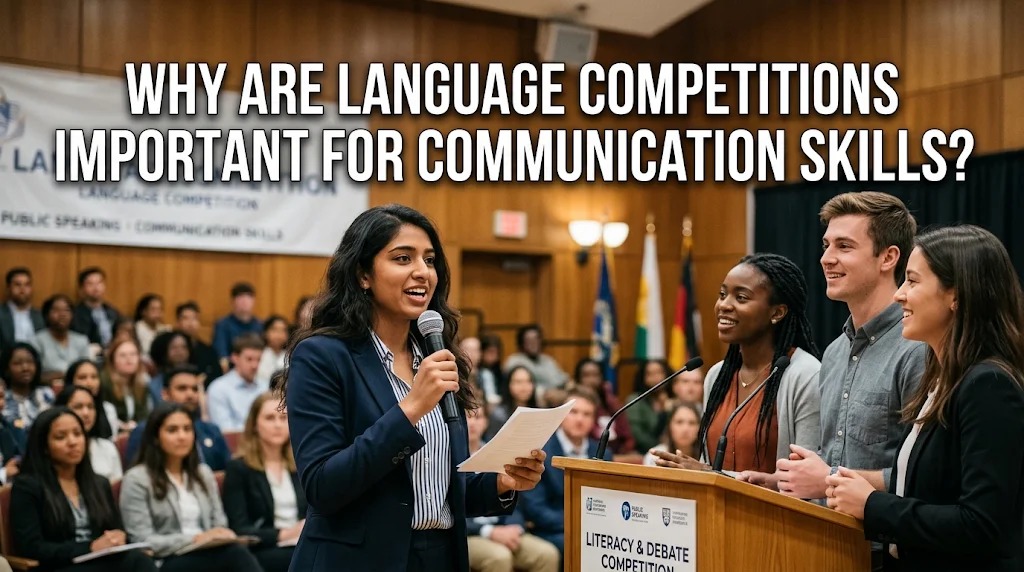
Language competitions play an important role in developing communication skills, especially for students. These activities provide opportunities to practice speaking, listening, reading, and writing in a more challenging and interactive environment. Through competitions, participants learn how to express ideas clearly, communicate confidently, and respond to different situations.
Beyond winning awards, language competitions help participants improve their ability to communicate with others. They also encourage critical thinking, creativity, teamwork, and confidence. These skills are valuable not only in academic activities but also in everyday conversations and future professional environments.
THE ROLE OF LANGUAGE COMPETITIONS IN DEVELOPING COMMUNICATION SKILLS
Language competitions help participants develop communication skills through various activities, such as speeches, debates, storytelling, poetry reading, and language quizzes. Each activity requires participants to understand information and deliver messages clearly. For example, a speech competition teaches students how to organize their thoughts and communicate them in front of an audience.
These activities also help participants become more comfortable expressing their opinions. They learn how to choose appropriate words, construct meaningful sentences, and adjust their speaking styles according to the situation. With regular practice, students can become more effective communicators and feel more confident when interacting with other people.
IMPROVING SPEAKING AND LISTENING ABILITIES
Speaking and listening are two essential parts of effective communication. Language competitions provide opportunities for participants to practice both skills through direct interaction. In debate competitions, for example, students must explain their arguments while carefully listening to opposing opinions. This process helps them understand different perspectives and respond with relevant information.
Listening carefully also allows participants to understand instructions, questions, and feedback from judges or other competitors. Meanwhile, speaking activities encourage them to pronounce words correctly, use appropriate expressions, and organize their messages logically. These experiences gradually improve their ability to communicate in different situations.
BUILDING CONFIDENCE WHEN SPEAKING IN PUBLIC
One of the most important benefits of language competitions is the opportunity to build public speaking confidence. Many students feel nervous when speaking in front of an audience because they are afraid of making mistakes or receiving negative comments. By participating in competitions, they can gradually become familiar with speaking in public and managing their nervousness.
Repeated practice helps participants control their voices, maintain eye contact, and use appropriate body language. They also learn that making mistakes is a normal part of the learning process. Instead of avoiding communication challenges, students become more willing to express their thoughts and share their knowledge with others.
DEVELOPING VOCABULARY AND CLEAR EXPRESSION
A strong vocabulary helps people communicate their thoughts more accurately. Language competitions encourage participants to learn new words, understand their meanings, and use them appropriately in different contexts. Activities such as storytelling, speech contests, and writing competitions require students to select suitable vocabulary to make their messages interesting and understandable.
In addition, participants learn how to organize sentences and explain ideas in a structured way. They become more aware of grammar, pronunciation, and word choice. These improvements help students avoid misunderstandings and deliver information more effectively in both formal and informal conversations.
ENCOURAGING CRITICAL THINKING AND TEAMWORK
Effective communication requires more than speaking fluently. People also need to understand information, evaluate opinions, and respond appropriately. Language competitions, especially debates and group activities, encourage participants to develop critical thinking by analyzing topics, finding supporting evidence, and preparing logical arguments.
Some competitions also involve teamwork, where students must communicate and cooperate to achieve shared goals. They learn how to listen to suggestions, respect different opinions, divide responsibilities, and solve problems together. These experiences develop interpersonal skills that are useful in classrooms, organizations, workplaces, and social environments.
CONCLUSION
Language competitions are important for developing communication skills because they provide practical opportunities to improve speaking, listening, vocabulary, and confidence. Through different activities, students learn to express ideas clearly, understand other people's perspectives, and communicate effectively in various situations.
Although winning is a valuable achievement, the learning experience is equally important. Participating in language competitions helps students become more confident, independent, and prepared to communicate in academic, social, and professional environments.
Recent Posts

How Does Technology Make Daily Evaluation... 21.11.2026/62 View

Apa Strategi Menghadapi Kesenjangan antara Kompetensi... 21.11.2026/63 View

Mengapa Inventaris Aset Penting bagi Kelancaran... 21.11.2026/59 View

When Should Musicians Join a Record... 21.11.2026/58 View

Daily Evaluation or Daily Planning Which... 21.11.2026/66 View
