

Why Are Lecturer Seminars Important for Improving Education Quality?
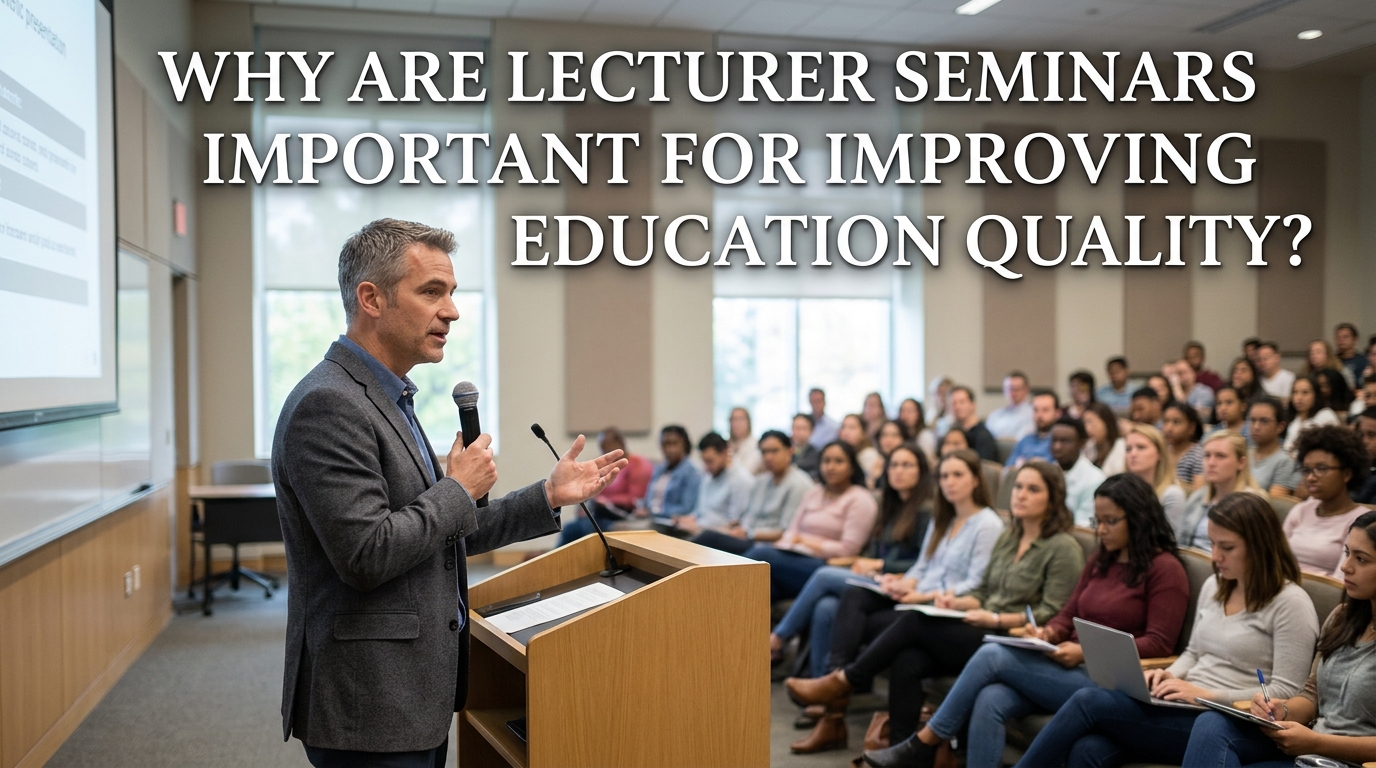
Lecturer seminars play an important role in improving education quality by helping educators develop their knowledge, teaching skills, and professional abilities. In higher education, lecturers are expected to deliver relevant learning experiences, conduct meaningful research, and adapt to changes in educational technology. Seminars provide opportunities for lecturers to exchange ideas, learn from experts, and discuss solutions to academic challenges. Through these activities, universities can encourage continuous improvement and create a more effective learning environment for students.
WHAT ARE LECTURER SEMINARS?
A lecturer seminar is an academic activity that brings lecturers, researchers, and education professionals together to discuss specific topics related to teaching, research, and higher education. These activities usually involve presentations, interactive discussions, question-and-answer sessions, and the exchange of professional experiences. Seminars can be organized by universities, faculties, academic departments, or educational organizations.
The main purpose of a lecturer seminar is to expand knowledge and strengthen professional competencies. Topics may include innovative teaching methods, curriculum development, research techniques, educational technology, and student assessment. By participating in relevant seminars, lecturers can gain new perspectives and discover practical approaches that support their academic responsibilities.
WHY ARE LECTURER SEMINARS IMPORTANT FOR EDUCATION QUALITY?
Lecturer seminars are important because education quality depends partly on lecturers' knowledge, teaching abilities, and commitment to professional development. Students need learning experiences that encourage critical thinking, creativity, and problem-solving. Seminars help lecturers explore different teaching approaches and understand how to respond to students' changing learning needs.
These activities also encourage lecturers to evaluate their existing teaching practices. Through discussions with colleagues and experts, they can identify weaknesses, exchange successful strategies, and consider improvements. When lecturers apply relevant knowledge in their classrooms, they can help create more engaging, effective, and student-centered learning experiences.
HOW DO LECTURER SEMINARS IMPROVE TEACHING SKILLS?
Lecturer seminars introduce educators to teaching strategies that can make classroom activities more effective. For example, lecturers may learn how to use project-based learning, group discussions, case studies, and digital learning platforms. These methods can encourage students to participate actively instead of relying entirely on lectures and memorization. The most suitable approach depends on the subject, learning objectives, and students' needs.
Seminars also provide opportunities for lecturers to share classroom experiences and receive constructive feedback. By discussing real teaching challenges, participants can identify practical solutions and learn from different perspectives. Applying these insights can improve lesson planning, classroom interaction, student engagement, and learning assessment. As a result, lecturers can develop teaching practices that better support students' academic progress.
HOW DO LECTURER SEMINARS SUPPORT RESEARCH AND INNOVATION?
Research is an essential part of higher education, and lecturer seminars can help strengthen research skills. Participants may learn about research methodologies, academic writing, data analysis, publication strategies, and ethical research practices. Presenting research findings also allows lecturers to receive feedback that can help them refine their ideas and improve their work.
In addition, seminars can encourage research collaboration and academic innovation. Lecturers from different departments or institutions may discover shared interests and develop joint research projects. These collaborations can generate new knowledge, encourage interdisciplinary studies, and contribute to solutions for real-world problems. Stronger research activities can also enrich classroom discussions by connecting academic theories with current evidence and practical applications.
HOW DO LECTURER SEMINARS HELP LECTURERS ADAPT TO EDUCATIONAL TECHNOLOGY?
Educational technology continues to influence how universities deliver learning materials, assess students, and manage academic activities. Lecturer seminars can introduce participants to learning management systems, interactive teaching tools, online assessment methods, and responsible uses of artificial intelligence. These discussions help lecturers understand both the benefits and limitations of digital learning solutions.
Technology alone does not guarantee better education. Lecturers must know how to select tools that match their learning objectives, protect student information, and support academic integrity. Through practical demonstrations and professional discussions, seminars can help educators develop digital literacy and technology-based teaching skills. This knowledge enables lecturers to use technology more effectively while maintaining meaningful interaction with students.
WHAT ARE THE BENEFITS OF LECTURER SEMINARS FOR STUDENTS?
Although lecturer seminars primarily focus on educators, students can benefit from the improvements that follow. Lecturers who develop their teaching skills may provide clearer explanations, more relevant learning materials, and better opportunities for classroom participation. Students may also experience more effective assessments that measure understanding, analytical thinking, and practical skills.
Seminars can help lecturers identify common learning difficulties and explore ways to address them. For example, discussions about inclusive education may encourage lecturers to provide accessible materials and use different teaching approaches to accommodate diverse learning needs. However, the benefits depend on whether lecturers apply what they learn. Consistent implementation and evaluation are necessary to turn professional development into meaningful improvements in student learning.
HOW CAN UNIVERSITIES MAKE LECTURER SEMINARS MORE EFFECTIVE?
Universities can improve lecturer seminars by starting with clear objectives and identifying the professional development needs of their academic staff. Seminar topics should be relevant to current educational challenges and the institution's academic priorities. Organizers should select qualified speakers, provide appropriate learning materials, and allow sufficient time for discussion and practical activities.
After the event, universities should evaluate participant feedback and examine whether the seminar has influenced teaching or research practices. Follow-up workshops, peer mentoring, and collaborative projects can help lecturers apply their new knowledge. Institutions should also provide suitable resources and opportunities for continued learning. Regular evaluation and practical follow-up make seminars more valuable than activities focused only on attendance or completion certificates.
CONCLUSION
Lecturer seminars are valuable for improving education quality because they support professional development, teaching improvement, research collaboration, and the effective use of educational technology. They help lecturers exchange knowledge, explore innovative methods, and respond to challenges in higher education. Students can benefit when these insights are applied to classroom practices and academic support.
However, the success of a seminar depends on its relevance, organization, and practical outcomes. Universities should provide meaningful learning opportunities and evaluate their impact over time. By making lecturer seminars part of a continuous professional development strategy, higher education institutions can strengthen teaching quality and support better learning experiences for students.
Recent Posts

Bagaimana Sistem SKS pada Program Kuliah... 22.11.2026/49 View

How Does Technology Make Daily Evaluation... 21.11.2026/77 View

Apa Strategi Menghadapi Kesenjangan antara Kompetensi... 21.11.2026/78 View

Mengapa Inventaris Aset Penting bagi Kelancaran... 21.11.2026/74 View

When Should Musicians Join a Record... 21.11.2026/79 View
