

Why Are Lecturer Seminars Important for Improving Research Quality?
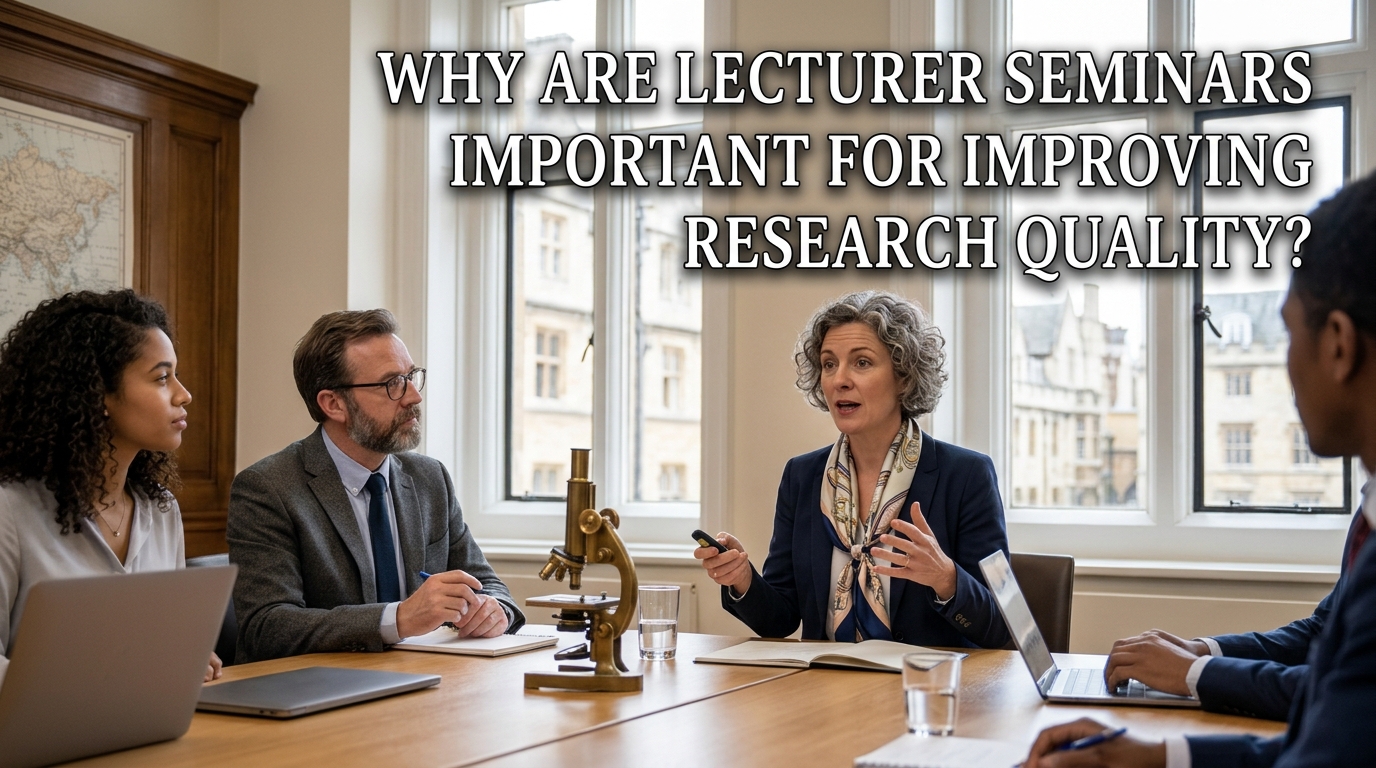
Lecturer seminars play an important role in improving research quality by helping educators develop their research skills, exchange knowledge, and explore new academic perspectives. In higher education, lecturers are expected to produce reliable research that contributes to scientific knowledge and addresses real-world problems. However, conducting high-quality research requires more than subject knowledge. Researchers must also understand appropriate methodologies, maintain ethical standards, analyze data carefully, and communicate their findings effectively. Through academic seminars, lecturers can strengthen these abilities and discover practical ways to improve their research outcomes.
WHAT ARE LECTURER SEMINARS IN RESEARCH DEVELOPMENT?
Lecturer seminars are academic activities that bring lecturers, researchers, and other professionals together to discuss research topics, share findings, and exchange ideas. These events may include research presentations, methodological workshops, expert discussions, and feedback sessions. They can be organized by universities, research centers, academic departments, or professional associations.
In research development, seminars provide opportunities for lecturers to examine new approaches and learn from the experiences of other researchers. Participants can discuss research challenges, explore emerging academic trends, and receive suggestions for improving their projects. Knowledge sharing and constructive feedback make seminars useful for identifying weaknesses and strengthening research plans. When the information gained is applied carefully, lecturers can improve the quality and relevance of their academic work.
HOW DO LECTURER SEMINARS IMPROVE RESEARCH METHODOLOGY?
A suitable research methodology is essential for producing reliable and meaningful findings. Lecturer seminars can introduce participants to different research designs, sampling techniques, data collection methods, and analytical approaches. Experts may explain the strengths and limitations of qualitative, quantitative, and mixed-methods research. These discussions help lecturers understand how to select methods that match their research questions and objectives.
Seminars also provide opportunities to discuss methodological problems and receive feedback from experienced researchers. For example, a lecturer may discover that a sampling strategy does not adequately represent the intended population. Discussion with other participants can help identify possible improvements before data collection begins. Appropriate research design and systematic analysis strengthen the credibility of research and reduce the risk of unsupported conclusions.
HOW DO SEMINARS ENCOURAGE CRITICAL THINKING AND ACADEMIC DISCUSSION?
Critical thinking is necessary for evaluating evidence, identifying research gaps, and interpreting findings objectively. Lecturer seminars encourage participants to question assumptions, compare different explanations, and examine the strengths and limitations of existing studies. Presenting research to an academic audience also challenges lecturers to explain their reasoning clearly and respond to questions about their methods and conclusions.
These discussions can reveal alternative perspectives that researchers may not have considered independently. For example, feedback from colleagues may identify limitations in an argument or suggest additional literature that could strengthen a study. Researchers can then revise their proposals, improve their analysis, or refine their conclusions. Critical evaluation and open academic discussion help lecturers develop stronger arguments and produce more carefully supported research findings.
HOW DO LECTURER SEMINARS SUPPORT RESEARCH COLLABORATION?
Research collaboration allows lecturers to combine expertise, share resources, and approach complex questions from different perspectives. Seminars bring together researchers who may have similar interests or complementary skills. Through presentations and informal discussions, participants can identify shared research priorities and explore opportunities for joint projects.
Collaborative research can be especially valuable when a project requires expertise from multiple disciplines. For example, lecturers in education and information technology may work together to investigate how digital tools influence student learning. Successful collaboration requires clear responsibilities, effective communication, and agreement on research objectives. Academic networking and interdisciplinary cooperation can expand research opportunities and help teams address questions that are difficult to investigate independently.
HOW DO SEMINARS HELP LECTURERS MAINTAIN RESEARCH ETHICS?
Research quality depends not only on accurate methods but also on responsible research practices. Lecturer seminars can address informed consent, participant confidentiality, data protection, plagiarism prevention, and transparent reporting. These topics help researchers understand their responsibilities toward participants, institutions, and the wider academic community. They also encourage discussion about ethical challenges that may arise during data collection, analysis, and publication.
Researchers can learn how to recognize conflicts of interest, document their procedures, and report findings honestly, including unexpected or unfavorable results. Where required, they should seek approval from the appropriate research ethics committee before collecting data. Following relevant institutional policies and disciplinary standards helps protect participants and maintain public trust. Research integrity and ethical compliance are essential foundations of credible academic research.
HOW DO LECTURER SEMINARS IMPROVE ACADEMIC WRITING AND PUBLICATION?
Academic writing is important because research findings must be communicated clearly for other researchers to understand, evaluate, and use them. Lecturer seminars can provide guidance on structuring research papers, presenting evidence, citing sources correctly, and developing logical arguments. Participants may also learn about journal requirements, peer review, and the differences between research articles, conference papers, and other academic publications.
Feedback from experienced writers and editors can help lecturers identify weaknesses in their manuscripts. For instance, a seminar may show participants how to improve a research abstract, clarify a discussion section, or explain the significance of their findings. Lecturers should also learn to choose suitable journals and avoid misleading publication offers. Clear academic writing and responsible publication practices help research findings reach the appropriate audience and contribute to academic knowledge.
HOW DO SEMINARS HELP LECTURERS KEEP UP WITH RESEARCH DEVELOPMENTS?
Academic knowledge develops as new evidence, methods, and technologies emerge. Lecturer seminars help researchers stay informed about current discussions in their disciplines and learn how recent developments may affect their work. Presentations from specialists can introduce emerging research questions, updated analytical tools, and new interpretations of existing evidence.
Staying informed does not mean accepting every new idea without evaluation. Lecturers should examine the quality of the evidence, the reliability of the sources, and the relevance of new approaches to their own research. Seminars provide opportunities to discuss these issues with knowledgeable colleagues. Continuous learning and evidence-based decision-making help lecturers keep their research relevant while maintaining appropriate academic standards.
HOW CAN UNIVERSITIES MEASURE THE IMPACT OF RESEARCH SEMINARS?
Universities can evaluate research seminars by examining whether participants gain useful knowledge and apply it to their research activities. Immediate evaluation may include participant feedback, short knowledge assessments, and reviews of research proposals presented during the event. Organizers can also assess the quality of discussion, relevance of the topics, and usefulness of the feedback provided.
Longer-term evaluation can examine changes in research practices, the development of collaborative projects, improvements in research proposals, and progress toward publication. However, research quality should not be measured solely by publication counts or citation numbers. Institutions should also consider methodological rigor, ethical compliance, originality, transparency, and practical or academic contribution. Combining several indicators provides a more balanced understanding of whether seminars support meaningful research improvement.
CONCLUSION
Lecturer seminars are important for improving research quality because they strengthen research methodology, encourage critical thinking, support collaboration, promote ethical practices, and develop academic writing skills. They also help lecturers stay informed about developments in their fields and identify opportunities for further investigation. These benefits can improve the reliability, relevance, and clarity of academic research.
However, seminar attendance alone does not guarantee better research outcomes. Lecturers need to apply what they learn, evaluate their research practices, and seek continued feedback from colleagues and experts. Universities can support this process by organizing relevant seminars and providing opportunities for follow-up development. Through continuous professional learning and responsible research practices, lecturer seminars can contribute to stronger research and more meaningful academic contributions.
Recent Posts

Bagaimana Sistem SKS pada Program Kuliah... 22.11.2026/49 View

How Does Technology Make Daily Evaluation... 21.11.2026/77 View

Apa Strategi Menghadapi Kesenjangan antara Kompetensi... 21.11.2026/78 View

Mengapa Inventaris Aset Penting bagi Kelancaran... 21.11.2026/74 View

When Should Musicians Join a Record... 21.11.2026/79 View
