

Why Are Lecturer Seminars Valuable for Sharing Knowledge and Experience?
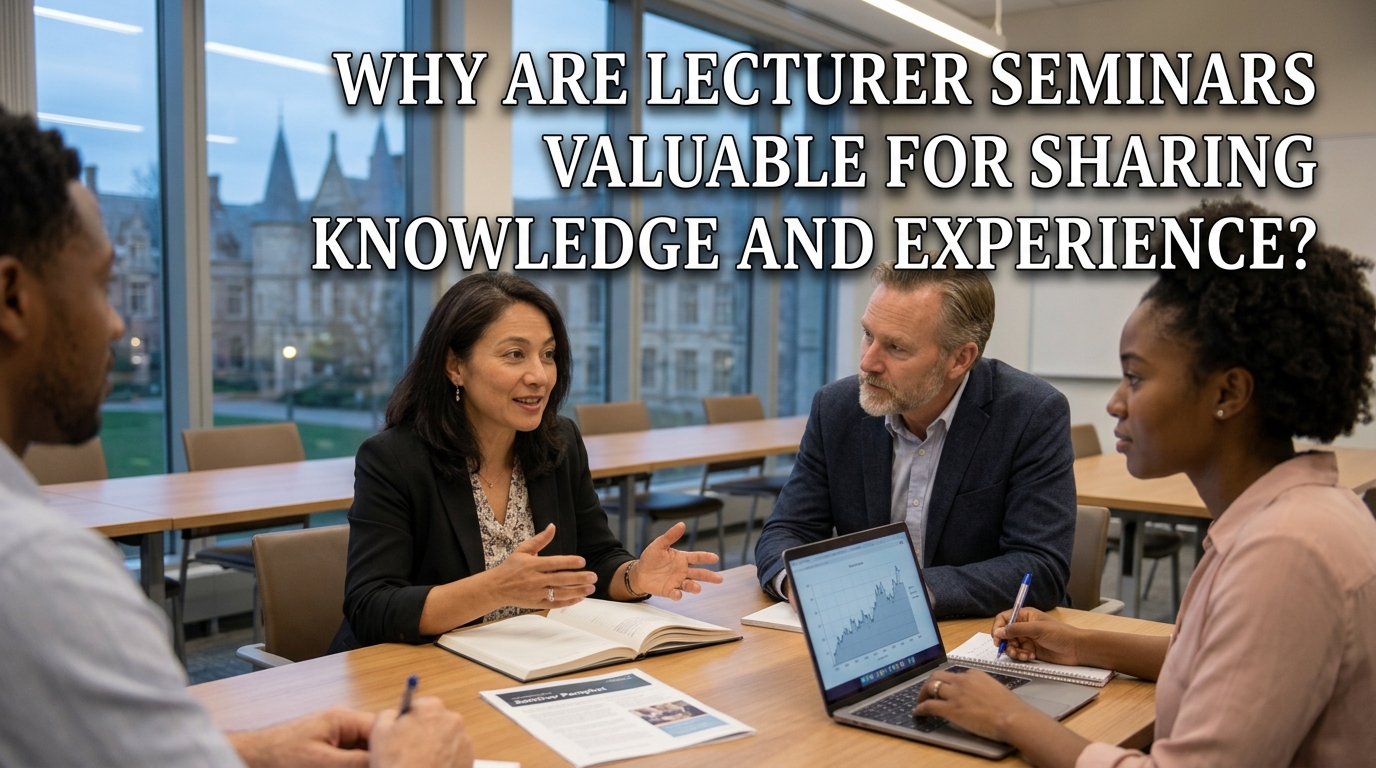
Lecturer seminars are valuable academic activities that allow educators to exchange ideas, share professional experiences, and learn from experts in their fields. In higher education, knowledge sharing helps lecturers improve their teaching methods, strengthen research skills, and respond to changes in academic practices. Through seminars, participants can discuss challenges, explore new perspectives, and discover practical solutions to common problems. These activities also create opportunities for collaboration and professional growth. Therefore, lecturer seminars play an important role in improving the quality of education and supporting continuous learning.
WHAT ARE LECTURER SEMINARS?
A lecturer seminar is an academic event where lecturers, researchers, and experts gather to present information, discuss ideas, and exchange professional experiences. The topics may include teaching strategies, research developments, educational technology, curriculum design, and higher education policies. Seminars can take place in person, online, or through a hybrid format. Each format allows participants to learn from presentations and interact with other professionals.
Unlike activities that focus mainly on individual study, seminars encourage discussion and the exchange of perspectives. Participants can ask questions, share examples from their institutions, and examine different approaches to academic challenges. This process helps lecturers understand how knowledge can be applied in various educational settings. As a result, seminars become useful spaces for professional learning and academic communication.
WHY KNOWLEDGE SHARING IS IMPORTANT IN HIGHER EDUCATION
Knowledge sharing helps lecturers stay informed about new research, teaching methods, and developments in their academic fields. Higher education continues to change as technology, student needs, and professional expectations evolve. By exchanging information, lecturers can discover approaches that may improve classroom learning and research activities. They can also learn from the experiences of colleagues who have faced similar challenges.
Sharing knowledge benefits more than individual lecturers. When useful ideas spread across departments and institutions, universities can strengthen teaching practices, encourage innovation, and support collaborative research. Knowledge exchange also reduces the need for every lecturer to solve the same problem independently. In this way, lecturer seminars contribute to continuous academic improvement and institutional development.
HOW LECTURER SEMINARS ENCOURAGE EXPERIENCE SHARING
Lecturer seminars give participants opportunities to explain how they handle real situations in teaching and research. For example, a lecturer may describe a classroom activity that improves student participation or share lessons learned from a research project. Other participants can ask questions, offer suggestions, and discuss whether the approach could work in their own institutions. These conversations turn individual experiences into useful learning opportunities.
Experience sharing is especially valuable because academic challenges do not always have one universal solution. A teaching method that works well in one classroom may need adjustments for another group of students. Through open discussion, lecturers can identify the strengths and limitations of different approaches. Learning from practical experience helps them make better-informed decisions and adapt their methods to specific needs.
IMPROVING TEACHING METHODS AND LEARNING QUALITY
One major benefit of lecturer seminars is the opportunity to discover innovative teaching methods. Participants may learn about project-based learning, collaborative assignments, digital learning platforms, or new approaches to student assessment. Speakers can explain how these methods work and share evidence or experiences related to their effectiveness. Lecturers can then consider which strategies are appropriate for their own courses.
Seminars also encourage lecturers to reflect on their current teaching practices. Discussions with colleagues may reveal ways to explain difficult concepts more clearly, involve students in classroom activities, or provide more useful feedback. However, new methods should be adapted to the subject, learning objectives, and students' needs rather than copied without evaluation. When lecturers apply and assess relevant ideas, seminars can support better teaching quality and student engagement.
SUPPORTING RESEARCH AND ACADEMIC COLLABORATION
Lecturer seminars also help researchers exchange findings, discuss research methods, and receive feedback on their work. Presenting research to an academic audience can reveal weaknesses in an argument, gaps in the available evidence, or opportunities for further investigation. Participants may suggest alternative methods or recommend useful academic sources. This feedback can help lecturers improve the quality and clarity of their research.
Seminars can also connect lecturers with colleagues who have complementary expertise. For instance, researchers from different disciplines may discover a shared interest and develop a joint research project. Such collaboration can lead to conference presentations, research publications, or interdisciplinary studies. Research collaboration and constructive feedback make seminars valuable for strengthening academic knowledge and expanding research opportunities.
DEVELOPING COMMUNICATION AND CRITICAL THINKING SKILLS
Participating in lecturer seminars can improve communication skills because lecturers must explain ideas clearly, ask relevant questions, and respond to different viewpoints. Presenters learn to organize information and communicate complex concepts in a way that their audience can understand. Participants also practice listening carefully and identifying the main points of a discussion. These abilities are useful in teaching, research presentations, and academic meetings.
Seminars further encourage critical thinking by exposing lecturers to different interpretations of academic issues. Instead of accepting every claim without examination, participants can evaluate evidence, compare arguments, and consider alternative explanations. Respectful disagreement can help clarify complex topics and improve the quality of academic discussion. These skills support thoughtful decision-making and responsible academic practice.
BUILDING PROFESSIONAL NETWORKS AND ACADEMIC RELATIONSHIPS
Lecturer seminars bring together academics from different departments, universities, and research communities. These meetings allow participants to introduce their work, learn about other people's interests, and identify shared professional goals. Informal conversations during breaks and networking sessions can also lead to useful exchanges of information. Over time, these interactions may develop into lasting academic relationships.
Strong professional networks can provide access to research partners, experienced mentors, academic events, and new learning opportunities. However, effective networking depends on genuine communication and continued engagement rather than simply collecting contacts. Lecturers can maintain relationships by sharing relevant publications, following up on discussions, and participating in future activities. Academic networking helps create a supportive environment for professional growth and knowledge exchange.
HOW UNIVERSITIES CAN MAKE LECTURER SEMINARS MORE EFFECTIVE
Universities can improve lecturer seminars by selecting relevant topics and inviting speakers with appropriate knowledge and experience. Organizers should define clear objectives, provide a well-planned agenda, and allow enough time for questions and discussion. Activities such as case studies, group conversations, and research presentations can encourage active participation. Online and hybrid options may also help lecturers who cannot attend in person.
After each seminar, universities should collect feedback and evaluate whether the event achieved its objectives. Participants can be asked about the usefulness of the content, the quality of the discussion, and how they plan to apply what they learned. Organizers may also encourage follow-up activities, such as research groups or teaching discussions. Careful planning and continuous evaluation help universities deliver seminars that create meaningful academic value.
CONCLUSION
Lecturer seminars are valuable for sharing knowledge and experience because they bring academics together to exchange ideas, discuss challenges, and learn from one another. These activities can improve teaching methods, support research development, strengthen communication skills, and create opportunities for professional networking. They also help lecturers explore different perspectives and apply useful lessons to their academic responsibilities.
To achieve these benefits, seminars should encourage active participation, constructive discussion, and practical learning. Universities can support this process by choosing relevant topics, providing effective learning environments, and evaluating outcomes. When lecturers share knowledge and apply what they learn, lecturer seminars can contribute to stronger academic communities and better higher education.
Recent Posts

Bagaimana Sistem SKS pada Program Kuliah... 22.11.2026/49 View

How Does Technology Make Daily Evaluation... 21.11.2026/76 View

Apa Strategi Menghadapi Kesenjangan antara Kompetensi... 21.11.2026/78 View

Mengapa Inventaris Aset Penting bagi Kelancaran... 21.11.2026/74 View

When Should Musicians Join a Record... 21.11.2026/78 View
