

Why Are Literacy Movements Important for Building an Intelligent and Critical Generation?
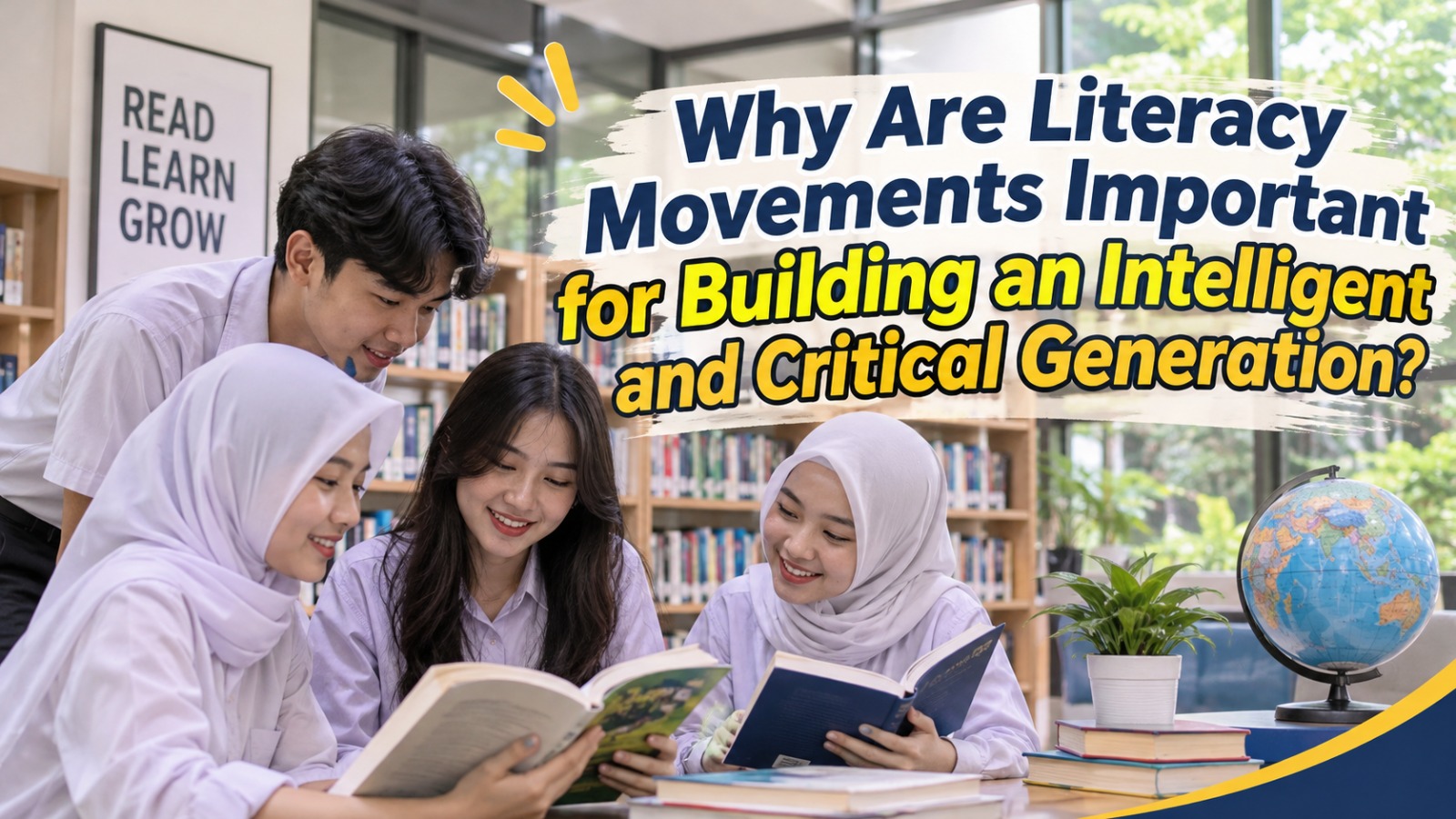
Literacy movements play an important role in developing a generation that is intelligent, knowledgeable, and capable of thinking critically. In modern society, people are surrounded by large amounts of information from books, social media, websites, and other digital platforms. However, having access to information does not automatically mean someone can understand, evaluate, and use it correctly. This is why literacy movements are essential for encouraging people to develop strong reading habits and improve their ability to think independently.
Through literacy activities, individuals can gain knowledge, understand different perspectives, and develop skills that are useful in everyday life. Literacy is not limited to reading and writing but also includes the ability to analyze information, communicate effectively, and solve problems. Therefore, literacy movements need to become an important part of education and community development.
THE MEANING OF LITERACY MOVEMENTS IN MODERN SOCIETY
A literacy movement is a collective effort to encourage individuals and communities to improve their reading, writing, comprehension, and information-processing skills. These activities can be organized through schools, libraries, families, educational institutions, and community organizations. The main purpose is to create an environment where learning and reading become regular habits rather than activities performed only when necessary.
In modern society, literacy has developed beyond traditional reading and writing skills. People also need digital literacy, information literacy, and media literacy to understand the information they encounter every day. For example, someone who reads news online must be able to distinguish reliable information from misleading content. This ability helps individuals make better decisions and avoid being influenced by inaccurate information.
BUILDING KNOWLEDGE AND EXPANDING PERSPECTIVES
One of the most important benefits of literacy movements is their ability to increase knowledge and broaden people's perspectives. Reading allows individuals to explore various subjects, including science, technology, history, culture, economics, and social issues. Through books and other educational materials, people can discover information that may not be available through their daily experiences.
Furthermore, reading introduces individuals to different opinions, experiences, and ways of thinking. This helps them understand that a problem can have several possible explanations and solutions. A generation with broad knowledge is more prepared to adapt to social changes, technological developments, and new challenges. Therefore, literacy movements can help create individuals who are more open-minded, informed, and willing to continue learning.
DEVELOPING CRITICAL THINKING AND ANALYTICAL SKILLS
Literacy movements are essential because they encourage people to develop critical thinking skills. Reading is not simply about recognizing words or understanding sentences. It also involves identifying important information, examining arguments, comparing different perspectives, and determining whether a statement is supported by reliable evidence.
For example, when students read an article about an environmental issue, they can learn to examine its arguments, identify the supporting facts, and consider alternative solutions. These activities train them to avoid accepting information without questioning its accuracy.
Analytical thinking also helps individuals recognize problems and make decisions based on logical reasoning. People who develop these skills are generally better prepared to evaluate information before sharing or using it. As a result, literacy movements contribute to building a generation that does not easily believe rumors, misinformation, or unsupported opinions.
IMPROVING EDUCATION AND LEARNING QUALITY
Literacy movements also contribute to improving the quality of education by encouraging students to become more active and independent learners. Students who regularly read educational materials often have more opportunities to improve their vocabulary, writing abilities, comprehension, and academic knowledge. These skills support their learning process across different subjects.
Schools can strengthen literacy activities through classroom reading sessions, book discussions, writing exercises, storytelling, and library programs. Teachers can also encourage students to ask questions, express opinions, and discuss the information they discover. Such activities create a more interactive learning environment instead of depending entirely on memorization.
In addition, literacy movements can help reduce learning difficulties caused by limited reading comprehension. When students understand information more effectively, they can follow lessons, complete assignments, and communicate their ideas more clearly. This makes literacy an important foundation for better educational achievement and lifelong learning.
THE ROLE OF FAMILIES AND COMMUNITIES IN SUPPORTING LITERACY
The success of literacy movements does not depend only on schools or educational institutions. Families and communities also have an important responsibility in developing reading habits and encouraging continuous learning. Children who grow up in environments where reading is appreciated are more likely to recognize books and learning materials as valuable parts of everyday life.
Parents can support literacy development by reading stories with their children, providing age-appropriate books, and discussing interesting topics at home. Meanwhile, communities can organize reading groups, book-sharing activities, public discussions, and educational events. Village libraries and community reading centers can also provide access to learning materials for people who have limited resources.
Furthermore, cooperation between schools, families, local organizations, and government institutions can make literacy programs more accessible. By creating supportive learning environments, communities can encourage people of different ages to participate in educational activities. This collaboration helps establish a strong reading culture that benefits future generations.
CONCLUSION
Literacy movements are important for building an intelligent and critical generation because they improve knowledge, develop analytical abilities, and encourage independent learning. Through consistent reading activities, individuals can understand information more deeply, evaluate different perspectives, and make decisions based on reliable knowledge.
However, successful literacy movements require cooperation between schools, families, communities, and government institutions. Everyone needs to contribute by providing learning opportunities and creating environments that encourage reading. With strong literacy habits, young generations can become more creative, responsible, knowledgeable, and prepared to face future challenges.
Recent Posts

Bagaimana Sistem SKS pada Program Kuliah... 22.11.2026/28 View

How Does Technology Make Daily Evaluation... 21.11.2026/65 View

Apa Strategi Menghadapi Kesenjangan antara Kompetensi... 21.11.2026/65 View

Mengapa Inventaris Aset Penting bagi Kelancaran... 21.11.2026/62 View

When Should Musicians Join a Record... 21.11.2026/63 View
