

Why Are Local Languages an Important Part of Cultural Heritage?
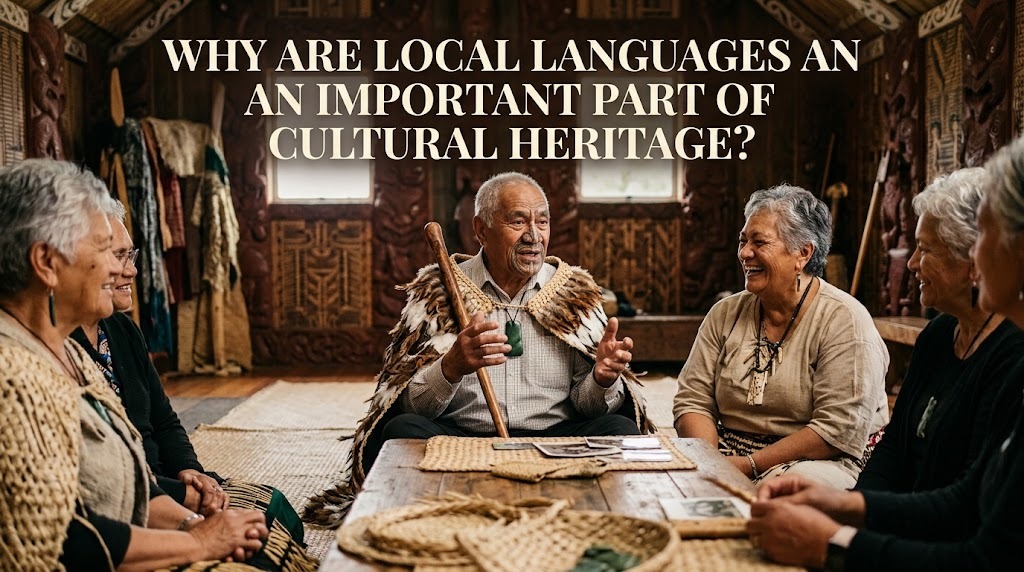
Local languages are an important part of cultural heritage because they preserve a community’s identity, history, traditions, and values. They connect people with their ancestors and help pass cultural knowledge from one generation to another. However, many local languages face the risk of disappearing as younger generations increasingly use dominant national or international languages. Preserving local languages is essential to maintaining cultural diversity and ensuring that traditional knowledge remains available for the future.
LOCAL LANGUAGES PRESERVE CULTURAL IDENTITY
Local languages help people recognize their cultural identity and understand their connection to a particular community. The words, expressions, and ways of speaking often reflect the history and experiences of the people who use them. Language also influences how communities express respect, relationships, and social responsibilities. When people continue using their local languages, they help maintain a distinctive part of their cultural identity.
In Indonesia, languages such as Javanese, Sundanese, Balinese, and Minangkabau reflect the country's rich cultural diversity. Each language has its own expressions and traditions that may not have exact equivalents in other languages. Learning these languages helps younger generations understand their cultural roots. It also encourages respect for the different identities that contribute to national unity.
LOCAL LANGUAGES PASS DOWN TRADITIONS AND KNOWLEDGE
Local languages play an important role in passing cultural knowledge from older generations to younger people. Traditional stories, folk songs, proverbs, and oral histories often carry important lessons about community values and historical experiences. These forms of knowledge may lose some of their original meaning when translated into another language. Using the original language helps preserve their expressions, cultural context, and deeper meanings.
Many communities also use local languages to explain traditional farming methods, medicinal plants, local environments, and customary practices. These words can contain knowledge developed through generations of experience. When a language disappears, some of this knowledge may become harder to understand or recover. Therefore, teaching local languages helps protect both linguistic diversity and valuable cultural traditions.
LOCAL LANGUAGES STRENGTHEN FAMILY AND COMMUNITY RELATIONSHIPS
Speaking a local language can strengthen relationships between family members and people within a community. Older generations can use their native languages to share memories, tell stories, and explain family traditions. These conversations help children understand their heritage and develop a stronger sense of belonging. Language also allows communities to maintain familiar forms of communication during cultural ceremonies and social gatherings.
When young people learn the languages spoken by their parents or grandparents, they can communicate more easily across generations. This interaction creates opportunities to exchange experiences and preserve family histories. Local languages can also strengthen solidarity among community members who share similar cultural backgrounds. Maintaining these languages helps keep cultural connections alive even as lifestyles change.
LOCAL LANGUAGES SUPPORT CULTURAL DIVERSITY
The world's languages represent different ways of expressing ideas, describing experiences, and understanding the environment. Every language contributes to the diversity of human culture. If a language disappears, the world may lose unique expressions, traditional stories, and knowledge associated with its speakers. Protecting local languages helps ensure that different cultural perspectives continue to exist.
In multilingual countries such as Indonesia, local languages are an important part of the nation's cultural richness. The national language, Indonesian, helps people communicate across regions, while local languages preserve regional identities and traditions. These roles can complement each other rather than compete. People can use Indonesian for wider communication while continuing to learn and speak their local languages at home and in their communities.
WHY ARE MANY LOCAL LANGUAGES AT RISK?
Many local languages face challenges because of urbanization, migration, changing lifestyles, and the growing influence of dominant languages. In some families, parents may use a national or international language more frequently because they believe it offers better educational or career opportunities. As a result, children may have fewer opportunities to learn their ancestral languages. Over time, a language can become less commonly spoken and may eventually disappear if it is no longer passed on.
Limited learning materials and fewer opportunities to use local languages in schools, media, and public spaces can make the situation more difficult. Some languages are mainly spoken by older people, while younger generations may understand only a few words. However, local languages do not need to disappear as society becomes more modern. With family support, education, and community participation, they can continue to develop alongside other languages.
HOW CAN WE PRESERVE LOCAL LANGUAGES?
Preserving local languages begins with using them in everyday life. Parents and grandparents can speak their local languages with children, tell traditional stories, and teach common expressions. Schools and community organizations can organize language classes, storytelling activities, and cultural performances. These practical experiences help younger generations learn languages naturally and understand their cultural importance.
Technology can also support language preservation through digital dictionaries, recordings, educational videos, podcasts, and social media content. Young people can interview fluent speakers and document traditional stories with the community's permission. Local writers and content creators can produce songs, books, and videos in their regional languages. By combining everyday communication with education and digital resources, communities can help ensure that local languages remain useful and meaningful.
CONCLUSION
Local languages are an important part of cultural heritage because they preserve cultural identity, traditional knowledge, family relationships, and cultural diversity. They connect generations and help communities maintain their unique histories and values. However, these languages need continued use and support to survive in a changing world.
Everyone can contribute to language preservation by speaking local languages, teaching them to younger generations, and supporting cultural education. Schools, families, communities, and digital creators can work together to keep these languages alive. Protecting local languages means protecting the cultural knowledge and identities that make each community unique.
Recent Posts

Bagaimana Sistem SKS pada Program Kuliah... 22.11.2026/48 View

How Does Technology Make Daily Evaluation... 21.11.2026/76 View

Apa Strategi Menghadapi Kesenjangan antara Kompetensi... 21.11.2026/78 View

Mengapa Inventaris Aset Penting bagi Kelancaran... 21.11.2026/73 View

When Should Musicians Join a Record... 21.11.2026/78 View
