

Why Are Online Courses a Flexible Way to Learn?
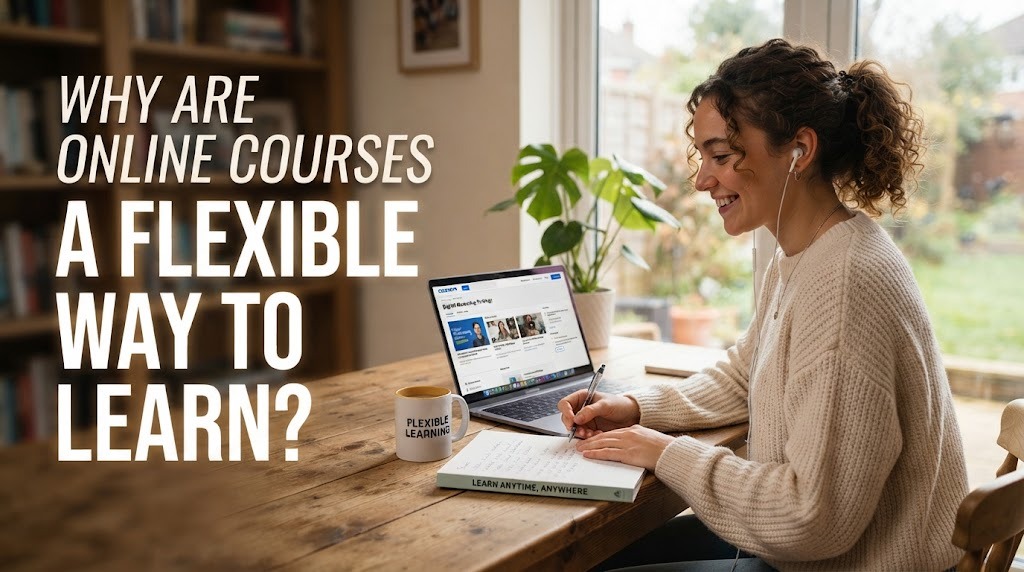
Online courses have changed the way people access education and develop new skills. Traditional learning often requires students to attend classes at specific times and locations, while online courses can provide greater freedom in organizing study activities. Learners can access educational materials through computers, tablets, or smartphones, depending on the course platform. This flexibility makes online learning suitable for students, employees, and people with different daily responsibilities.
The flexibility of online courses is not limited to study location. Learners can often choose when to study, control their learning pace, and select courses based on their interests and goals. These advantages make it easier to combine education with work, college, family responsibilities, or personal activities. However, flexible learning still requires discipline and good time management to produce effective results.
LEARNING FROM DIFFERENT LOCATIONS
One of the main advantages of online courses is the ability to study from different locations. Learners do not always need to travel to a campus or training center to access lessons. They can study from home, a library, a workplace, or another suitable location with internet access. This can save travel time and make education more accessible.
Location flexibility is especially useful for people who live far from educational institutions. Students can access courses provided by organizations or instructors from different regions without relocating. This gives learners more choices when searching for subjects that match their needs. However, a suitable device, stable internet connection, and comfortable learning environment are still important.
CHOOSING A CONVENIENT STUDY TIME
Online courses often allow learners to study at times that fit their schedules. Recorded lessons and digital materials can be accessed outside traditional classroom hours when the course format supports asynchronous learning. This is useful for people who have work, college, family, or other responsibilities. Learners can organize their study sessions around their existing routines.
Flexible study times can also reduce conflicts between education and other activities. A college student may study after completing classes, while an employee may learn before work or in the evening. This makes continuing education more realistic for people with busy schedules. However, learners need to create a consistent study routine so flexibility does not turn into procrastination.
LEARNING AT YOUR OWN PACE
Another reason online courses are flexible is that many allow learners to control their learning pace. Students can spend additional time on difficult topics and review materials when necessary. If a lesson is easy to understand, they may be able to move forward more quickly. This can create a learning experience that is more suitable for individual needs.
Learning at an appropriate pace can also improve understanding. Some learners need repeated explanations before they fully understand a concept, while others prefer to move quickly through familiar material. Digital lessons can make reviewing easier because materials may remain available throughout the course period. The exact level of flexibility depends on the course design and access conditions.
PROVIDING MANY LEARNING OPTIONS
Online learning platforms offer courses covering a wide range of subjects and skill levels. Learners can choose introductory courses when they are new to a topic or more advanced courses when they already have basic knowledge. Subjects may include technology, business, languages, design, communication, marketing, and many other areas. This variety allows people to build learning paths that match their goals.
The availability of different courses also supports career exploration. Someone who is unsure about a particular profession can start with an introductory course before making a larger commitment. If the subject matches their interests, they can continue with more advanced learning. This gives learners greater freedom to explore their educational and professional interests.
FITTING EDUCATION AROUND DAILY RESPONSIBILITIES
Many people want to continue learning but cannot easily follow a fixed classroom schedule. Online courses can make education easier to combine with work, college, family responsibilities, and other activities. Learners can decide how to divide their available time between different priorities. This can make professional and personal development more accessible.
The ability to combine learning with other responsibilities can be especially valuable for working professionals. They can improve their skills without necessarily taking extended time away from their jobs. Students can also use online courses to develop additional abilities outside their main academic program. With proper planning, learning can become part of a balanced daily routine.
MAKING LEARNING MORE PERSONAL
Online courses can give learners more control over the way they study. They can choose which materials to review, repeat lessons when needed, and sometimes select activities that match their preferred learning methods. Some platforms also provide quizzes, progress tracking, discussion forums, or interactive exercises. These features can help learners understand their progress and identify areas that need improvement.
Personal control can make learning feel more relevant. Learners can focus on subjects that support their specific goals rather than following exactly the same path as everyone else. However, not every online course offers the same level of personalization. Students should review the course structure before enrolling to understand how much flexibility and support are available.
REDUCING TRAVEL AND SCHEDULING BARRIERS
Online courses can reduce the time and effort required to travel to a physical learning location. Learners can access lessons directly through an internet connected device when the course allows remote participation. This can make education more convenient for people with limited transportation options or demanding schedules. Time that would normally be spent traveling can potentially be used for studying or other responsibilities.
Flexible scheduling can also reduce conflicts between different activities. Learners are not always required to attend a physical class at a specific hour. This allows them to organize their day more efficiently. Even so, some online courses may include live sessions with fixed schedules, so learners should check the course requirements before registering.
REQUIRING STRONG TIME MANAGEMENT
Flexibility does not mean that online learning requires less responsibility. Without a fixed classroom schedule, learners need to manage their own study time. They must set deadlines, complete assignments, review lessons, and stay motivated. Strong time management is therefore an important part of successful online learning.
Learners can create a simple weekly schedule to maintain consistency. Setting specific study periods can prevent assignments from accumulating near deadlines. Breaking larger tasks into smaller activities can also make learning easier to manage. With discipline and realistic planning, the flexibility of online courses can become a major advantage.
CONCLUSION
Online courses are a flexible way to learn because they can provide freedom in location, study time, learning pace, and subject selection. They allow students and professionals to continue education while managing work, college, family responsibilities, and other activities. Digital learning can also reduce travel barriers and give learners greater control over their educational experience.
However, flexibility works best when combined with discipline and effective time management. Learners need to choose suitable courses, create consistent study habits, and complete their learning activities responsibly. When these habits are developed, online courses can provide a convenient and effective way to gain knowledge and develop skills in the digital era.
Recent Posts

Bagaimana Sistem SKS pada Program Kuliah... 22.11.2026/35 View

How Does Technology Make Daily Evaluation... 21.11.2026/69 View

Apa Strategi Menghadapi Kesenjangan antara Kompetensi... 21.11.2026/70 View

Mengapa Inventaris Aset Penting bagi Kelancaran... 21.11.2026/67 View

When Should Musicians Join a Record... 21.11.2026/69 View
