

Why Are Online Courses Becoming More Popular in the Digital Era?
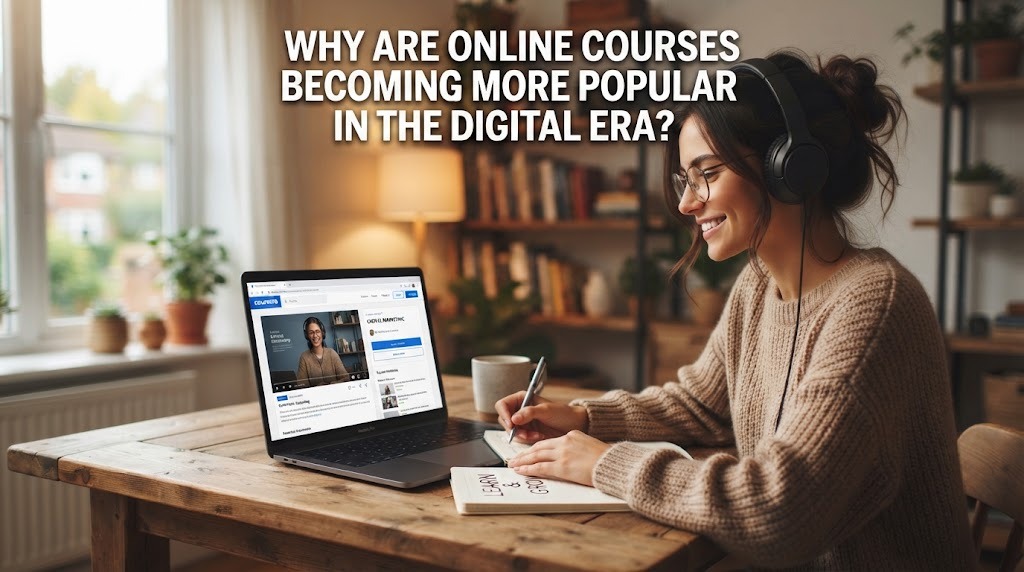
Online courses have become increasingly popular as technology changes the way people learn and develop their skills. In the past, learning was often connected to classrooms, fixed schedules, and physical locations. Today, people can access educational materials through computers, tablets, and smartphones from almost anywhere. This change makes online learning an attractive option for students, workers, and people who want to improve their knowledge.
The popularity of online courses is also connected to the growing demand for new skills. Technology continues to influence education and the workplace, so people need flexible ways to learn and update their abilities. Online courses can provide access to different subjects, learning materials, instructors, and practical activities. As a result, digital learning has become an important part of modern education and professional development.
FLEXIBLE LEARNING SCHEDULES
One of the main reasons online courses are popular is their flexibility. Learners can often choose when and where they study according to their personal schedules. This is useful for students who have academic responsibilities and workers who have full time jobs. Flexible learning allows people to continue their education without completely changing their daily routines.
Online courses can also help learners study at their own pace. Some people may need more time to understand a difficult topic, while others may learn quickly. Recorded lessons and digital materials can often be reviewed several times. This gives learners more control over their learning process and makes education easier to fit into different lifestyles.
EASY ACCESS TO LEARNING MATERIALS
Digital learning provides access to educational materials without requiring learners to visit a physical classroom. Depending on the course, students may receive videos, presentations, reading materials, assignments, quizzes, and other resources through an online platform. These materials can usually be accessed using an internet connected device. This convenience makes learning more accessible to people in different locations.
Easy access is particularly useful for people who live far from educational institutions or have limited time to attend traditional classes. Online courses can connect learners with instructors and educational providers from different regions. However, learners still need reliable internet access and suitable devices to participate effectively. Access to technology therefore remains an important part of successful online learning.
WIDER CHOICE OF SUBJECTS
Online courses offer a wide range of subjects for different learning goals. Learners can study languages, business, technology, design, marketing, communication, data analysis, and many other areas. This variety allows people to choose courses based on their interests and career plans. They can also explore new fields before deciding whether to pursue them more seriously.
The wide range of subjects makes online learning useful for both academic and professional development. A student can take additional courses to support their university studies, while a worker can learn skills related to a changing job market. People can also combine several skills to create a broader professional profile. This flexibility is one reason online courses continue to attract different types of learners.
SUPPORTING CAREER DEVELOPMENT
Online courses can help learners develop skills that are useful in the workplace. Many courses focus on practical abilities rather than only theoretical knowledge. Learners may complete projects, exercises, or assignments that allow them to practice what they have studied. These activities can help build confidence and provide evidence of learning.
Online learning can also support people who want to change careers or improve their current position. Instead of waiting for a formal education program that may take several years, learners can choose shorter courses related to specific skills. The knowledge gained can complement previous education and work experience. However, learners should select reputable courses and understand that completing an online course does not automatically guarantee employment.
MORE AFFORDABLE LEARNING OPTIONS
Cost is another factor that contributes to the popularity of online courses. Some digital courses are available at lower prices than traditional programs because they may not require physical classrooms or daily transportation. There are also free educational resources provided by universities, organizations, and learning platforms. These options allow more people to explore education according to their financial situation.
However, not every online course is inexpensive, and course quality can vary. Learners should consider the curriculum, instructor qualifications, learning support, course duration, and reputation of the provider before enrolling. A low price should not be the only reason for choosing a course. The value of the knowledge and skills gained should also be considered.
SUPPORTING LIFELONG LEARNING
The modern workplace changes quickly, making lifelong learning increasingly important. Skills that are valuable today may need to be updated as technology, industries, and job requirements develop. Online courses make it easier for people to continue learning after completing formal education. Learners can return to education whenever they need new knowledge or skills.
Lifelong learning is not limited to professional development. People can also use online courses to develop personal interests and practical abilities. Learning a language, improving communication skills, studying creative subjects, or exploring new technology can provide personal benefits. This makes online learning useful for people with different goals and backgrounds.
USING TECHNOLOGY TO IMPROVE LEARNING
Technology allows online courses to provide learning experiences that are different from traditional classrooms. Videos, interactive quizzes, digital discussions, online assignments, and virtual collaboration can make lessons more engaging. Some platforms also provide progress tracking and personalized learning features. These tools can help learners understand their progress and identify areas that require more attention.
At the same time, technology does not automatically guarantee effective learning. Learners still need discipline, concentration, and active participation. A person may have access to excellent materials but make limited progress without consistent study habits. Therefore, technology works best when combined with clear learning goals and regular practice.
GIVING LEARNERS GREATER CONTROL
Online courses give learners more control over how they organize their education. They can often choose courses based on their current level, interests, and goals. Some learners may focus on one specific skill, while others may follow a broader learning path. This level of choice can make education feel more relevant to individual needs.
Greater control also encourages learners to become more responsible for their progress. They need to manage their schedules, complete assignments, and stay motivated without constant supervision. These habits can also be useful in professional environments where employees are expected to manage tasks independently. As a result, online learning can develop both knowledge and self management skills.
CONCLUSION
Online courses are becoming more popular in the digital era because they offer flexible schedules, easy access to learning materials, diverse subjects, and opportunities for skill development. They can support students, workers, career changers, and anyone interested in lifelong learning. Digital technology also makes it possible to learn from different locations without always depending on traditional classroom settings.
However, effective online learning requires more than simply enrolling in a course. Learners should choose quality programs, set clear goals, manage their time, and actively practice the skills they learn. When used properly, online courses can become a valuable tool for education, personal development, and career preparation in an increasingly digital world.
Recent Posts

Bagaimana Sistem SKS pada Program Kuliah... 22.11.2026/35 View

How Does Technology Make Daily Evaluation... 21.11.2026/69 View

Apa Strategi Menghadapi Kesenjangan antara Kompetensi... 21.11.2026/70 View

Mengapa Inventaris Aset Penting bagi Kelancaran... 21.11.2026/67 View

When Should Musicians Join a Record... 21.11.2026/69 View
