

Why Are Online Courses Important for College Students?
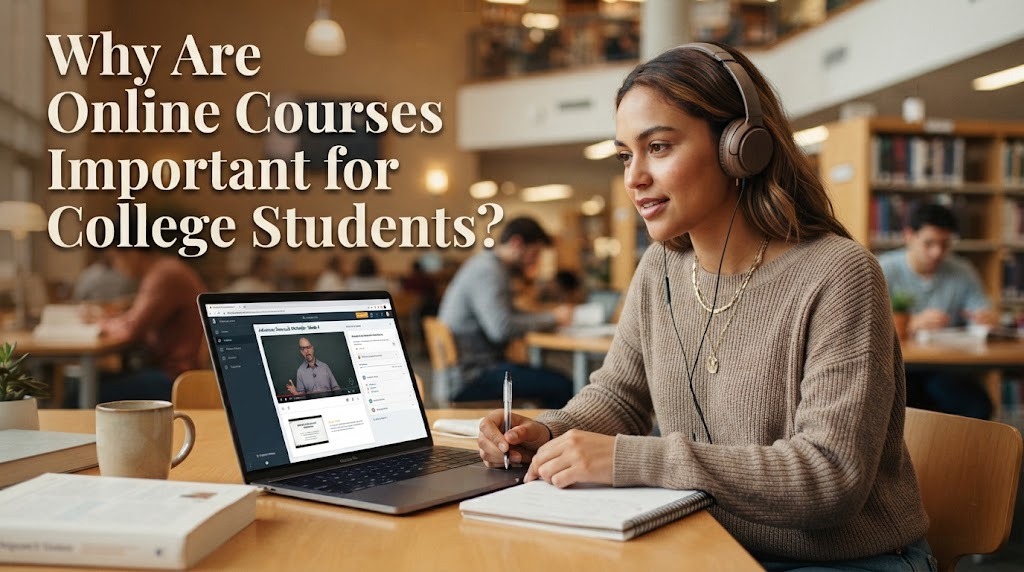
Online courses have become an important part of modern education. College students can use them to gain additional knowledge, improve practical skills, and explore subjects that may not be fully covered in their regular classes. Unlike traditional learning, online courses often allow students to study from different locations and at flexible times. This makes them useful for students who want to develop themselves while continuing their college education.
The growing importance of online courses is also connected to changes in technology and the job market. Employers increasingly value graduates who can adapt to new tools, communicate effectively, solve problems, and continue learning. By taking relevant online courses, college students can complement their academic knowledge with additional skills. This preparation can help them become more confident and better prepared for future academic and professional challenges.
EXPANDING KNOWLEDGE BEYOND THE CLASSROOM
College students usually study subjects related to their major, but their learning opportunities do not have to stop there. Online courses allow students to explore topics outside their regular curriculum. They can learn about technology, business, communication, design, languages, data analysis, or other areas that match their interests. This broader knowledge can help students understand different perspectives and discover new areas of interest.
Additional learning can also strengthen academic understanding. A student who finds a particular topic difficult can use an online course to study it through another explanation or learning method. Different instructors may present concepts in ways that are easier for certain learners to understand. As a result, online courses can complement classroom education rather than replace it.
DEVELOPING PRACTICAL SKILLS
Academic knowledge is important, but students also need practical skills that can be applied to real situations. Online courses can provide opportunities to practice skills through assignments, projects, quizzes, simulations, or other activities. For example, students may learn how to create presentations, analyze data, design digital content, or use professional software. These experiences can make learning more applicable to future work.
Practical skills can also help students understand their strengths and weaknesses. When completing a project, students may discover that they are good at planning but need more practice with communication or technical tools. Identifying these areas early gives students time to improve before entering the workforce. This makes online learning a useful part of personal and professional preparation.
PREPARING FOR THE WORLD OF WORK
College students need to prepare for a job market that continues to change. Employers may look for candidates who have both academic qualifications and relevant skills. Online courses can help students develop additional competencies that match their desired career fields. This can give them a stronger foundation when applying for internships, entry level positions, or other opportunities.
Online learning can also introduce students to professional practices before they graduate. Courses may include case studies, industry examples, practical projects, or assignments based on real workplace situations. These experiences can help students understand how their knowledge may be used professionally. However, students should remember that online courses work best when combined with practical experience.
IMPROVING DIGITAL SKILLS
Digital skills are increasingly relevant across many professions. Even jobs that are not directly related to technology may require employees to use digital communication tools, online platforms, data systems, or specialized software. Online courses naturally expose students to digital learning environments and different technologies. Regular use of these tools can help students become more comfortable with digital workflows.
Students can also choose courses that focus directly on specific digital skills. Depending on their goals, they may learn about programming, graphic design, digital marketing, data analysis, cybersecurity, or productivity tools. Developing these abilities can make students more adaptable in different academic and professional environments. Digital competence can therefore become an important part of their overall skill set.
PROVIDING FLEXIBLE LEARNING
One of the biggest advantages of online courses is flexibility. College students often have busy schedules involving classes, assignments, organizations, internships, and personal responsibilities. Online learning allows them to choose study times that fit their routines. This makes additional education more manageable than programs that require fixed physical attendance.
Flexibility also allows students to control their learning pace. They can review difficult materials and move through familiar topics more quickly. This can create a learning experience that is more suitable for individual needs. However, students still need discipline because flexible learning requires them to manage their own time and maintain consistent study habits.
SUPPORTING CAREER EXPLORATION
Many college students are still deciding which career path they want to follow. Online courses can provide a relatively accessible way to explore different fields. Students can take introductory courses before committing significant time and resources to a particular area. This can help them understand whether a subject matches their interests and abilities.
Career exploration through online learning can also help students identify skills they need to develop. After learning about a particular profession, they can compare its requirements with their current abilities. They can then choose additional courses or practical activities to address skill gaps. This process can make career planning more focused and realistic.
BUILDING A PROFESSIONAL PORTFOLIO
Some online courses require students to complete projects that can demonstrate their abilities. These projects can become useful examples of practical work when they are relevant and completed to a good standard. A student studying design, writing, programming, marketing, or data analysis, for example, may be able to use selected course projects as part of a portfolio. A strong portfolio can help students show what they can actually do.
Students should focus on quality rather than simply collecting certificates. A certificate may show that a course was completed, but practical work can provide stronger evidence of skills. Students can explain the purpose of a project, the methods they used, and the results they achieved. This approach makes their learning experience more meaningful for future academic or career opportunities.
BUILDING INDEPENDENT LEARNING HABITS
Online courses require students to take greater responsibility for their own learning. They need to organize study schedules, complete assignments, review materials, and monitor their progress. These habits can strengthen independence and self management. Such abilities are useful not only in college but also in professional environments.
Independent learning can also encourage students to become more proactive. Instead of waiting for a lecturer to introduce every topic, students can search for knowledge based on their own needs and interests. This habit is valuable because learning often continues after graduation. Professionals need to update their knowledge as technology, industries, and job requirements change.
CONCLUSION
Online courses are important for college students because they provide additional knowledge, practical skills, digital abilities, and flexible learning opportunities. They can complement classroom education while helping students explore interests and prepare for future careers. Online learning can also support independent study habits and provide opportunities to build a professional portfolio.
However, students should choose online courses carefully and connect them with clear academic or career goals. Taking many courses without practicing the knowledge may not provide meaningful results. Students can gain greater benefits by selecting relevant subjects, completing practical projects, and applying what they learn. With the right approach, online courses can become a valuable part of college education and long term career preparation.
Recent Posts

Bagaimana Sistem SKS pada Program Kuliah... 22.11.2026/35 View

How Does Technology Make Daily Evaluation... 21.11.2026/69 View

Apa Strategi Menghadapi Kesenjangan antara Kompetensi... 21.11.2026/70 View

Mengapa Inventaris Aset Penting bagi Kelancaran... 21.11.2026/67 View

When Should Musicians Join a Record... 21.11.2026/69 View
