

Why Are Online Courses Useful for Career Development?
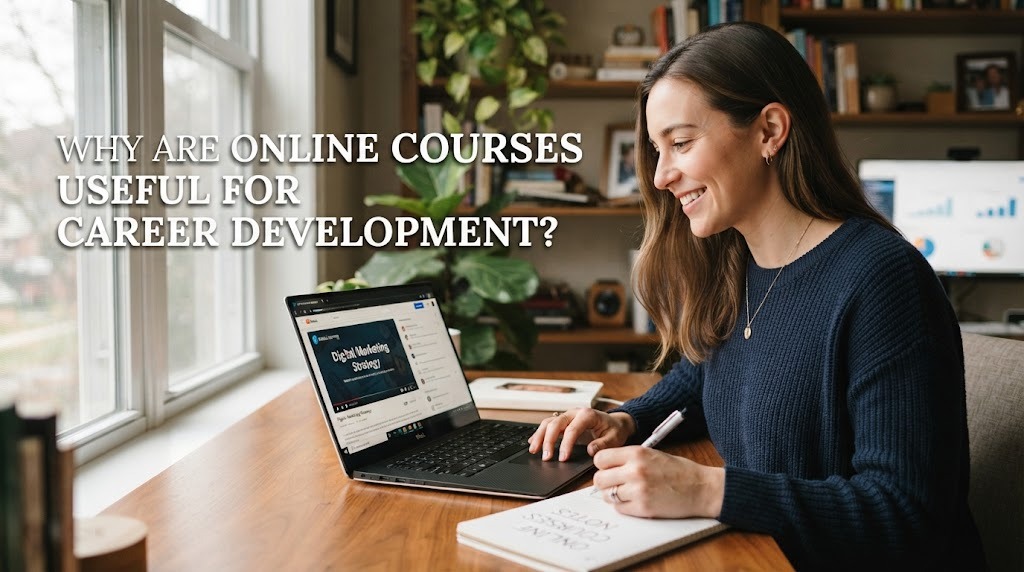
Career development requires continuous learning because the world of work is constantly changing. New technologies, business models, and professional requirements can create demand for skills that were not as important in the past. For students, fresh graduates, and working professionals, online courses provide a practical way to learn new knowledge without completely leaving their existing activities. This makes online learning an increasingly useful part of modern career planning.
Online courses can also help people identify the skills they need for their desired career. Instead of relying only on formal education, learners can take additional courses that match specific professional goals. They can study technical skills, communication, leadership, digital tools, or other areas that support their career path. With clear goals and consistent practice, online learning can become an important part of long term professional growth.
DEVELOPING JOB RELATED SKILLS
One of the main benefits of online courses is the opportunity to develop skills that are relevant to specific jobs. Learners can choose courses based on the requirements of their target position or industry. For example, someone interested in digital marketing can study content creation, search engine optimization, data analysis, or social media strategy. This focused approach allows learners to build abilities that can be applied in practical situations.
Online courses can also help learners improve skills they already have. A person may understand the basic concepts of a subject but need additional practice to reach a higher level. By taking an appropriate course, they can review important concepts and learn more advanced techniques. Continuous improvement can make their professional skills more relevant and competitive.
SUPPORTING CAREER CHANGES
Career changes can be challenging because people often need knowledge that is different from their previous experience. Online courses can provide a flexible way to explore a new field before making a major career decision. Learners can study introductory subjects to understand whether a particular career matches their interests and abilities. This can reduce the risk of making a career change without sufficient preparation.
Online learning can also provide a pathway toward new skills. Someone with a background in one field may take courses related to technology, business, design, communication, or another area of interest. Although an online course alone may not qualify someone for every profession, it can provide useful foundational knowledge. Learners may then combine this knowledge with projects, practical experience, and other qualifications.
IMPROVING PROFESSIONAL COMPETENCE
Career development is not only about finding a new job. It also involves becoming more effective in a current role. Online courses can help employees improve their professional competence by introducing new methods, tools, and approaches. Learning new skills can make it easier to complete tasks efficiently and respond to changes in the workplace.
Professional competence also includes soft skills. Courses in communication, leadership, teamwork, time management, and problem solving can support better workplace performance. These abilities are valuable across many industries because employees often need to work with different people and handle changing responsibilities. Developing both technical and interpersonal skills can create a stronger professional profile.
PROVIDING FLEXIBLE LEARNING OPTIONS
Many people find it difficult to attend traditional classes because of work, study, family responsibilities, or distance. Online courses provide greater flexibility because learners can often study from different locations and choose suitable study times. This makes professional development more accessible to people with busy schedules. Learners can organize their study time around their existing responsibilities.
Flexibility also makes it easier to maintain continuous learning. Instead of waiting for a long academic program, people can choose shorter courses that address a specific skill gap. They can gradually build knowledge through several learning experiences over time. This approach can make career development more manageable and realistic.
BUILDING A PROFESSIONAL PORTFOLIO
Some online courses include projects, assignments, case studies, or practical exercises. These activities can give learners opportunities to demonstrate what they have learned. When appropriate, completed projects can become part of a professional portfolio. A portfolio can provide employers with examples of a person's practical abilities rather than relying only on educational qualifications.
A strong portfolio should focus on relevant and meaningful work. Learners can select projects that demonstrate skills related to their desired career. They should also be prepared to explain the process, challenges, and results of each project. This can make their learning experience more valuable during job applications or professional discussions.
EXPANDING PROFESSIONAL KNOWLEDGE
Online courses allow learners to explore subjects beyond their main academic background or current job responsibilities. This broader knowledge can help them understand how different areas of an organization work together. For example, a technical professional may benefit from learning basic project management or communication skills. A business professional may benefit from understanding digital tools and data analysis.
Broader knowledge can also help people identify new career opportunities. Learning about a different field may reveal interests and abilities that were previously overlooked. However, learners should avoid collecting courses without a clear purpose. Choosing subjects that support a specific career goal can make the learning process more focused and useful.
SUPPORTING LIFELONG LEARNING
Career development does not end when someone graduates or gets a job. Industries continue to change, and professionals may need to update their knowledge throughout their careers. Online courses make lifelong learning more convenient because people can return to education whenever new skills are needed. This creates opportunities for continuous professional development.
A lifelong learning mindset can also make people more adaptable. Instead of viewing new technology or changing job requirements only as challenges, learners can see them as opportunities to develop. Regular learning helps professionals stay informed and prepared. Over time, this attitude can contribute to sustainable career growth.
IMPROVING CAREER CONFIDENCE
Learning new skills can increase confidence when people face professional challenges. Understanding how to use a new tool or complete a new type of task can make employees feel more prepared. Students and fresh graduates can also gain confidence when they have practical knowledge beyond their academic studies. Confidence can make it easier to communicate abilities during interviews and professional discussions.
However, confidence should be supported by real competence and practice. Simply completing a course does not mean that a person has mastered a skill. Learners should apply what they study through projects, exercises, internships, or workplace activities whenever possible. Combining knowledge with practice creates a stronger foundation for professional growth.
CONCLUSION
Online courses are useful for career development because they provide opportunities to develop job related skills, improve professional competence, explore career changes, and support lifelong learning. Their flexibility makes it easier for students and professionals to continue learning while managing other responsibilities. Online courses can also contribute to professional portfolios when they include relevant practical projects.
However, learners should choose courses carefully and connect their learning activities with clear career goals. Completing many courses without applying the knowledge may provide limited value. The most effective approach is to select relevant learning opportunities, practice the skills, evaluate progress, and gradually build experience. In this way, online courses can become a practical tool for long term career development.
Recent Posts

Bagaimana Sistem SKS pada Program Kuliah... 22.11.2026/35 View

How Does Technology Make Daily Evaluation... 21.11.2026/69 View

Apa Strategi Menghadapi Kesenjangan antara Kompetensi... 21.11.2026/70 View

Mengapa Inventaris Aset Penting bagi Kelancaran... 21.11.2026/67 View

When Should Musicians Join a Record... 21.11.2026/69 View
