

Why Are Presentation Techniques Important in Education?
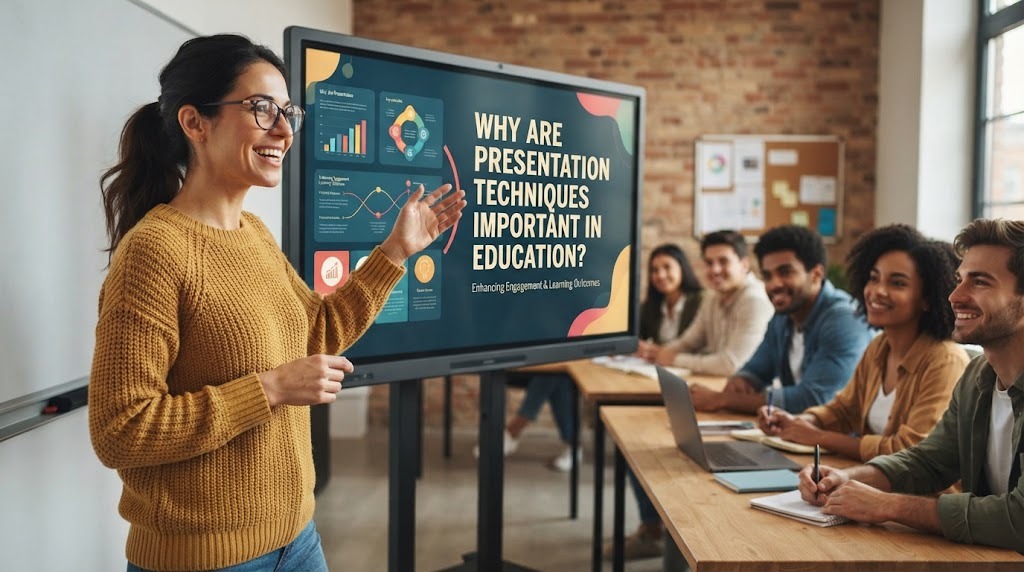
Presentations are an important part of education because they help students communicate ideas, explain information, and build confidence. In classrooms, students are often asked to present projects, research results, group assignments, or personal opinions. Good presentation techniques can make these activities more effective and help students deliver information clearly.
Presentation skills are also useful beyond the classroom. Students who learn how to organize ideas, speak confidently, use visual materials, and communicate with an audience can become better prepared for higher education and the workplace. For this reason, presentation techniques should be considered an important part of the learning process.
IMPROVING COMMUNICATION SKILLS
One of the main reasons presentation techniques are important in education is that they improve students' communication skills. Presenting requires students to explain ideas in a clear and organized way. They need to choose appropriate words, arrange information logically, and adjust their explanations according to the audience. These abilities can help students communicate more effectively in academic and professional situations.
Presentation activities also encourage students to practice speaking in front of other people. Regular practice can help students become more comfortable expressing their opinions and explaining complex information. Over time, students may develop better verbal communication, listening, and interpersonal skills. These skills are valuable because effective communication is needed in almost every area of life.
BUILDING STUDENT CONFIDENCE
Presentation techniques can also help students develop confidence. Speaking in front of classmates may initially feel uncomfortable, especially for students who are shy or afraid of making mistakes. With regular practice and supportive feedback, students can gradually become more comfortable speaking in public. This experience can reduce anxiety and encourage students to trust their own abilities.
Confidence does not mean speaking perfectly without mistakes. Instead, it involves being willing to communicate ideas even when challenges occur. Students who frequently participate in presentations can learn how to manage nervousness, maintain eye contact, and speak with a stronger voice. These experiences can prepare them for interviews, academic discussions, meetings, and other situations that require confident communication.
DEVELOPING CRITICAL THINKING
Presentation activities can encourage students to develop critical thinking skills. Before giving a presentation, students usually need to collect information, identify reliable sources, and decide which ideas are most relevant to their topic. They also need to understand the information instead of simply memorizing it. This process encourages students to analyze information and make thoughtful decisions.
When preparing a presentation, students may also need to anticipate questions from their audience. They have to consider different perspectives and prepare logical explanations for their arguments. Answering questions after a presentation can further develop their ability to think quickly and respond appropriately. Therefore, presentation techniques can support deeper learning rather than focusing only on memorizing academic material.
SUPPORTING EFFECTIVE LEARNING
Presentations can make learning more active and engaging. Instead of only listening to a teacher, students have opportunities to research topics, organize information, and explain what they have learned. Teaching a topic to others can also help students understand the material more deeply. This makes presentations a useful learning method in different educational environments.
Students can also learn from their classmates during presentations. Each student may explain a topic from a different perspective or use different examples to make the information easier to understand. Classroom presentations can therefore create opportunities for knowledge sharing and discussion. When combined with appropriate teacher guidance, presentation activities can make the learning process more interactive.
ENCOURAGING CREATIVITY
Presentation techniques can encourage students to use creativity when communicating information. Students can choose appropriate visual materials, examples, storytelling methods, or demonstrations to make their presentations more interesting. Creative approaches can help an audience understand and remember important information. However, creativity should always support the main message rather than distract from it.
Students can also experiment with different presentation formats depending on their topic and audience. They might use slides, charts, images, short videos, demonstrations, or other educational materials. Choosing the right format requires students to think about how information can be communicated most effectively. This process can strengthen both their creative thinking and communication abilities.
PREPARING STUDENTS FOR FUTURE CAREERS
Presentation techniques are highly relevant to students' future careers. Many jobs require employees to explain ideas, report results, participate in meetings, or communicate with clients and colleagues. Employees who can present information clearly may find it easier to contribute to professional discussions. Developing these skills during education gives students an advantage when they enter the workplace.
Presentation practice can also prepare students for job interviews and professional situations. Students learn how to organize their thoughts, speak clearly, maintain professional body language, and respond to questions. These abilities can make them more prepared for situations that require effective communication. Therefore, presentation skills are not only useful for academic assignments but also for long-term career development.
IMPROVING TEAMWORK AND COLLABORATION
Presentation assignments are often completed in groups, making them useful for developing teamwork skills. Students need to divide responsibilities, discuss ideas, organize materials, and coordinate their presentation. These activities teach students how to work with people who may have different opinions and working styles. Successful group presentations require cooperation and clear communication among team members.
Group presentations can also teach students how to manage responsibilities. Each member needs to understand their role and contribute to the final result. If problems occur, students have to communicate and find solutions together. These experiences can help students develop collaboration skills that are important in both academic and professional environments.
CONCLUSION
Presentation techniques are important in education because they provide students with practical communication and learning skills. Through presentations, students can improve their communication abilities, build confidence, develop critical thinking, and express ideas more creatively. Presentation activities can also make learning more active because students participate directly in researching and explaining information.
In addition, presentation skills prepare students for future academic and professional challenges. The ability to communicate ideas clearly, work with others, respond to questions, and speak confidently can be valuable in many situations. For these reasons, teaching effective presentation techniques should be an important part of modern education.
Recent Posts

Bagaimana Sistem SKS pada Program Kuliah... 22.11.2026/37 View

How Does Technology Make Daily Evaluation... 21.11.2026/70 View

Apa Strategi Menghadapi Kesenjangan antara Kompetensi... 21.11.2026/73 View

Mengapa Inventaris Aset Penting bagi Kelancaran... 21.11.2026/68 View

When Should Musicians Join a Record... 21.11.2026/71 View
