

Why Are Quran Recitation Skills Important in the MAPSI Competition?
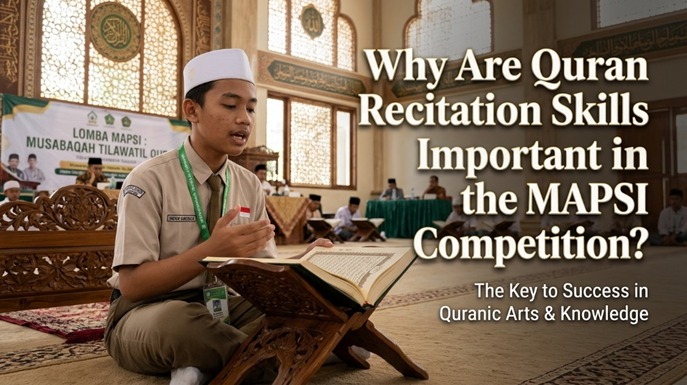
The MAPSI Competition (Islamic Education and Arts Competition) is an educational event that encourages students to develop their religious knowledge, talents, and creativity. One important area featured in MAPSI is Quranic recitation, which allows students to demonstrate their ability to read the Holy Quran correctly, fluently, and beautifully.
Quran recitation is more than simply reading Arabic words aloud. Students need to understand the rules of Tajweed, pronounce Arabic letters correctly, maintain fluency, and develop confidence when reciting in front of judges and audiences. These abilities are important because they help participants demonstrate respect for the Quran while meeting the technical requirements of the competition.
Developing Quran recitation skills also provides benefits beyond competition achievements. Students can strengthen their religious understanding, improve their discipline, and build positive habits in their daily lives. So, why are Quran recitation skills important in the MAPSI Competition? Here are several reasons.
1. ENSURING CORRECT QURANIC PRONUNCIATION
Correct pronunciation is one of the most important aspects of Quranic recitation. Students must pronounce Arabic letters accurately according to their articulation points, known as Makharijul Huruf. Incorrect pronunciation can change the sound and, in some cases, the meaning of Quranic words.
In MAPSI competitions, participants are generally expected to demonstrate accurate pronunciation throughout their recitation. They need to recognize the differences between Arabic letters that have similar sounds and practice producing them correctly. Mastering proper pronunciation helps students deliver accurate recitations and demonstrate their understanding of basic Quranic reading techniques.
2. MASTERING TAJWEED RULES
Tajweed is the set of rules that guides Muslims in reading the Quran correctly. These rules include characteristics of Arabic letters, elongation, nasal sounds, and other pronunciation requirements.
Students participating in Quranic recitation competitions need to understand and apply Tajweed consistently. For example, they should recognize rules such as Idgham, Ikhfa, Iqlab, and Izhar, as well as the appropriate length of Mad. Judges may consider the accuracy of these rules when evaluating participants. Therefore, Tajweed mastery is an essential skill for achieving a technically correct Quranic recitation.
3. IMPROVING RECITATION FLUENCY
Fluency is another important factor in Quranic recitation. Students should be able to read the assigned verses smoothly without excessive pauses, repeated mistakes, or unnecessary interruptions.
Developing fluency requires regular practice and a strong understanding of the verses being recited. Students should practice reading at an appropriate pace rather than rushing through the passages. Consistent and fluent recitation demonstrates preparation, familiarity with the Quranic text, and the ability to maintain concentration throughout the performance.
4. DEVELOPING A BEAUTIFUL AND CONTROLLED VOICE
A beautiful voice can make Quranic recitation more pleasant and meaningful to hear. However, students should understand that vocal beauty must not take priority over correct pronunciation and Tajweed.
In MAPSI competitions, participants may be assessed on aspects such as vocal clarity, rhythm, tone, and voice control, depending on the official judging criteria. Students should learn to manage their breathing and maintain a stable voice throughout the recitation. Good vocal control helps create a clear and comfortable recitation while maintaining the correct rules of Quranic reading.
5. BUILDING SELF-CONFIDENCE DURING COMPETITIONS
Quranic recitation competitions require students to perform in front of judges, teachers, and other participants. This situation can make some students feel nervous, especially when they are participating for the first time.
Regular practice helps students become more familiar with performing in public. They can also develop confidence by practicing in front of family members, classmates, or teachers before the actual event. Self-confidence allows participants to concentrate on their recitation, manage nervousness, and demonstrate their abilities more effectively.
6. STRENGTHENING MEMORY AND CONCENTRATION
Quranic recitation often requires students to remember specific verses and maintain the correct sequence throughout their performance. This process can strengthen their memory and concentration through repeated learning and practice.
Students who regularly practice Quranic recitation become more familiar with the structure and pronunciation of the verses they study. They also learn to maintain focus and recognize their mistakes during reading. Memory and concentration skills developed through this process can support other academic activities, including studying, reading, and completing school assignments.
7. DEVELOPING DISCIPLINE THROUGH REGULAR PRACTICE
Achieving good Quranic recitation skills requires commitment and consistent effort. Students need to dedicate time to studying Tajweed, practicing pronunciation, memorizing verses when required, and correcting mistakes.
Teachers can help participants establish structured practice schedules based on their individual abilities. Students should also review previous lessons regularly to maintain their progress. Discipline and consistency are essential because Quranic recitation skills improve gradually through continuous learning rather than instant results.
8. STRENGTHENING UNDERSTANDING OF ISLAMIC TEACHINGS
Learning to recite the Quran correctly can encourage students to become more interested in understanding its messages. Although Quranic recitation and Quranic interpretation are different areas of study, they can complement each other in Islamic education.
Students who become familiar with Quranic verses may develop greater motivation to learn about their meanings through translations, explanations, and guidance from qualified teachers. This knowledge can help them understand the values contained in the Quran, including honesty, patience, kindness, and responsibility. Religious understanding makes Quranic learning more meaningful beyond the technical aspects of recitation.
9. SUPPORTING POSITIVE ISLAMIC CHARACTER DEVELOPMENT
Quranic learning can also support the development of positive Islamic character. Students are encouraged to practice patience, humility, respect, and responsibility throughout their learning process.
These values can be reflected in how students treat their teachers, communicate with friends, and participate in school activities. They also learn to appreciate the learning process instead of focusing entirely on winning awards. Good character and religious awareness are important outcomes that make Quranic recitation valuable for students' personal development.
10. INCREASING STUDENTS' OPPORTUNITIES TO ACHIEVE COMPETITION RESULTS
Strong Quranic recitation skills can help students perform more effectively in MAPSI competitions. Participants who understand the technical requirements and practice consistently are generally better prepared to meet the judges' expectations.
However, students should remember that competition results depend on several factors, including the official assessment criteria, the performance of other participants, and the applicable competition regulations. Winning cannot be guaranteed simply by having a beautiful voice or memorizing many verses. Accurate recitation, strong preparation, and consistent performance provide a better foundation for achieving positive results.
TIPS FOR IMPROVING QURAN RECITATION SKILLS BEFORE MAPSI
Students who want to perform well in the MAPSI Quranic recitation category should prepare through structured learning and regular practice. They should focus on improving technical accuracy while developing confidence and maintaining proper recitation habits.
Here are several practical tips:
- Study Tajweed Regularly: Learn the rules of Quranic recitation and practice applying them correctly.
- Improve Makharijul Huruf: Practice pronouncing Arabic letters according to their correct articulation points.
- Listen to Qualified Qaris: Use reliable Quranic recitations as learning references.
- Practice Every Day: Set aside time for consistent reading and correction.
- Ask Teachers for Guidance: Seek feedback from qualified Quran teachers or experienced mentors.
- Record Your Recitation: Listen to recordings of your practice to identify pronunciation and fluency problems.
- Control Your Breathing: Practice appropriate breathing techniques to maintain a stable voice.
- Understand the Competition Rules: Study the official assessment criteria before participating.
By applying these methods, students can gradually improve their Quranic recitation abilities and become better prepared for the MAPSI Competition.
CONCLUSION
Quran recitation skills are important in the MAPSI Competition because they help students demonstrate accurate pronunciation, Tajweed mastery, fluency, and proper vocal control. These abilities are essential for delivering a technically correct and meaningful Quranic recitation.
Beyond competition performance, learning to recite the Quran also supports memory, concentration, discipline, confidence, and Islamic character development. Students can gain valuable experiences that benefit their religious learning and everyday lives.
Ultimately, the purpose of developing Quranic recitation skills should not be limited to winning awards. Understanding, respecting, and reading the Quran correctly are more meaningful goals that students can continue to practice throughout their lives. With consistent training and guidance from qualified teachers, students can improve their abilities and participate in MAPSI with greater confidence.
Recent Posts

How Does Technology Make Daily Evaluation... 21.11.2026/62 View

Apa Strategi Menghadapi Kesenjangan antara Kompetensi... 21.11.2026/63 View

Mengapa Inventaris Aset Penting bagi Kelancaran... 21.11.2026/59 View

When Should Musicians Join a Record... 21.11.2026/58 View

Daily Evaluation or Daily Planning Which... 21.11.2026/66 View
