

Why Are Regional Languages Important for Cultural Identity in Indonesia?
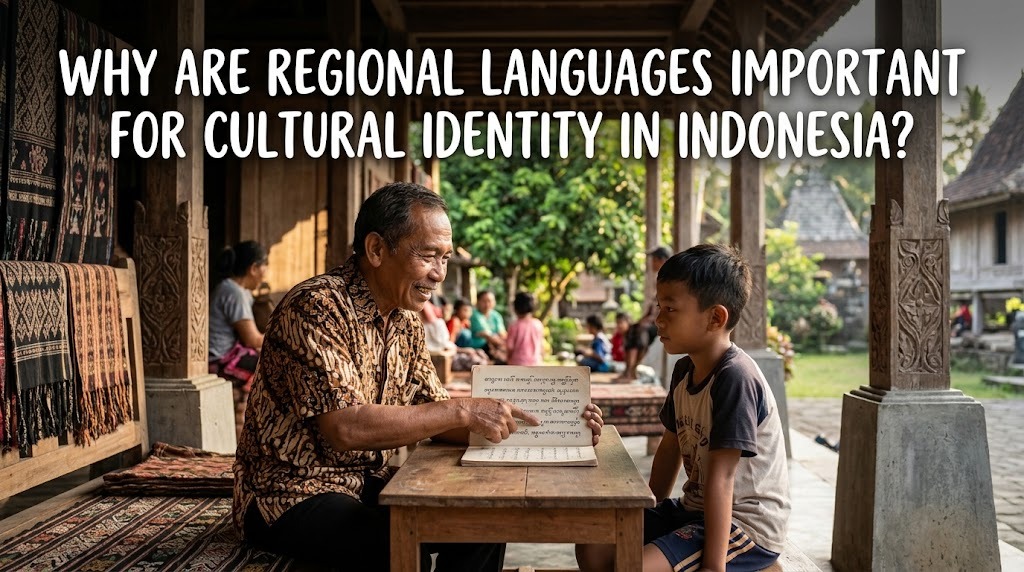
Indonesia is known for its rich cultural diversity, which includes hundreds of regional languages spoken across its islands. These languages are more than tools for communication because they carry local history, traditional knowledge, cultural values, and community identity. From everyday conversations to traditional ceremonies, regional languages help people maintain connections with their ancestors and understand their cultural roots. However, changes in communication habits and modern lifestyles have reduced the use of some regional languages, particularly among younger generations. Understanding why regional languages are important for cultural identity can encourage communities to preserve their linguistic heritage while adapting to modern life.
REGIONAL LANGUAGES REPRESENT CULTURAL IDENTITY
Regional languages are an important part of how communities express their identity. The words, expressions, and ways of speaking used in a language often reflect the experiences and values of the people who speak it. For example, Javanese has different speech levels that can express politeness and social relationships, while many other regional languages also contain distinctive expressions connected to local customs. These linguistic features help communities communicate not only information but also social meanings.
Speaking a regional language can strengthen a person's connection to their hometown, family, and cultural background. It allows people to participate more naturally in conversations with older relatives and community members who use the language in everyday life. Regional languages can also help people recognize shared traditions and maintain a sense of belonging when living far from their place of origin. Language is therefore an important marker of cultural identity, connecting individuals with the history and experiences of their communities. Preserving regional languages helps ensure that these cultural connections remain meaningful for future generations.
REGIONAL LANGUAGES PRESERVE LOCAL HISTORY AND TRADITIONS
Many regional languages contain stories, legends, songs, proverbs, and oral histories that have been passed down through generations. These forms of expression provide information about how communities understand their environment, explain historical events, and interpret important experiences. Traditional stories may describe the origins of a village, the meaning of a local ceremony, or the values that guide relationships between people. When these stories are told in their original languages, they often preserve meanings and expressions that are difficult to translate completely.
Regional languages are also closely connected to traditional ceremonies and cultural practices. In various Indonesian communities, local languages are used during weddings, customary meetings, traditional performances, and religious or community celebrations. Certain expressions may have specific meanings that are understood most clearly by people familiar with the local culture. Preserving the language helps protect the knowledge and meanings behind these traditions. Recording oral histories, teaching traditional songs, and encouraging older generations to share their experiences can help communities maintain this valuable cultural heritage.
REGIONAL LANGUAGES STRENGTHEN FAMILY AND COMMUNITY RELATIONSHIPS
Language plays an important role in building relationships between family members and members of a community. In many Indonesian households, regional languages are used to communicate affection, show respect, share advice, and express emotions. Parents and grandparents can use familiar local expressions to teach children about family values, responsibility, and appropriate behavior. These conversations help children learn both the language and the cultural expectations associated with it.
Regional languages also support communication between generations. Older people may be more comfortable expressing personal experiences and traditional knowledge in their mother tongue, while younger family members may be more familiar with Indonesian. When families make an effort to use both languages, they can maintain mutual understanding while helping children develop regional-language skills. Intergenerational communication is essential for passing cultural knowledge from one generation to another. Regular conversations, family storytelling, and participation in community activities can help strengthen relationships while keeping regional languages alive.
REGIONAL LANGUAGES REFLECT LOCAL VALUES AND WAYS OF THINKING
Every language develops within a particular social and cultural environment. Its vocabulary and expressions can reflect how a community understands relationships, nature, work, social responsibilities, and everyday life. Some regional languages contain specialized terms for local plants, traditional foods, agricultural practices, or environmental conditions. These words can represent knowledge developed through generations of interaction with the surrounding environment.
Regional languages may also express values such as cooperation, respect for elders, hospitality, and responsibility toward the community. For example, certain forms of address and expressions of politeness communicate how speakers recognize age, social relationships, or levels of formality. These meanings vary across languages and should be understood within their specific cultural contexts. Linguistic diversity helps preserve different ways of describing and understanding the world. When a regional language disappears, some expressions and traditional knowledge may become difficult to recover, especially if they were never documented in other forms.
REGIONAL LANGUAGES SUPPORT CULTURAL DIVERSITY AND TOURISM
Indonesia's cultural diversity is reflected in its many languages, traditional performances, local literature, and customary practices. Regional languages contribute to this diversity by giving each community distinctive ways to express its history and traditions. They can also help visitors understand the cultural significance of local places, festivals, traditional arts, and community stories. Learning a few local greetings or expressions can make interactions between visitors and residents more meaningful.
Cultural tourism can create opportunities to introduce regional languages to wider audiences. Tour guides, museums, cultural centers, and local performers can explain traditional expressions, tell stories in local languages, and provide translations for visitors. These activities can increase public appreciation of local heritage and create incentives for communities to maintain their traditions. However, tourism should respect the needs and preferences of local communities rather than treating their languages only as attractions. Responsible cultural tourism can support language awareness while helping communities maintain control over their heritage. Regional languages become more visible when cultural experiences are developed with meaningful community participation.
HOW CAN REGIONAL LANGUAGES BE PRESERVED FOR FUTURE GENERATIONS?
Preserving regional languages requires cooperation among families, schools, communities, cultural organizations, and government institutions. Families can introduce children to their regional languages through daily conversations, traditional stories, songs, and interactions with grandparents. Schools can support these efforts by providing appropriate language lessons, cultural projects, and opportunities for students to practice local languages. These activities help young people understand that regional languages are valuable parts of their identity rather than outdated forms of communication.
Digital technology can also support preservation efforts. Young people can create videos, podcasts, digital dictionaries, online stories, and educational posts in their regional languages. Researchers and community members can record oral histories and document vocabulary, pronunciation, and traditional expressions before they are forgotten. At the same time, communities should encourage the regular use of regional languages in everyday life instead of relying entirely on written records or special cultural events. The most effective preservation efforts combine documentation, education, and active communication. By using regional languages in both traditional and modern settings, Indonesians can protect their cultural heritage while remaining connected to the wider world.
CONCLUSION
Regional languages are important for cultural identity in Indonesia because they preserve local history, traditional knowledge, community values, and relationships between generations. They help people understand their cultural roots while maintaining distinctive ways of expressing ideas and experiences. Regional languages also contribute to Indonesia's linguistic diversity and can support cultural education and responsible tourism. However, these benefits can be weakened when languages are no longer passed down or used regularly. Preserving regional languages requires active participation from families, schools, communities, and younger generations. By speaking local languages, documenting traditional knowledge, and using digital platforms creatively, Indonesians can ensure that their linguistic and cultural heritage remains meaningful for the future.
Recent Posts

Bagaimana Sistem SKS pada Program Kuliah... 22.11.2026/48 View

How Does Technology Make Daily Evaluation... 21.11.2026/76 View

Apa Strategi Menghadapi Kesenjangan antara Kompetensi... 21.11.2026/78 View

Mengapa Inventaris Aset Penting bagi Kelancaran... 21.11.2026/73 View

When Should Musicians Join a Record... 21.11.2026/78 View
