

Why Are Social Volunteers Needed to Help Communities in Need?
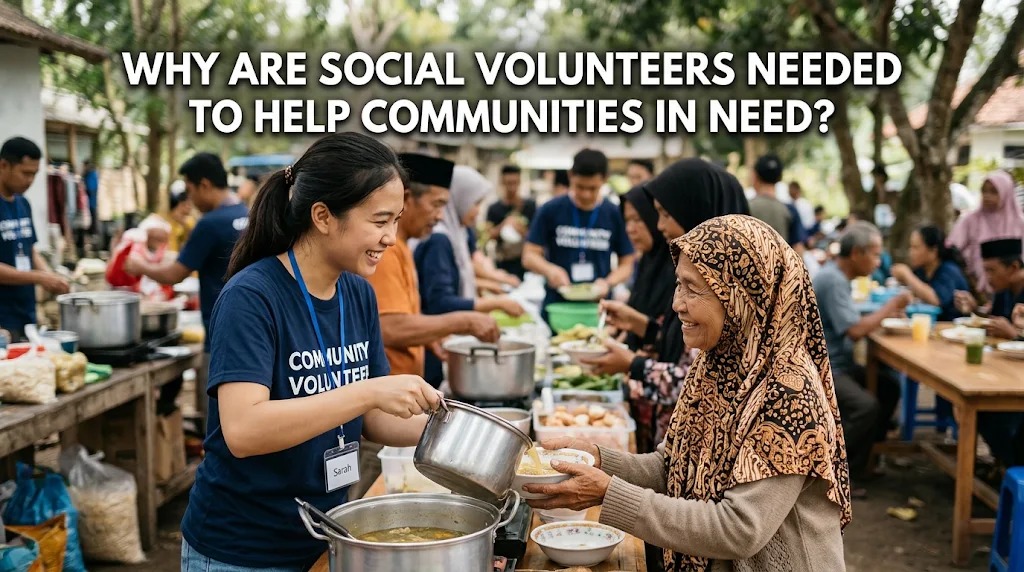
Social volunteers play an important role in helping communities facing poverty, natural disasters, limited access to education, and other social challenges. They offer their time, energy, knowledge, and skills to support people who need assistance. Their contributions can take many forms, such as distributing food, teaching children, supporting elderly people, cleaning public spaces, and helping disaster victims. These activities can make a meaningful difference, especially in communities with limited resources.
The presence of social volunteers is important because not every community has enough resources or support to overcome its problems independently. Volunteers can work together with local organizations, government institutions, and community members to provide practical assistance. Beyond offering direct help, they can also encourage cooperation, strengthen social relationships, and inspire more people to care about others. Understanding their role helps explain why volunteering is an important part of building a supportive and inclusive society.
PROVIDING HELP TO PEOPLE IN NEED
One of the main reasons social volunteers are needed is their ability to provide direct assistance to people experiencing difficult situations. Some families struggle to afford basic necessities such as food, clothing, clean water, and suitable housing. Volunteers can help by collecting donations, preparing essential supplies, and distributing them to people who need support. They may also assist elderly individuals who live alone or families facing unexpected financial difficulties. Although volunteer activities cannot solve every social problem, they can reduce immediate hardship and help people meet essential needs.
Social volunteers are also valuable during emergencies and natural disasters. Floods, earthquakes, landslides, and other disasters can force families to leave their homes and lose access to basic services. Volunteers can support emergency response efforts by distributing food, preparing temporary shelters, organizing donated supplies, and helping affected communities recover. Their involvement can make assistance reach more people, especially when local resources are limited. However, volunteers should coordinate with emergency services and trained professionals to ensure that their activities are safe and appropriate.
IMPROVING ACCESS TO EDUCATION AND LEARNING
Education is an important factor in improving people's quality of life, but not every child has equal access to learning opportunities. Some children live in areas with limited educational facilities, learning materials, or qualified teachers. Social volunteers can help by organizing free tutoring sessions, reading activities, and basic learning programs. They can also provide school supplies and encourage children to continue their education. These efforts can support students who need additional guidance outside their regular school activities.
Volunteers can also help improve learning opportunities for adults and other community members. For example, they may organize basic literacy classes, digital skills training, or workshops about financial management. These programs can help people develop useful abilities for daily life and future employment. Volunteers with relevant knowledge can share practical information in ways that are easy to understand. Through educational activities, social volunteering can support personal development and create better opportunities for communities.
STRENGTHENING SOCIAL SOLIDARITY AND COMMUNITY RELATIONSHIPS
Social volunteers help build stronger relationships among people from different backgrounds. When individuals work together to support others, they learn to understand different experiences and develop greater empathy. Volunteering encourages cooperation because participants must communicate, share responsibilities, and work toward common goals. These interactions can reduce social distance and create a stronger sense of belonging. As a result, communities can become more supportive and willing to help one another.
Volunteer activities can also inspire more people to participate in community development. A neighborhood clean-up, food donation program, or fundraising event may encourage residents to contribute their time and resources. When people see the positive results of collective action, they may become more interested in taking part in other social initiatives. This involvement helps create a culture of mutual assistance rather than depending entirely on outside support. Strong social relationships are valuable because they help communities respond more effectively to challenges.
SUPPORTING HEALTH AND COMMUNITY WELL-BEING
Social volunteers can contribute to public health by helping communities understand the importance of healthy lifestyles and disease prevention. They may support health campaigns, distribute educational materials, organize community exercise activities, or help residents access available health services. In some programs, volunteers also assist health professionals with administrative tasks and community outreach. These activities can improve public awareness of hygiene, nutrition, sanitation, and preventive healthcare. However, medical examinations, diagnoses, and treatments must be handled by qualified healthcare professionals.
Volunteers can also provide social and emotional support to people experiencing loneliness, isolation, or difficult life circumstances. Spending time with elderly people, visiting individuals with limited mobility, and supporting community activities can help people feel included and valued. Such interactions may improve social connections and encourage individuals to seek help when they need it. Volunteers should respect personal boundaries and protect the privacy of the people they support. When necessary, they should refer individuals to trained professionals who can provide more specialized assistance.
ENCOURAGING COMMUNITY DEVELOPMENT AND POSITIVE CHANGE
Social volunteers are needed because they can support community development through activities that address local problems. Instead of focusing only on short-term assistance, volunteers can participate in programs that help residents develop long-term skills and independence. Examples include environmental education, waste management campaigns, small business training, and community empowerment activities. These programs can encourage people to use available resources more effectively. When residents are actively involved, they can become part of the solution to problems affecting their own environment.
Volunteering can also connect communities with organizations and institutions that have additional resources or expertise. Through cooperation, local residents may gain access to educational programs, social services, funding opportunities, and professional guidance. Volunteers can help communicate community needs and support the implementation of suitable programs. To create lasting results, activities should be planned according to local priorities and evaluated regularly. This approach makes social volunteering more meaningful because it supports communities in building their own capacity for the future.
CONCLUSION
Social volunteers are needed because they provide practical assistance, improve access to education, strengthen social relationships, support community well-being, and encourage long-term development. Their contributions can help individuals and families overcome difficult situations while creating stronger connections among community members. Although volunteers cannot replace professional workers or public services, their involvement can complement existing support systems. Successful volunteer activities require responsibility, cooperation, and an understanding of the community's actual needs. With consistent participation and proper planning, social volunteers can help create a more caring, inclusive, and resilient society.
Recent Posts

Bagaimana Sistem SKS pada Program Kuliah... 22.11.2026/27 View

How Does Technology Make Daily Evaluation... 21.11.2026/65 View

Apa Strategi Menghadapi Kesenjangan antara Kompetensi... 21.11.2026/65 View

Mengapa Inventaris Aset Penting bagi Kelancaran... 21.11.2026/62 View

When Should Musicians Join a Record... 21.11.2026/63 View
