

Why Are Traditional Ceremonies Important in Indonesian Communities?
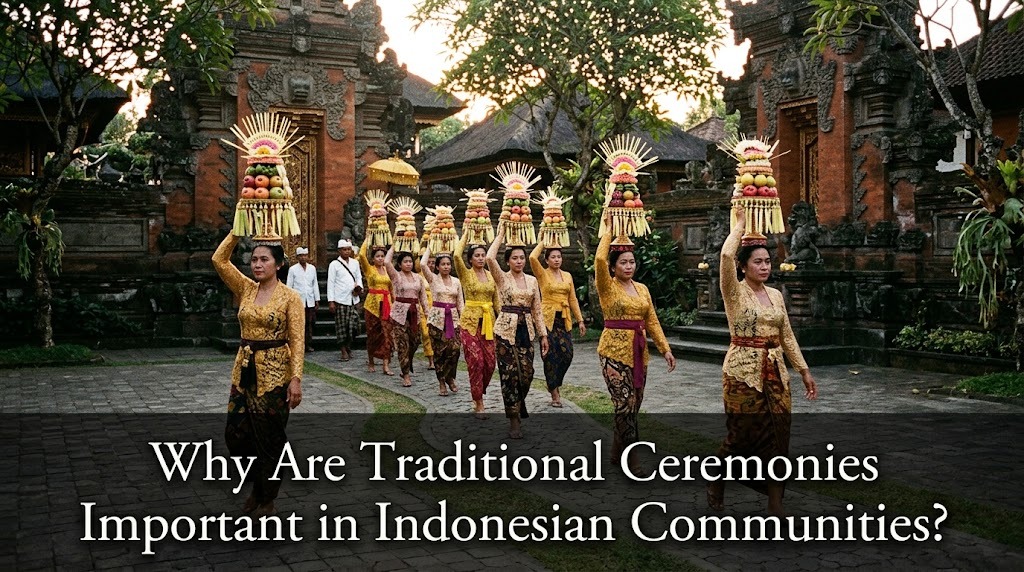
Traditional ceremonies are an important part of Indonesian culture. Across the country, different communities practice ceremonies to celebrate important life events, express gratitude, and maintain connections with their ancestors. These traditions reflect local beliefs, values, and ways of life. Although Indonesia continues to develop in the modern era, traditional ceremonies remain meaningful to many communities. They help preserve cultural identity and strengthen relationships between generations.
PRESERVING CULTURAL IDENTITY
Traditional ceremonies help Indonesian communities preserve their cultural identity. Each region has unique customs, clothing, music, dances, and rituals that reflect its history and beliefs. For example, the Ngaben ceremony in Bali is a Hindu cremation ritual, while the Rambu Solo’ ceremony among the Toraja people in South Sulawesi is associated with funeral traditions. These ceremonies demonstrate the diversity of Indonesian culture. By continuing these practices, communities keep their traditions alive and pass them on to younger generations.
STRENGTHENING COMMUNITY RELATIONSHIPS
Traditional ceremonies bring families, neighbors, and community members together. People often work together to prepare food, decorate locations, organize activities, and welcome guests. This cooperation encourages mutual assistance, commonly known as gotong royong. Ceremonies also create opportunities for people to reconnect with relatives and neighbors they may not see regularly. As a result, these events can strengthen solidarity and create a stronger sense of belonging.
TEACHING VALUES TO YOUNGER GENERATIONS
Traditional ceremonies provide opportunities for young people to learn about their community's values and customs. Through participation, they can understand the importance of respect, cooperation, responsibility, and gratitude. Elders often explain the meanings behind particular rituals, helping younger generations understand their cultural background. These experiences can make cultural learning more meaningful than simply reading about traditions in books. They also encourage young people to appreciate and respect the diversity of Indonesian society.
EXPRESSING GRATITUDE AND SPIRITUAL BELIEFS
Many traditional ceremonies express gratitude for blessings, successful harvests, important life events, or the well-being of a community. Some ceremonies are connected to religious beliefs, while others reflect local customs and relationships with nature. For example, the Seren Taun tradition among Sundanese communities is associated with gratitude for the harvest and agricultural life. The meaning and practices of each ceremony vary according to local traditions and beliefs. These events allow communities to express their hopes, reflect on their lives, and maintain practices that hold spiritual or cultural significance.
SUPPORTING LOCAL ECONOMIES AND CULTURAL TOURISM
Traditional ceremonies can also support local economies. Visitors may travel to experience cultural events, creating opportunities for local guides, food sellers, craft makers, performers, and small businesses. Traditional clothing, handicrafts, music, and local dishes can receive greater attention through these celebrations. However, cultural tourism should respect community values and avoid changing sacred practices simply to entertain visitors. With careful management, ceremonies can help communities share their heritage while supporting local livelihoods.
KEEPING TRADITIONS ALIVE IN THE MODERN ERA
Modern lifestyles and technological changes can affect how traditional ceremonies are practiced. Some communities adapt their celebrations to fit changing circumstances while retaining their essential meanings. Families may use digital communication to coordinate events or share cultural knowledge with relatives who live far away. Schools, cultural organizations, and local leaders can also help introduce traditional practices to younger people. Preserving these ceremonies does not mean rejecting modern life; it means finding ways to respect cultural heritage while allowing traditions to develop naturally.
CONCLUSION
Traditional ceremonies are important in Indonesian communities because they preserve cultural identity, strengthen social relationships, teach values, and express gratitude and spiritual beliefs. They can also support local economies and introduce cultural heritage to wider audiences. Each ceremony has its own meaning and deserves to be understood within its cultural context. By respecting these traditions and involving younger generations, communities can help ensure that their cultural heritage continues to be valued in the future.
Recent Posts

Bagaimana Sistem SKS pada Program Kuliah... 22.11.2026/49 View

How Does Technology Make Daily Evaluation... 21.11.2026/76 View

Apa Strategi Menghadapi Kesenjangan antara Kompetensi... 21.11.2026/78 View

Mengapa Inventaris Aset Penting bagi Kelancaran... 21.11.2026/74 View

When Should Musicians Join a Record... 21.11.2026/78 View
