

Why Are Traditional Houses Important Symbols of Indonesian Culture?
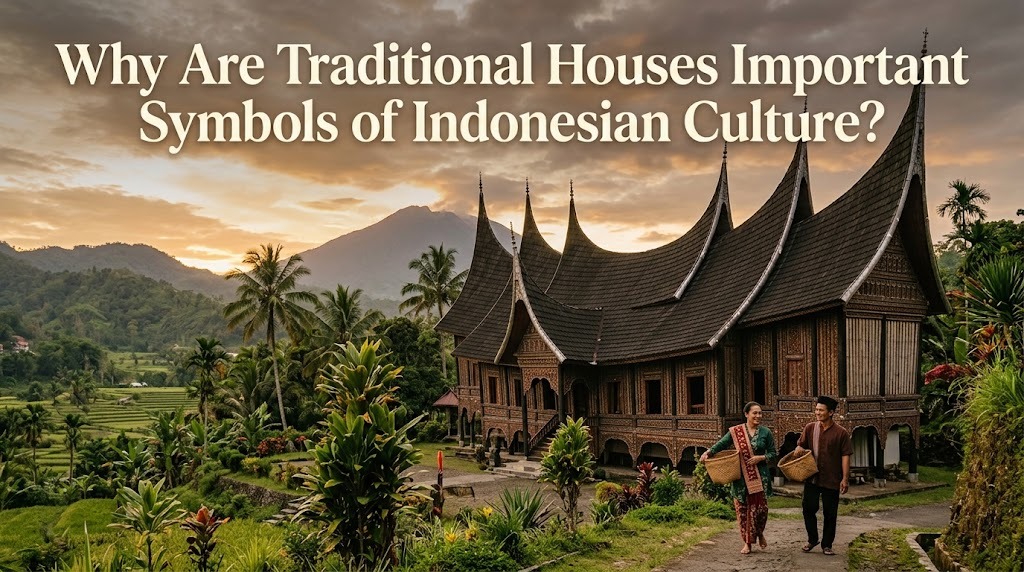
Traditional houses are important symbols of Indonesian culture because they represent the history, identity, values, and lifestyles of local communities. Indonesia has hundreds of ethnic groups, each with distinctive customs, architectural styles, and cultural traditions. These differences can be seen in traditional houses, which often reflect local beliefs, environmental conditions, and social relationships. From the towering roofs of Torajan houses to the distinctive structures of Minangkabau houses, each design tells a story about the people who built and maintained it. Understanding the importance of traditional houses helps people appreciate Indonesia's cultural diversity and recognize the need to preserve this valuable heritage.
TRADITIONAL HOUSES REPRESENT INDONESIAN CULTURAL IDENTITY
Traditional houses reflect the cultural identity of the communities that build and use them. Their architectural designs, decorations, materials, and room arrangements often express local customs and values. For example, Rumah Gadang from West Sumatra is widely recognized by its distinctive curved roof and its connection with Minangkabau culture. Meanwhile, Tongkonan houses in South Sulawesi are closely associated with Torajan identity and traditional community life. These architectural differences show how each region has developed its own cultural characteristics over generations.
Traditional houses also help communities maintain a connection with their ancestors. Their designs and construction methods may preserve knowledge that has been passed down through generations. Certain spaces within a house may be used for family gatherings, traditional ceremonies, or community activities. These functions demonstrate that traditional houses are more than places to live because they can also represent collective memories and shared cultural values. By maintaining these buildings and the knowledge associated with them, communities can strengthen their cultural identity.
TRADITIONAL HOUSES REFLECT LOCAL HISTORY AND ANCESTRAL KNOWLEDGE
Traditional houses provide valuable information about how Indonesian communities lived in the past. Their structures can reveal historical building techniques, social organization, family relationships, and the influence of local beliefs. Many traditional houses were constructed using knowledge developed through generations of experience. Builders selected materials and designed structures according to the resources available in their surroundings. As a result, traditional architecture serves as evidence of the creativity and practical knowledge of earlier generations.
Some traditional houses also have important roles in preserving oral histories and ancestral traditions. In certain communities, the construction, maintenance, or use of a traditional house is connected with customary rules and ceremonies. These practices help transmit cultural knowledge from older generations to younger people. Studying traditional houses can therefore help researchers and students understand the historical development of Indonesian society. Protecting these buildings also helps preserve the stories and knowledge connected to them.
TRADITIONAL HOUSES REFLECT INDONESIA'S NATURAL ENVIRONMENT
The design of traditional houses often reflects the climate, landscape, and natural resources of the region where they are built. In some areas, houses are elevated on stilts to reduce exposure to ground moisture, improve ventilation, or address local flooding conditions. Roof shapes, wall materials, and window arrangements may also help residents respond to rainfall, heat, and humidity. Communities traditionally used locally available materials such as wood, bamboo, thatch, and other natural resources. These design choices demonstrate how local knowledge helped people adapt their homes to their surroundings.
For example, many traditional houses in parts of Kalimantan and Sumatra are built on stilts, although their exact designs and purposes vary by community. Rumah Gadang in West Sumatra features a large, distinctive roof that is a recognizable element of Minangkabau architecture. In Toraja, Tongkonan houses have prominent curved roofs and detailed decorations associated with local cultural traditions. These examples show that traditional architecture develops through a combination of environmental adaptation, cultural meaning, and practical needs. Learning about these designs can also provide useful insights into sustainable building practices, although each structure must be understood within its specific local context.
TRADITIONAL HOUSES STRENGTHEN FAMILY AND COMMUNITY RELATIONSHIPS
Traditional houses can serve as important spaces for family interaction and community activities. In many Indonesian communities, houses are not only places for individuals to rest but also locations where relatives gather, customs are practiced, and important events are celebrated. Certain traditional buildings have functions that extend beyond a single household and serve wider family groups or communities. These shared functions help maintain social connections and reinforce a sense of belonging. The specific role of a traditional house, however, differs according to the customs of each ethnic group.
Rumah Gadang, for example, has traditionally been associated with the Minangkabau matrilineal family system, in which family lineage is traced through the mother's line. Tongkonan houses are also closely connected with Torajan family identity, customary activities, and relationships among relatives. These examples demonstrate how architecture can reflect the social organization of a community. Traditional houses may provide settings for family discussions, customary ceremonies, and the transmission of cultural values. Preserving them can therefore help protect both architectural heritage and the social traditions associated with it.
TRADITIONAL HOUSES SHOW THE DIVERSITY OF INDONESIAN CULTURE
Indonesia's traditional houses demonstrate the country's rich cultural diversity. Each region has developed distinctive architectural forms influenced by its history, environment, beliefs, and community practices. Examples include Rumah Gadang from West Sumatra, Tongkonan from South Sulawesi, Joglo houses associated with Javanese architecture, and traditional Balinese houses arranged according to local spatial and cultural principles. These buildings differ in their roof shapes, construction methods, decorations, and uses. Together, they illustrate the variety of cultural expressions found across the Indonesian archipelago.
Learning about different traditional houses can encourage people to respect cultural differences. Students can discover how architecture reflects different ways of organizing families, using natural resources, and expressing artistic ideas. Cultural festivals, museums, educational programs, and visits to traditional villages can help introduce these buildings to wider audiences. Such experiences also encourage people to recognize that Indonesia's national identity includes many distinct regional traditions. Appreciating this diversity is an important step toward protecting the country's cultural heritage.
TRADITIONAL HOUSES SUPPORT EDUCATION AND CULTURAL TOURISM
Traditional houses provide valuable learning opportunities for students, researchers, and the general public. They can be studied to understand architecture, local history, traditional craftsmanship, and community customs. School visits to historical buildings or traditional villages can make cultural education more engaging and practical. Students can observe construction techniques, decorations, and building layouts while learning about the people who developed them. This direct experience helps connect historical knowledge with real examples of cultural heritage.
Traditional houses can also contribute to cultural tourism when visitors and local communities approach them responsibly. Tourists may visit traditional villages to learn about local architecture, observe cultural activities, and understand regional lifestyles. These activities can create income opportunities for local guides, craftspeople, and small businesses. However, tourism should not damage buildings, disrupt community life, or turn culturally significant spaces into attractions without appropriate permission. Community participation is essential to ensure that tourism supports preservation while respecting local values and traditions.
HOW CAN WE PRESERVE INDONESIAN TRADITIONAL HOUSES?
Preserving traditional houses requires cooperation between local communities, governments, cultural organizations, and educational institutions. Regular maintenance can help prevent structural damage caused by weather, insects, moisture, and aging materials. Restoration should respect the building's original design, traditional construction methods, and cultural significance whenever possible. Documentation through photographs, architectural drawings, interviews, and digital records can also help preserve information about buildings that may be at risk. These efforts allow future generations to learn about traditional architecture even when some structures cannot remain unchanged.
Younger generations also have an important role in protecting traditional houses. They can learn about local architecture through school projects, family stories, cultural events, and visits to traditional villages. Communities can encourage young people to learn traditional building skills from experienced craftspeople and cultural practitioners. Digital media can be used to share accurate information about traditional houses with wider audiences. Most importantly, preservation efforts should involve the people who maintain and use these buildings so that cultural heritage remains meaningful to the communities it represents.
CONCLUSION
Traditional houses are important symbols of Indonesian culture because they represent cultural identity, ancestral knowledge, local history, environmental adaptation, and community relationships. Their distinctive architectural features reveal how different communities have developed their own ways of living and expressing cultural values. Buildings such as Rumah Gadang, Tongkonan, and Joglo houses demonstrate the rich variety of architectural traditions across Indonesia.
Beyond their physical structures, traditional houses can preserve family memories, customary practices, and knowledge passed down through generations. They also provide educational opportunities and can support responsible cultural tourism. However, modernization, neglect, environmental damage, and changing lifestyles may threaten their survival. Protecting traditional houses requires active participation from communities, governments, educational institutions, and younger generations. By preserving these buildings and the cultural knowledge connected to them, Indonesia can continue to celebrate its diversity and pass its valuable heritage on to future generations.
Recent Posts

Bagaimana Sistem SKS pada Program Kuliah... 22.11.2026/48 View

How Does Technology Make Daily Evaluation... 21.11.2026/76 View

Apa Strategi Menghadapi Kesenjangan antara Kompetensi... 21.11.2026/78 View

Mengapa Inventaris Aset Penting bagi Kelancaran... 21.11.2026/73 View

When Should Musicians Join a Record... 21.11.2026/78 View
