

Why Are Verbal Reasoning Tests Commonly Used in University and Job Selection?
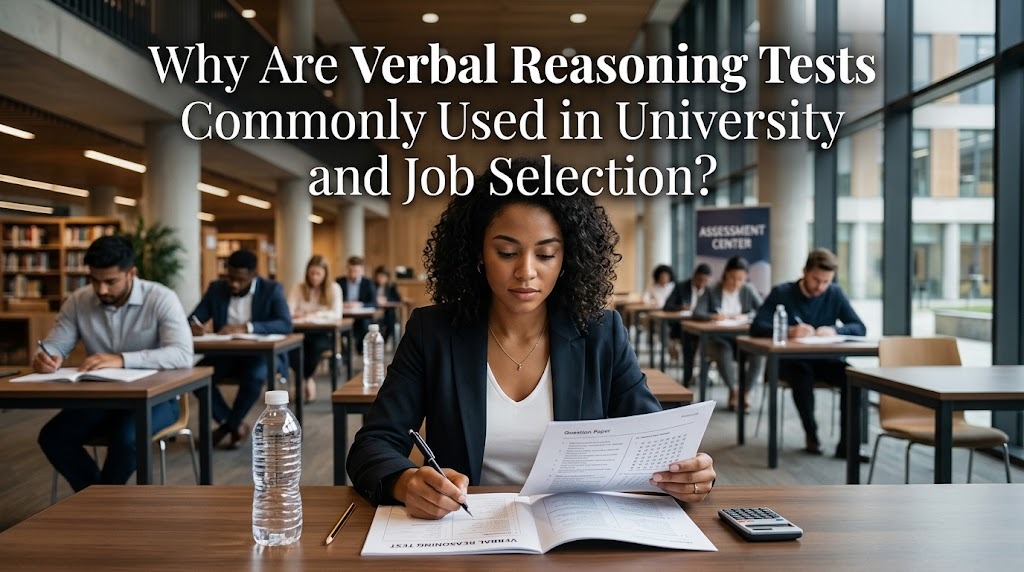
Verbal reasoning tests are commonly used in university admissions and job recruitment because they help assess how well individuals understand information, interpret language, and make logical conclusions. These tests provide insights into a person's ability to process written information rather than simply measuring how many words they know. In academic and professional environments, strong verbal reasoning skills are important for understanding instructions, analyzing problems, and communicating ideas effectively. As a result, many educational institutions and employers use verbal reasoning assessments as part of their selection processes. Understanding why these tests are widely used can help applicants prepare more effectively and recognize the skills they need to develop.
MEASURING THE ABILITY TO UNDERSTAND WRITTEN INFORMATION
One major reason verbal reasoning tests are used in selection processes is their ability to measure reading comprehension and information processing skills. Students and employees regularly encounter written instructions, reports, policies, and other documents that require careful understanding. A verbal reasoning test evaluates whether candidates can identify important details and distinguish relevant information from unnecessary statements. It may also assess their ability to recognize the main idea of a passage and understand the meaning of specific words based on context. These skills are important because misunderstanding written information can lead to mistakes in academic assignments or workplace responsibilities.
In university environments, students must understand textbooks, research articles, examination questions, and academic guidelines. Similarly, employees need to interpret emails, reports, contracts, and professional instructions. Candidates who can understand written information accurately are generally better prepared to handle these responsibilities. Therefore, verbal reasoning tests help institutions and employers identify individuals with useful reading and comprehension abilities.
ASSESSING CRITICAL THINKING AND LOGICAL REASONING
Verbal reasoning tests are also used to evaluate critical thinking and logical reasoning skills. Candidates are often required to examine statements, compare information, and determine whether a conclusion is supported by the available evidence. These questions measure more than basic reading ability because they require individuals to think carefully before selecting an answer. Candidates must avoid making assumptions that are not supported by the information provided. This makes verbal reasoning an effective way to assess how people approach information-based problems.
Critical thinking is valuable in both higher education and professional environments. University students use it when evaluating research findings, discussing academic theories, and developing arguments. In the workplace, employees may need to analyze reports, identify problems, and make decisions based on available information. Individuals with strong logical reasoning abilities can evaluate different perspectives more carefully. For this reason, verbal reasoning tests can provide useful information about a candidate's potential to handle complex tasks.
IDENTIFYING CANDIDATES WITH STRONG COMMUNICATION SKILLS
Effective communication is another important factor that makes verbal reasoning tests relevant to selection processes. Although these tests do not measure every aspect of communication, they can evaluate several related abilities, such as understanding vocabulary, interpreting sentences, and recognizing relationships between words. Candidates who understand language effectively may find it easier to explain information and respond appropriately to different situations. These abilities are useful when communicating with lecturers, classmates, colleagues, supervisors, and clients. A good understanding of language also helps reduce misunderstandings in academic and professional interactions.
In universities, students need communication skills to participate in discussions, complete presentations, and write academic assignments. In professional environments, employees must understand instructions and communicate information clearly with other team members. Verbal reasoning assessments can help identify candidates who have a strong foundation in language comprehension. However, these tests should be considered alongside other assessments because communication also involves speaking, listening, and interpersonal skills.
SUPPORTING FAIRER AND MORE CONSISTENT SELECTION PROCESSES
Universities and employers often use verbal reasoning tests because they provide a standardized method of evaluating candidates. When applicants complete the same or comparable questions under similar conditions, institutions can assess their reasoning abilities using consistent criteria. This can make the selection process more structured and easier to manage, especially when there are many applicants. Test results also provide additional information that may not be visible through academic records or resumes alone. Consequently, verbal reasoning assessments can support more informed selection decisions.
A standardized assessment can also help institutions compare candidates with different educational or professional backgrounds. For example, two applicants may have similar academic qualifications but different abilities to interpret written information. Verbal reasoning results can provide another perspective when evaluating their suitability. Nevertheless, a single test score should not determine the entire selection outcome. A balanced process should consider other factors, including experience, academic achievement, practical skills, and personal qualifications.
PREDICTING READINESS FOR ACADEMIC AND PROFESSIONAL CHALLENGES
Verbal reasoning tests can help universities and employers understand whether candidates have certain abilities needed to face academic or professional challenges. The ability to interpret information, identify patterns, and draw logical conclusions can support learning and problem-solving in different situations. Students who possess these skills may find it easier to understand complex reading materials and follow academic discussions. Employees may also benefit when they need to evaluate written instructions or respond to unfamiliar problems. These abilities do not guarantee future success, but they can provide useful indicators of a candidate's readiness.
In higher education, students are expected to learn independently and process increasingly complex information. They must understand different viewpoints, evaluate arguments, and connect ideas from various sources. In the workplace, employees may encounter new procedures, changing responsibilities, and unexpected situations that require careful analysis. Verbal reasoning skills can help individuals adapt to these demands. This is why many selection processes include assessments that examine how candidates understand and use information.
HELPING INSTITUTIONS SELECT CANDIDATES MORE EFFECTIVELY
Another reason verbal reasoning tests are commonly used is that they can support more effective candidate selection. Universities and employers often receive applications from individuals with different qualifications and levels of experience. Reviewing documents alone may not provide enough information about their reasoning abilities. Verbal reasoning tests offer an additional assessment method that can help decision-makers understand how candidates process language and solve problems. When combined with interviews, academic records, and other assessments, the results can contribute to a more comprehensive evaluation.
For universities, these assessments may help identify applicants who are prepared to handle reading-intensive academic activities. For employers, they can provide insights into abilities that are relevant to roles involving communication, documentation, analysis, and decision-making. The importance of verbal reasoning may differ depending on the position or academic program. Therefore, institutions should use appropriate assessment methods based on their specific requirements. This approach helps ensure that selection decisions consider both general reasoning abilities and the practical needs of the institution.
CONCLUSION
Verbal reasoning tests are commonly used in university and job selection because they help evaluate important abilities such as reading comprehension, critical thinking, logical reasoning, and language understanding. These skills support academic learning and professional performance in many different situations. Standardized verbal assessments can also provide additional information for comparing candidates and making more informed selection decisions. However, test results should not be the only factor used to determine whether someone is suitable for a university program or job position. By understanding the purpose of these assessments and practicing regularly, candidates can improve their preparation and increase their confidence when facing selection tests.
Recent Posts

Bagaimana Sistem SKS pada Program Kuliah... 22.11.2026/44 View

How Does Technology Make Daily Evaluation... 21.11.2026/73 View

Apa Strategi Menghadapi Kesenjangan antara Kompetensi... 21.11.2026/75 View

Mengapa Inventaris Aset Penting bagi Kelancaran... 21.11.2026/70 View

When Should Musicians Join a Record... 21.11.2026/74 View
