

Why Can a Work Accident Insurance Claim Be Rejected?
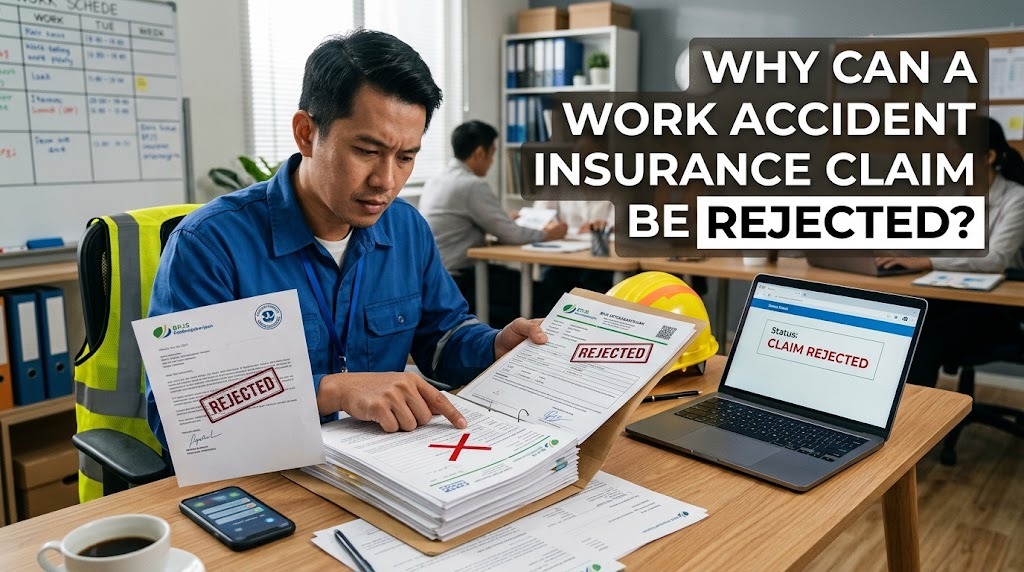
A work accident insurance claim can be rejected for several reasons, even when an employee believes that the incident should qualify for coverage. Insurance providers must verify the accident, employment relationship, membership status, and supporting documents before approving benefits. If important requirements are not fulfilled, the claim may face delays or rejection. In Indonesia, employees participating in BPJS Ketenagakerjaan's Work Accident Security (JKK) program must follow the applicable procedures and regulations. Understanding the common reasons for rejection can help workers prepare their applications more carefully.
INCOMPLETE OR INCORRECT DOCUMENTS
One common reason for a work accident insurance claim rejection is incomplete or inaccurate documentation. Employees may need to submit identification, proof of employment, accident reports, and medical records to support their applications. If some documents are missing, unclear, or contain inconsistent information, the insurance provider may be unable to complete the verification process. In certain situations, the institution may request additional documents before making a decision. However, if the requirements remain unfulfilled, the claim may not be approved.
To reduce this risk, employees should review every document before submitting it. They should ensure that their personal details match their official identification and membership records. Accident reports should also describe the incident accurately and include the required information. Workers can ask their HR department or insurance provider for an updated document checklist. Careful preparation helps prevent avoidable administrative problems.
THE ACCIDENT DOES NOT MEET COVERAGE REQUIREMENTS
Another reason a claim may be rejected is that the incident does not meet the insurance program's coverage requirements. Work accident insurance generally protects eligible workers against accidents connected to their employment, according to the applicable rules. The insurance provider may examine where the incident happened, what activities the employee was performing, and whether the event falls within the program's definition of a work accident. Not every incident automatically qualifies for benefits. Therefore, the circumstances must be assessed individually.
Employees should understand the coverage provisions of their insurance program before submitting a claim. They can request clarification from their employer or the relevant insurance institution if they are uncertain about an incident's eligibility. Providing an accurate explanation and relevant supporting evidence is important during the assessment. Workers should not change or exaggerate details to make an incident appear eligible. Honest and complete reporting supports a fair verification process.
INSURANCE MEMBERSHIP OR REGISTRATION PROBLEMS
A claim may also encounter problems when an employee's insurance membership cannot be verified. For example, the worker's personal information may not match the institution's records, or the registration data may be incomplete. In some cases, the employer may not have completed the required registration or reporting procedures. These issues can make it difficult for the insurance provider to confirm the employee's participation. As a result, the application may require further clarification or may not qualify under the applicable rules.
Employees should regularly check their BPJS Ketenagakerjaan membership status and make sure their employment information is accurate. They can ask the company's HR department to confirm their registration and relevant program participation. If they discover incorrect information, they should request assistance to correct it through official procedures. Workers should also keep copies of membership records and employment documents. Checking these details before an accident occurs can help prevent unnecessary complications.
DELAYED REPORTING OF THE ACCIDENT
Timely reporting is important when an employee experiences a workplace accident. If the incident is reported late, the insurance provider may have difficulty verifying when, where, and how it occurred. Delayed reporting can also make it harder to obtain witness statements or other supporting evidence. Depending on the applicable rules, failure to follow reporting deadlines may affect the claim assessment. Employees and employers should therefore understand the required notification procedures.
Workers should inform their supervisors or HR department as soon as possible after an incident. The employer can then follow the required reporting process and coordinate with the relevant institution. Employees should keep any available records that support the accident report, such as medical documents and written communication. If reporting has already been delayed, they should contact the insurance provider to ask how to proceed. Following official guidance is better than assuming that a late report will automatically be accepted or rejected.
WHAT EMPLOYEES CAN DO IF A CLAIM IS REJECTED
Receiving a claim rejection does not mean that employees should immediately give up seeking clarification. They should first request an official explanation of the decision and identify the specific reason for the rejection. If the problem involves missing documents or incorrect information, they can ask whether additional submissions or corrections are permitted. Employees should review the relevant insurance rules and follow the institution's procedures for reconsideration or complaints. The available options depend on the reason for rejection and the applicable program provisions.
Workers can also consult their HR department or contact BPJS Ketenagakerjaan through official service channels. They should prepare copies of the original application, supporting documents, and any rejection notice. If they believe the decision does not follow the applicable rules, they can ask about the appropriate complaint or dispute-resolution process. Employees should avoid relying on unofficial promises of guaranteed claim approval. Keeping accurate records and using authorized channels can help them address the issue properly.
CONCLUSION
A work accident insurance claim may be rejected because of incomplete documents, incidents that do not meet coverage requirements, membership problems, or delayed reporting. Employees can reduce these risks by understanding their insurance provisions, checking their registration information, and reporting workplace accidents promptly. If a claim is rejected, they should request an official explanation and ask whether corrections or further review are possible. Coordination with employers and insurance institutions is essential throughout the process. Being informed and organized helps workers protect their rights and handle insurance claims more effectively.
Recent Posts

Bagaimana Sistem SKS pada Program Kuliah... 22.11.2026/37 View

How Does Technology Make Daily Evaluation... 21.11.2026/70 View

Apa Strategi Menghadapi Kesenjangan antara Kompetensi... 21.11.2026/73 View

Mengapa Inventaris Aset Penting bagi Kelancaran... 21.11.2026/68 View

When Should Musicians Join a Record... 21.11.2026/71 View
