

Why Can an ATM PIN Get Blocked?
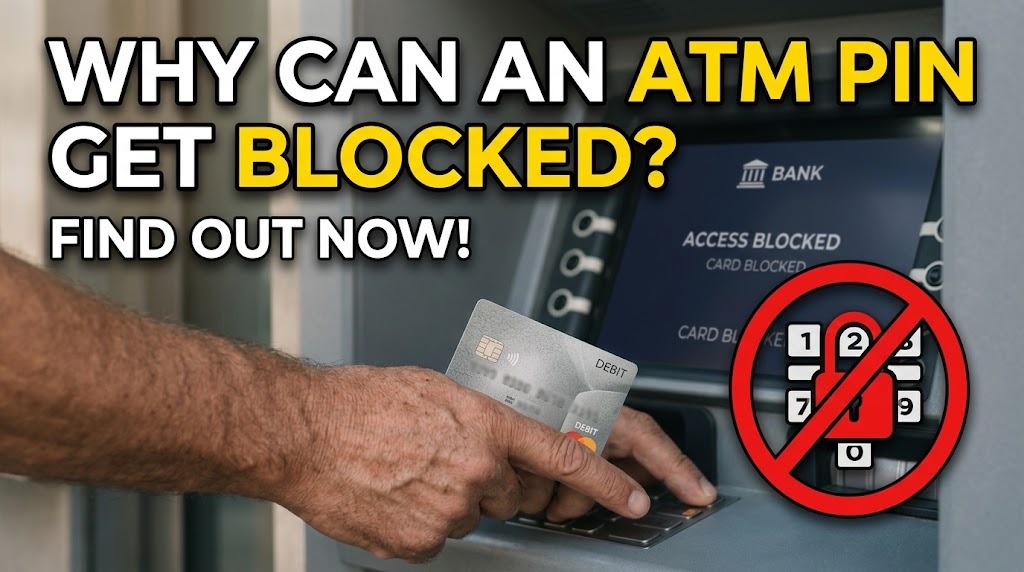
An ATM PIN can get blocked when a bank's security system detects repeated incorrect PIN attempts or other activity that requires additional protection. Blocking the PIN is generally a security measure designed to reduce the risk of unauthorized access to an account.
The exact reason and duration of a PIN block can vary depending on the bank and its security policy. Understanding why an ATM PIN gets blocked can help customers avoid repeated errors and know what to do when access is temporarily restricted.
REPEATED INCORRECT PIN ATTEMPTS
One of the most common reasons an ATM PIN gets blocked is entering the wrong PIN several times. Banks may set a limit on incorrect attempts to prevent unauthorized people from repeatedly guessing a customer's PIN.
The number of attempts allowed can vary between banks and account types. After the limit is reached, the ATM or banking system may temporarily block further PIN attempts.
If you are unsure of your PIN, avoid repeatedly entering different numbers. Instead, stop the transaction and follow the bank's official procedure for PIN recovery or account assistance.
ENTERING AN INCORRECT PIN BY MISTAKE
A customer may enter the wrong PIN accidentally because of a typing error, confusion between different PINs, or simply forgetting the correct number. One incorrect attempt does not necessarily mean the PIN will immediately become blocked.
However, repeatedly trying different combinations can increase the risk of reaching the bank's failed PIN attempt limit. This is why customers should avoid guessing repeatedly.
If you are uncertain about the correct PIN, check the official instructions provided by your bank rather than continuing to make unsuccessful attempts.
SECURITY SYSTEMS MAY RESTRICT ACCESS
Banks use different security measures for ATM transactions to help protect customer accounts. In some circumstances, a banking system may restrict access when it detects activity that appears unusual or potentially unauthorized.
The specific security rules are determined by each bank. A restriction does not necessarily mean that fraud has occurred, but it may indicate that additional verification or assistance is required.
Customers should follow the bank's instructions if an ATM PIN is blocked and avoid attempting to bypass security restrictions through unofficial methods.
WHAT HAPPENS AFTER A PIN IS BLOCKED?
When an ATM PIN is blocked, the customer may be unable to complete certain ATM transactions until the restriction is resolved. Depending on the bank's policy, the block may be temporary or may require the customer to take additional steps.
Some banks may allow customers to reset or manage their PIN through an official banking channel. Other situations may require contacting customer service or visiting a branch.
Because procedures differ, use only official bank channels to find out how the restriction can be removed. Never provide your PIN to another person who claims they can unblock it.
HOW TO PREVENT AN ATM PIN FROM BEING BLOCKED
Customers can reduce the risk of an ATM PIN block by remembering their PIN correctly and avoiding repeated guesses. Keep the PIN confidential and do not store it in an easily accessible location.
If you use more than one PIN for different services, make sure you can distinguish between them without writing confidential numbers where others can access them.
If you forget your PIN, stop entering random numbers and contact the bank through an official channel. Taking this approach can help prevent unnecessary PIN security restrictions.
CONCLUSION
An ATM PIN can get blocked when incorrect PIN attempts exceed the limit set by a bank or when a security system temporarily restricts access. The exact rules can differ depending on the financial institution and account type.
To reduce the risk of a blocked PIN, customers should remember their PIN, avoid repeated guesses, and follow official banking procedures when assistance is needed. Keeping ATM PIN information secure is also an important part of protecting an account.
Recent Posts

Bagaimana Sistem SKS pada Program Kuliah... 22.11.2026/35 View

How Does Technology Make Daily Evaluation... 21.11.2026/69 View

Apa Strategi Menghadapi Kesenjangan antara Kompetensi... 21.11.2026/69 View

Mengapa Inventaris Aset Penting bagi Kelancaran... 21.11.2026/67 View

When Should Musicians Join a Record... 21.11.2026/68 View
