

Why Can Body Posture Reflect Self-Confidence?
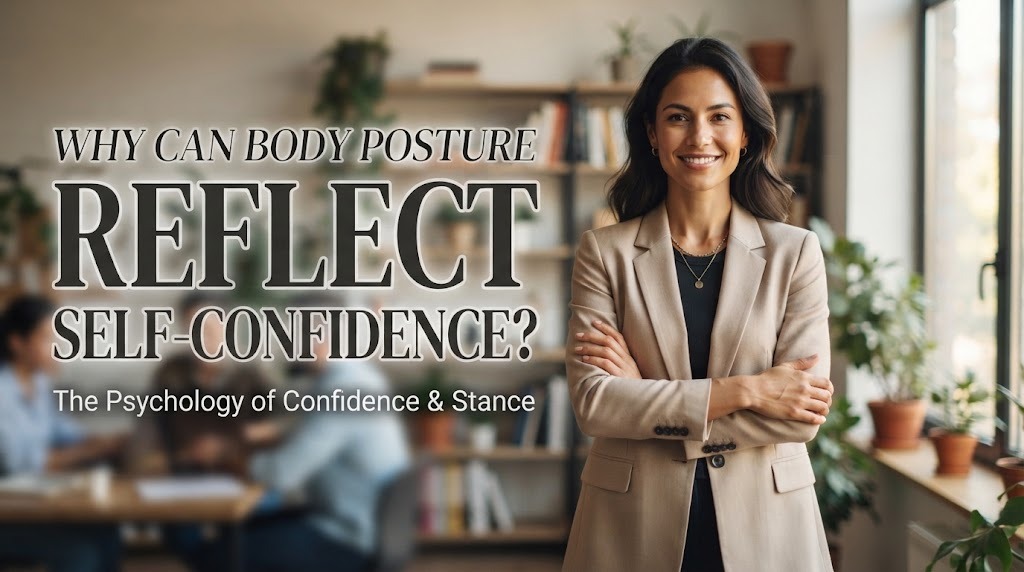
Body posture is an important part of nonverbal communication that can influence how people perceive themselves and others. The way a person stands, sits, walks, or holds their body can communicate attitudes and emotions without using words. An upright and relaxed posture may create an impression of confidence, while a closed or tense posture may appear less confident. Because of this, body posture can reflect self-confidence during many everyday interactions.
Posture does not always reveal exactly how a person feels. Someone may have a naturally reserved posture even when they feel confident, while another person may intentionally use a confident posture despite feeling nervous. Therefore, posture should be understood as one communication signal rather than definite proof of a person's personality or emotional state.
UPRIGHT POSTURE CAN CREATE A CONFIDENT IMPRESSION
An upright posture can make a person appear more confident and comfortable. Standing with the back relatively straight, shoulders relaxed, and head in a natural position can create an open and balanced appearance. This posture may also make communication seem more direct because the person appears ready to participate in the interaction. In situations such as presentations, interviews, and classroom discussions, posture can influence how others perceive the speaker.
An upright posture does not mean keeping the body stiff. Excessive tension can make a person appear uncomfortable rather than confident. A natural posture combines stability with relaxation, allowing the body to move comfortably while maintaining an appropriate position. This balance can make a person look more composed and approachable.
OPEN POSTURE SUPPORTS POSITIVE COMMUNICATION
Open body posture can also contribute to the perception of confidence. Keeping the arms and body in a natural, relaxed position can make a person appear more approachable and willing to communicate. In contrast, constantly crossing the arms, shrinking the shoulders, or turning the body away may create an impression of being closed or uncomfortable. These signals can affect how other people respond during an interaction.
Open posture is especially useful when someone wants to communicate cooperation and attention. For example, a student discussing an idea with a teacher may appear more engaged by sitting upright and facing the speaker naturally. Similarly, someone in a job interview can use an open posture to appear attentive and prepared. These small nonverbal signals can support the spoken message.
POSTURE CAN AFFECT HOW PEOPLE FEEL
Body posture is not only about how others perceive a person. It can also influence how a person feels during an interaction. Maintaining a balanced and comfortable posture may help someone feel more prepared and focused, especially before speaking in front of others. When the body is relaxed, it may become easier to control unnecessary physical tension caused by nervousness.
For example, a student who feels nervous before a presentation may initially sit or stand in a tense position. Taking a moment to relax the shoulders, breathe normally, and maintain a stable posture can help create a greater sense of readiness. This does not automatically remove nervousness, but it can support better physical control. As a result, posture can become one practical part of preparing for communication.
POSTURE INFLUENCES FIRST IMPRESSIONS
People often form initial impressions based on nonverbal signals before a conversation develops. Body posture is one of the signals that can influence these impressions. A person who stands naturally, maintains a balanced position, and faces others appropriately may appear more prepared and confident. This can be useful in situations where first impressions matter, such as interviews, presentations, meetings, and introductions.
However, first impressions should not be treated as accurate judgments of someone's personality. A person may appear nervous because they are in an unfamiliar environment, even though they are highly capable. Cultural differences, physical conditions, personal habits, and the specific situation can also influence posture. Therefore, posture should be considered together with verbal communication and other behaviors.
HOW TO USE POSTURE TO SUPPORT CONFIDENCE
People can develop more confident body language by practicing a natural and comfortable posture. When standing, they can keep their feet stable, shoulders relaxed, head in a natural position, and body facing the person they are communicating with. When sitting, maintaining an upright but comfortable position can help show attention and readiness. These habits should feel natural rather than forced.
It is also useful to combine posture with other forms of nonverbal communication. Appropriate eye contact, facial expressions, gestures, and a calm tone of voice can strengthen the impression created by posture. The goal is not to pretend to be confident but to develop communication habits that support clear and comfortable interaction. With regular practice, these habits can become more natural over time.
CONCLUSION
Body posture can reflect self-confidence because it communicates information about a person's attitude, comfort, attention, and readiness to interact. An upright and relaxed posture can create a positive impression, while a tense or closed posture may sometimes suggest discomfort or nervousness. However, posture alone cannot determine how confident someone truly is.
Using a natural and open posture can support communication in school, social situations, and professional environments. When combined with appropriate eye contact, facial expressions, gestures, and tone of voice, good posture can help people communicate with greater confidence and clarity.
Recent Posts

Bagaimana Sistem SKS pada Program Kuliah... 22.11.2026/38 View

How Does Technology Make Daily Evaluation... 21.11.2026/71 View

Apa Strategi Menghadapi Kesenjangan antara Kompetensi... 21.11.2026/73 View

Mengapa Inventaris Aset Penting bagi Kelancaran... 21.11.2026/69 View

When Should Musicians Join a Record... 21.11.2026/73 View
