

Why Can Climate Change Increase The Risk Of Droughts?
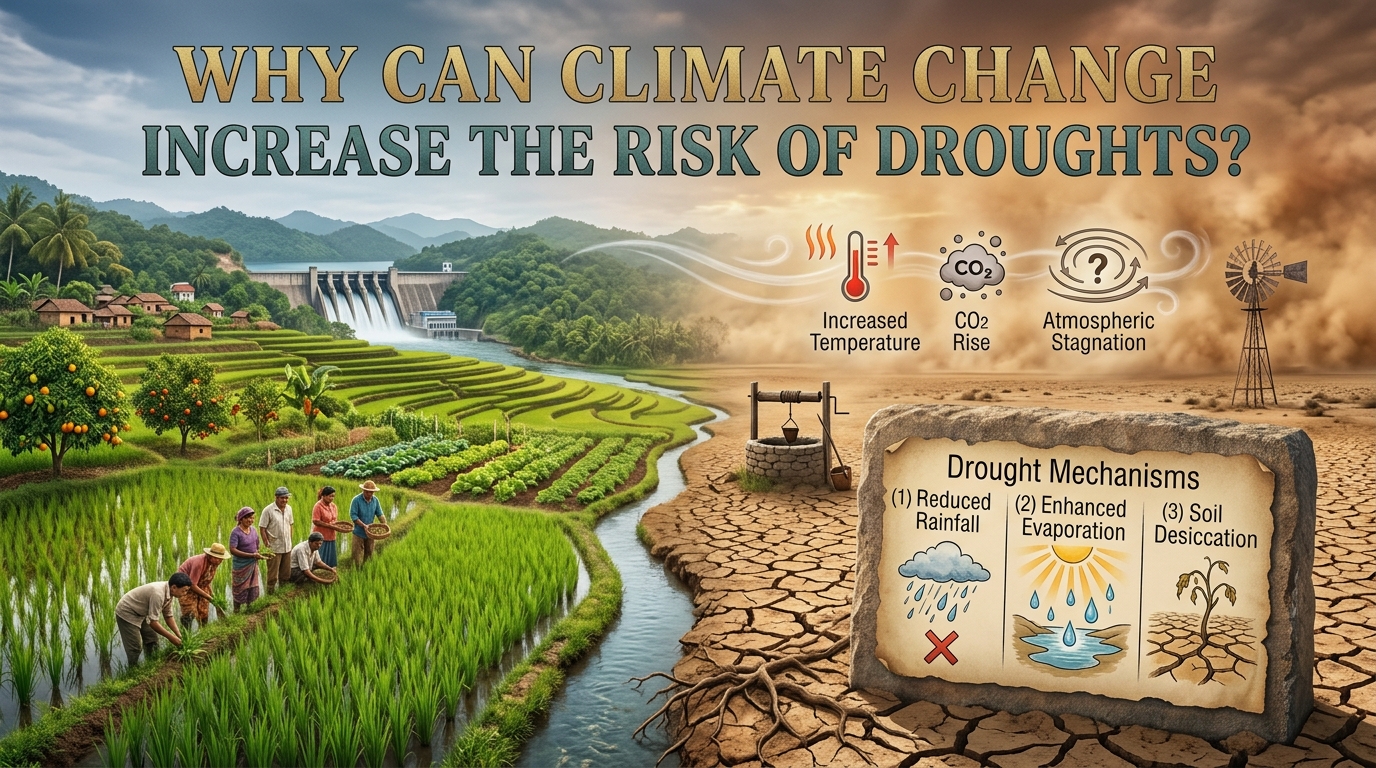
Climate change is making drought a growing concern in many parts of the world. Rising temperatures, changing rainfall patterns, and increased evaporation can reduce the amount of water available for people, agriculture, and natural ecosystems. Although droughts can occur naturally, climate change can increase their likelihood, intensity, or duration in certain regions. These conditions may lead to crop failures, water shortages, and environmental damage. Understanding why climate change increases drought risks is essential for protecting water supplies and preparing communities for a warmer future.
HOW CLIMATE CHANGE INCREASES DROUGHT RISK
Climate change affects the water cycle, which controls how water moves between the atmosphere, land, and oceans. As global temperatures rise, more water evaporates from soil, rivers, lakes, and other surfaces. Warmer air can also hold more moisture, changing how water vapor moves through the atmosphere and influencing rainfall patterns. In some regions, these changes contribute to longer dry periods and greater drought risk.
However, climate change does not increase drought risk equally everywhere. Some regions may experience heavier rainfall, while others may face declining precipitation or longer periods without rain. The effects depend on local geography, atmospheric circulation, soil conditions, and natural climate variations. Drought risk becomes especially serious when high temperatures combine with limited rainfall and depleted water supplies.
THE ROLE OF RISING TEMPERATURES IN DROUGHTS
Rising temperatures increase evaporation and water loss, making drought conditions more severe when water supplies are already limited. When the air becomes hotter, moisture can leave the soil more quickly, leaving less water available for crops and vegetation. Higher temperatures can also increase the amount of water plants release through a process called transpiration. Together, evaporation and transpiration contribute to a process known as evapotranspiration.
When evapotranspiration increases without enough rainfall to replace the lost water, the soil becomes drier. This can create agricultural drought, which occurs when there is insufficient soil moisture to support healthy crop growth. Farmers may need more irrigation, even when water resources are becoming scarce. As a result, prolonged heat can increase pressure on agriculture and make existing droughts more damaging.
CHANGING RAINFALL PATTERNS AND WATER SHORTAGES
Changes in rainfall patterns are another important reason climate change can increase drought risk. Some areas may experience less rainfall, while others may receive rain in fewer, more intense events. Heavy rainfall does not always provide lasting relief because water can run off the land before it has time to soak into the soil. This means a region can experience flooding during one period and water shortages later.
Longer intervals between rainfall events can also reduce the amount of water available for crops, rivers, and reservoirs. When dry conditions continue over several months, communities may have difficulty maintaining reliable water supplies. Meteorological drought occurs when an area receives significantly less precipitation than normal over a period of time. Climate change can alter the frequency and severity of these conditions in regions where rainfall patterns become less favorable.
HOW DROUGHTS AFFECT RIVERS AND GROUNDWATER
Droughts can reduce water levels in rivers, lakes, reservoirs, and other freshwater sources. When rainfall remains low and temperatures are high, less water enters these systems while evaporation and water use continue. This can lead to hydrological drought, a condition marked by unusually low water levels in rivers, reservoirs, or groundwater. The effects may continue even after rainfall returns because water systems need time to recover.
Groundwater is also important because many communities depend on underground water for drinking, farming, and industry. During droughts, people may pump more groundwater to replace missing rainfall, causing water tables to decline. If groundwater is used faster than it can naturally recharge, shortages may continue for years. Sustainable water management and careful groundwater use can help communities become more resilient to prolonged dry periods.
THE IMPACT OF DROUGHTS ON AGRICULTURE AND FOOD SUPPLIES
Agriculture is highly vulnerable to drought because crops need sufficient water to grow and produce healthy harvests. When soil moisture becomes too low, plants may grow more slowly, produce fewer fruits or grains, or die before harvest. Livestock can also suffer when pasture, drinking water, and animal feed become scarce. These conditions can reduce agricultural productivity and threaten farmers' incomes.
Widespread droughts may also affect food availability and prices. When harvests decline, the supply of certain foods can decrease, making them more expensive for consumers. Farmers may face higher irrigation costs or need to change the crops they grow. Drought-resistant crops, efficient irrigation, and improved soil management can help reduce agricultural losses and protect food supplies.
WHY SOME REGIONS FACE GREATER DROUGHT RISKS
Not all regions experience drought in the same way. Areas that naturally receive little rainfall, such as drylands and deserts, often have limited water reserves and can be especially vulnerable to prolonged dry periods. Regions that depend heavily on seasonal rainfall may also face serious challenges when the timing or amount of rain changes. Climate change can intensify existing water stress in places where demand already exceeds available supplies.
Local activities can make these risks worse. Deforestation, soil degradation, excessive groundwater extraction, and inefficient irrigation can reduce the ability of landscapes to store and conserve water. Population growth and rising water demand can place additional pressure on rivers and reservoirs. Although these factors do not all result directly from climate change, they can make drought impacts more severe when dry conditions occur.
THE EFFECTS OF DROUGHTS ON PEOPLE AND THE ENVIRONMENT
Droughts can affect human health, livelihoods, and economic development. Water shortages may limit access to safe drinking water and sanitation, while reduced crop production can threaten food security. Businesses that depend on agriculture, water supplies, or hydropower may also experience financial losses. In severe cases, prolonged drought can force people to leave affected areas in search of water, work, or better living conditions.
Natural ecosystems can suffer as well. Trees and other plants may weaken or die when water becomes scarce, while animals can lose food and suitable habitats. Dry vegetation can increase the risk of wildfires when other conditions, such as heat and ignition sources, are present. Protecting ecosystems and maintaining healthy soils can improve the ability of landscapes to retain water and recover after droughts.
HOW TO REDUCE DROUGHT RISKS IN A WARMING WORLD
Reducing drought risks requires both climate action and effective water management. Reducing greenhouse gas emissions can limit future warming and help prevent additional increases in climate-related drought risks. Governments and industries can support this effort by improving energy efficiency, expanding renewable energy, and protecting forests. These measures address the broader causes of climate change while supporting environmental sustainability.
Communities can also prepare for droughts by collecting rainwater where appropriate, repairing leaking pipes, improving irrigation systems, and protecting watersheds. Farmers can use soil conservation methods, grow suitable crop varieties, and adjust planting schedules according to reliable weather information. Governments can develop drought monitoring systems and emergency plans to protect vulnerable populations. Combining long-term climate action with practical adaptation strategies can reduce water shortages and help communities cope with future droughts.
CONCLUSION
Climate change can increase the risk of droughts by raising temperatures, changing rainfall patterns, and increasing water loss from soil and vegetation. These effects can reduce river levels, deplete groundwater, damage crops, and threaten human health and natural ecosystems. However, drought risk varies between regions and is also influenced by natural climate variability and human water use.
Reducing greenhouse gas emissions and managing water resources responsibly are essential steps toward limiting drought impacts. Farmers, governments, businesses, and individuals all have a role in preparing for changing conditions. Through sustainable practices, reliable climate information, and long-term planning, communities can strengthen their resilience and protect water supplies for future generations.
Recent Posts

Bagaimana Sistem SKS pada Program Kuliah... 22.11.2026/49 View

How Does Technology Make Daily Evaluation... 21.11.2026/77 View

Apa Strategi Menghadapi Kesenjangan antara Kompetensi... 21.11.2026/78 View

Mengapa Inventaris Aset Penting bagi Kelancaran... 21.11.2026/74 View

When Should Musicians Join a Record... 21.11.2026/79 View
