

Why Can Excessive Gadget Use Disrupt Concentration?
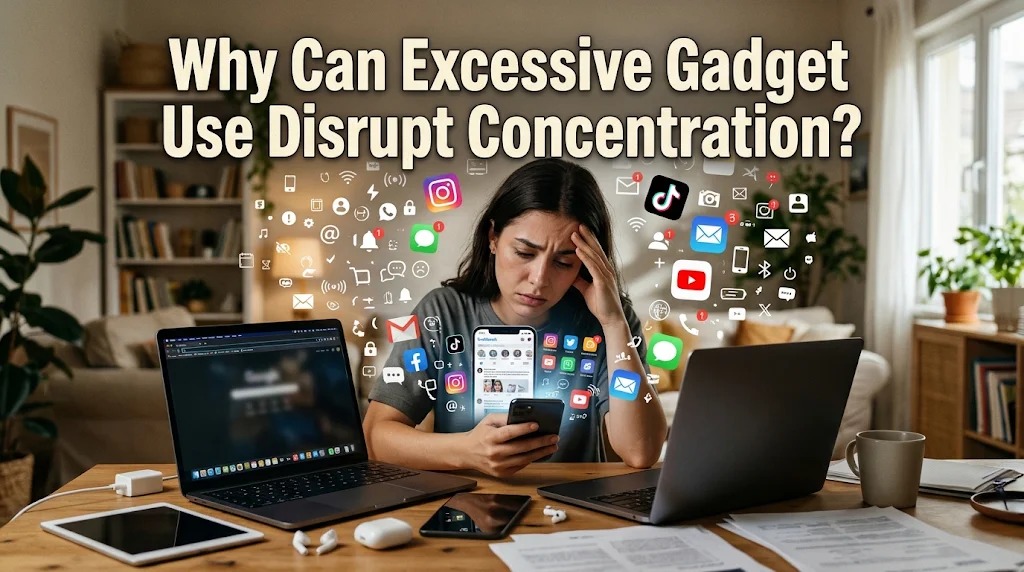
Gadgets such as smartphones, tablets, and computers have become important parts of everyday life. People use them to study, work, communicate, and find information. Although these devices offer many benefits, using them excessively can negatively affect a person's ability to concentrate. Frequent notifications, social media, online entertainment, and constant screen exposure can make it difficult to maintain attention.
Excessive gadget use can also encourage people to switch between activities too often. As a result, the brain may struggle to focus on tasks that require continuous attention. Understanding how gadgets affect concentration is important for developing healthier digital habits and maintaining productivity.
FREQUENT NOTIFICATIONS INTERRUPT ATTENTION
Notifications from smartphones are one of the most common causes of disrupted concentration. Messages, social media updates, emails, and application alerts can interrupt activities at any time. Even a short notification may shift someone's attention away from an important task. After checking the notification, it can take time to return to the previous activity and regain focus.
These interruptions become more problematic when they happen repeatedly throughout the day. People may develop the habit of checking their devices whenever they hear a notification sound or feel a vibration. This behavior makes it harder to maintain attention during studying, working, or reading. Turning off unnecessary notifications can help reduce distractions and improve concentration.
EXCESSIVE SCREEN TIME REDUCES MENTAL FOCUS
Spending too much time looking at screens can make people feel mentally tired. Continuously watching videos, browsing social media, or playing games requires the brain to process large amounts of information. When these activities continue without sufficient breaks, people may experience mental fatigue and find it harder to focus on other responsibilities.
Excessive screen time can also encourage passive consumption of information. For example, continuously scrolling through short videos may make people accustomed to receiving quick entertainment. Consequently, activities that require patience, deeper thinking, and sustained attention may feel less interesting. Taking regular breaks and limiting unnecessary screen activities can help maintain better mental focus.
MULTITASKING MAKES IT HARDER TO MAINTAIN CONCENTRATION
Many people use gadgets to perform several activities at the same time. They may study while checking messages, watch videos while browsing social media, or work while responding to notifications. Although this behavior may seem efficient, frequently switching between activities can reduce concentration and increase the possibility of mistakes.
The brain generally needs time to adjust when moving from one task to another. Constantly changing attention can make it harder to process information deeply and remember important details. This habit may also increase the time needed to complete simple responsibilities. Focusing on one task at a time and setting specific periods for checking gadgets can help improve productivity.
GADGET USE CAN DISTURB SLEEP QUALITY
Using gadgets excessively, especially before bedtime, can interfere with healthy sleeping habits. The light emitted by electronic screens, particularly blue light, can affect the body's natural sleep timing when exposure occurs at night. Engaging with exciting content, games, or social media can also keep the mind active when it should be preparing for rest.
Poor sleep quality can negatively affect attention, memory, and decision-making the following day. People who do not get enough sleep may feel tired, easily distracted, and less motivated to complete their activities. Establishing a screen-free period before bedtime and maintaining a consistent sleeping schedule can support better rest and concentration.
HOW TO REDUCE THE NEGATIVE EFFECTS OF GADGET USE
Reducing excessive gadget use does not mean avoiding technology completely. Instead, people need to develop balanced habits that allow them to enjoy digital devices without sacrificing their concentration. Setting daily screen time limits, disabling unnecessary notifications, and avoiding gadgets during important activities are practical ways to reduce distractions.
People can also create specific schedules for using social media, watching videos, and checking messages. Taking regular breaks, participating in outdoor activities, reading books, and exercising can provide alternatives to continuous screen use. Parents can also help children develop healthy gadget habits by establishing appropriate screen time rules and encouraging activities away from digital devices. With consistent habits, people can use technology more responsibly while maintaining their ability to focus.
CONCLUSION
Excessive gadget use can disrupt concentration through frequent notifications, mental fatigue, multitasking, and poor sleep quality. These effects can make it harder to maintain attention, process information, and complete daily responsibilities. However, gadgets are not necessarily harmful when used appropriately. By managing screen time, reducing digital distractions, and maintaining healthy daily routines, people can enjoy the benefits of technology while protecting their concentration.
Recent Posts

Bagaimana Sistem SKS pada Program Kuliah... 22.11.2026/4 View

How Does Technology Make Daily Evaluation... 21.11.2026/63 View

Apa Strategi Menghadapi Kesenjangan antara Kompetensi... 21.11.2026/64 View

Mengapa Inventaris Aset Penting bagi Kelancaran... 21.11.2026/61 View

When Should Musicians Join a Record... 21.11.2026/59 View
