

Why Can High Population Density Cause Traffic Congestion and Social Problems?
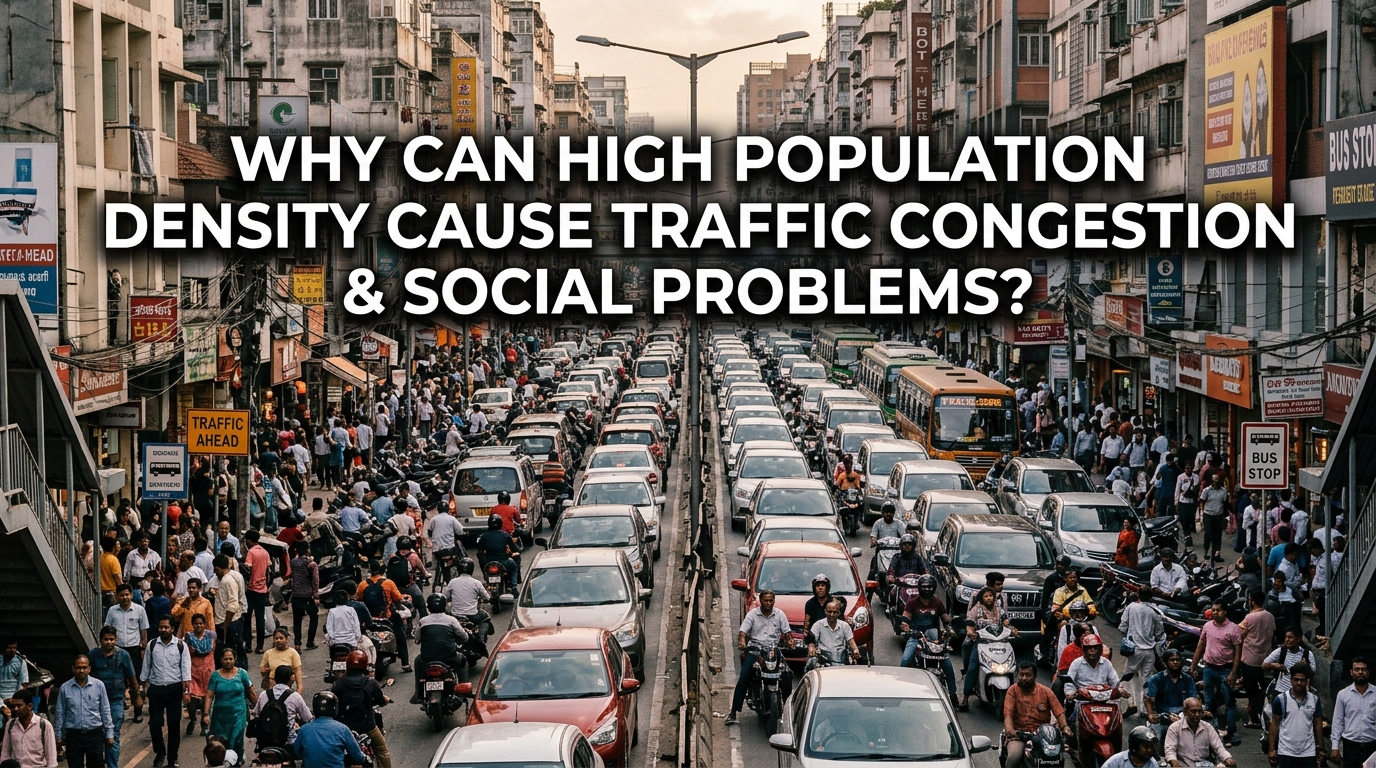
High population density is one of the major challenges faced by rapidly growing cities around the world. When too many people live in a limited geographical area, the demand for transportation, housing, public facilities, and essential services increases significantly. If urban infrastructure cannot accommodate this growing demand, various problems may emerge, including traffic congestion, overcrowding, pollution, and social inequality. These conditions can affect people's daily activities, economic opportunities, and overall quality of life.
The relationship between high population density and social problems is particularly visible in large metropolitan areas. As more people compete for limited space and resources, pressure on public facilities and urban environments becomes greater. Understanding why high population density causes traffic congestion and social problems is important for developing effective urban planning strategies and creating more sustainable communities.
UNDERSTANDING HIGH POPULATION DENSITY
Population density refers to the number of people living within a specific unit of land area, usually measured in people per square kilometer. An area with a large population concentrated within a relatively small territory is considered densely populated. This condition commonly occurs in major cities where employment opportunities, educational institutions, healthcare facilities, and business activities attract people from different regions.
High population density does not automatically create problems because well-planned cities can accommodate large populations through effective infrastructure and public services. However, difficulties arise when population growth exceeds the capacity of available facilities and resources. Limited housing, inadequate transportation systems, and insufficient public spaces can make urban life more difficult. Therefore, the main challenge is not simply the number of residents but how effectively a city manages its population.
WHY HIGH POPULATION DENSITY CAUSES TRAFFIC CONGESTION
One major consequence of high population density is increased transportation demand. When many people live and work within the same urban area, more residents need to travel to offices, schools, shopping centers, and other destinations. This creates a higher number of vehicles on roads, especially during morning and evening rush hours. When road capacity cannot accommodate the growing number of vehicles, traffic congestion becomes increasingly common.
Another contributing factor is the limited availability of road infrastructure. Many densely populated cities have narrow roads, insufficient parking spaces, and intersections that cannot handle heavy traffic volumes. The situation becomes worse when public transportation is unreliable or does not cover important residential and business areas. Consequently, more people depend on private cars and motorcycles, increasing the pressure on existing roads and making daily commuting slower.
THE ROLE OF LIMITED PUBLIC TRANSPORTATION
An inadequate public transportation system can significantly worsen traffic congestion in densely populated areas. When buses, trains, and other mass transit services are limited, expensive, unreliable, or inconvenient, residents often choose private vehicles as their primary means of transportation. As the number of private vehicles increases, roads become more crowded and travel times become longer. This situation can also increase fuel consumption and transportation expenses.
On the other hand, efficient public transportation can help reduce the number of private vehicles on urban roads. Systems such as metro trains, commuter railways, and rapid bus services can transport large numbers of passengers using less road space per person. However, these systems require proper planning, adequate investment, and connections between residential areas and important destinations. Improving public transportation is therefore an essential strategy for managing traffic congestion caused by high population density.
SOCIAL PROBLEMS CAUSED BY HIGH POPULATION DENSITY
High population density can create various social problems when the availability of housing, employment, and public services does not match the needs of residents. One common issue is housing shortages, which can increase rental prices and make affordable accommodation difficult to find. Some low-income families may be forced to live in overcrowded homes or settlements with inadequate sanitation and limited access to clean water. These conditions can increase health risks and reduce overall living standards.
Another problem is social inequality. In densely populated cities, differences in income and access to essential services can become more visible. Wealthier residents may have access to better housing, healthcare, education, and transportation, while disadvantaged communities may struggle to obtain basic necessities. Limited employment opportunities and competition for resources can also increase social tension. Without effective government policies, these inequalities may become more difficult to address.
THE IMPACT ON HEALTH AND THE ENVIRONMENT
High population density can also affect public health and environmental conditions, particularly when urban infrastructure is insufficient. A large number of residents generates more household waste, wastewater, and demand for clean water. If waste collection and sanitation systems cannot manage this demand, environmental pollution may increase. Poor sanitation and overcrowded living conditions can also contribute to the spread of certain infectious diseases.
Furthermore, traffic congestion and excessive vehicle use contribute to air and noise pollution. Vehicle emissions release harmful pollutants that can negatively affect respiratory and cardiovascular health. Constant exposure to traffic noise may also disturb sleep and increase stress levels. In addition, densely developed areas with limited green spaces can experience higher temperatures and reduced environmental comfort. These problems demonstrate the importance of combining population management with sustainable urban development.
HOW TRAFFIC CONGESTION AND SOCIAL PROBLEMS AFFECT DAILY LIFE
Traffic congestion and social problems can directly influence people's daily routines. Long commuting times reduce the time available for work, education, family activities, and rest. Workers may arrive late, businesses may experience delivery delays, and students may struggle to reach schools on time. Increased transportation costs can also place additional financial pressure on households, particularly those with limited incomes.
Social problems can create further difficulties for urban communities. Overcrowded housing, unequal access to public services, and limited recreational spaces may reduce residents' comfort and well-being. Continuous exposure to noise, pollution, and stressful living conditions can affect both physical and mental health. As a result, high population density combined with inadequate urban management can reduce the overall quality of life.
STRATEGIES TO REDUCE TRAFFIC CONGESTION AND SOCIAL PROBLEMS
Addressing the negative effects of high population density requires comprehensive urban planning and cooperation between governments, businesses, and communities. One important solution is improving public transportation infrastructure. Expanding reliable bus networks, developing mass transit systems, and providing safe pedestrian and cycling facilities can reduce dependence on private vehicles. Governments can also introduce effective traffic management systems, improve road intersections, and encourage flexible working arrangements to reduce peak-hour travel demand.
Another important strategy is promoting balanced regional development. Governments can create employment opportunities, educational facilities, and healthcare services in smaller cities and rural areas to reduce excessive concentration in major metropolitan regions. Providing affordable housing, improving sanitation, increasing green spaces, and ensuring equal access to public services are also essential. These measures can help cities accommodate growing populations while maintaining a healthier and more inclusive environment.
CONCLUSION
High population density can cause traffic congestion and social problems when the number of residents exceeds the capacity of urban infrastructure and public services. Increased transportation demand, limited road space, inadequate public transportation, housing shortages, and unequal access to resources are among the main factors contributing to these challenges. Environmental pollution and public health risks can also become more serious when urban development is not properly managed.
However, high population density does not always lead to poor living conditions. With effective urban planning, reliable public transportation, affordable housing, balanced regional development, and sustainable infrastructure, cities can manage large populations more successfully. The key is to ensure that urban facilities and public services develop alongside population growth so that residents can enjoy safer, healthier, and more comfortable living conditions.
Recent Posts

Bagaimana Sistem SKS pada Program Kuliah... 22.11.2026/33 View

How Does Technology Make Daily Evaluation... 21.11.2026/67 View

Apa Strategi Menghadapi Kesenjangan antara Kompetensi... 21.11.2026/67 View

Mengapa Inventaris Aset Penting bagi Kelancaran... 21.11.2026/65 View

When Should Musicians Join a Record... 21.11.2026/66 View
