

Why Can Mobile Phones Affect Learning Concentration?
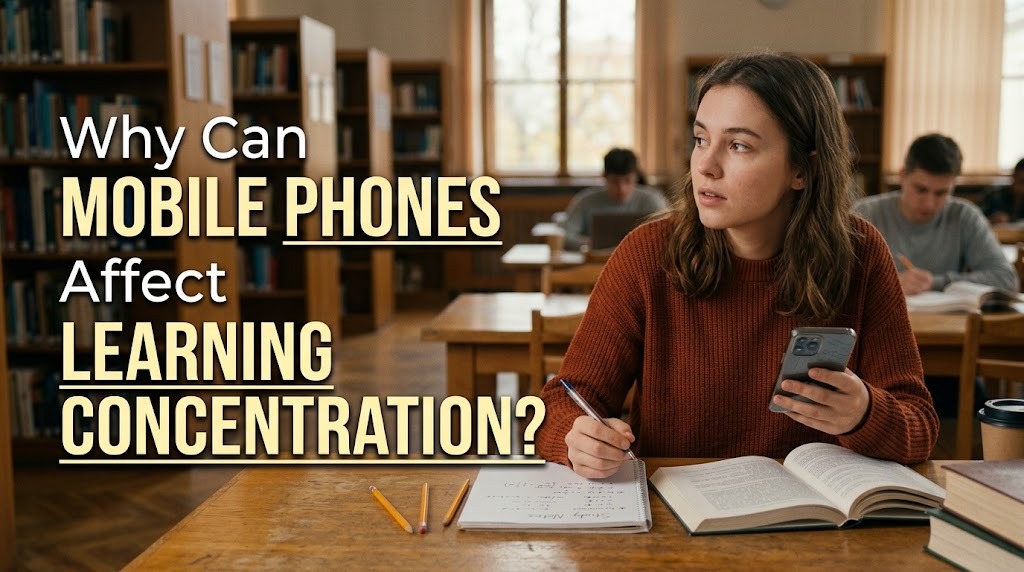
Mobile phones have become useful tools for students because they provide access to learning materials, communication, educational applications, and online information. However, frequent phone use can also make it more difficult to maintain learning concentration. Notifications, social media, entertainment, and messages can quickly attract attention away from lessons or study tasks.
The effect of mobile phones depends on how and when they are used. A phone can support learning when it is used for a clear academic purpose, but unrelated activities may interrupt attention. Understanding why phones can affect concentration can help students develop more responsible technology habits while studying.
NOTIFICATIONS CAN INTERRUPT ATTENTION
Notifications are one of the simplest ways a mobile phone can interrupt learning. Messages, social media updates, application alerts, and other notifications can encourage students to look at their screens even when they are working on an assignment. Each interruption can shift attention away from the material being studied.
Even when students do not immediately respond to a notification, knowing that a message has arrived may create an urge to check it. This can make it harder to maintain focused attention on a single task. Turning off unnecessary notifications during study sessions can reduce these interruptions.
SOCIAL MEDIA CAN ATTRACT STUDENTS' ATTENTION
Social media applications are designed to provide a continuous flow of content. Students may open an application for a short break but continue scrolling longer than expected. When this happens during study time, the activity can reduce the time available for learning and make it more difficult to return to the original task.
Students can manage this issue by setting boundaries around social media use. For example, they can decide to check social media only during designated breaks rather than during focused study periods. This approach allows students to continue using social platforms while protecting important learning time.
ENTERTAINMENT CAN DISTRACT FROM LEARNING TASKS
Mobile phones provide easy access to videos, games, music, and other forms of entertainment. These activities can be appealing when students encounter difficult or less interesting learning materials. As a result, students may choose entertainment instead of continuing with the academic task.
Entertainment is not necessarily harmful when used appropriately. The main issue is whether it repeatedly interrupts study focus or prevents students from completing important tasks. Creating clear boundaries between study time and entertainment time can help students manage both activities more effectively.
FREQUENT PHONE CHECKING CAN BREAK STUDY RHYTHM
Some students develop a habit of checking their phones repeatedly even when there is no important notification. This behavior can create frequent shifts in attention during reading, writing, or problem-solving. Returning to the original task after each interruption may require additional mental effort.
Students can reduce unnecessary checking by keeping their phones out of immediate reach or using features that limit notifications during study periods. When the phone is required for learning, students can open only the applications needed for the task. Intentional phone use can help preserve concentration without eliminating the benefits of technology.
PHONES CAN ALSO SUPPORT LEARNING
Mobile phones should not be viewed only as distractions. Students can use them to access digital textbooks, educational videos, dictionaries, research materials, learning platforms, and communication tools. When used with a clear purpose, smartphones can become useful learning resources.
The key is to distinguish between purposeful academic use and unrelated activities. Students can establish specific goals before using their phones for study and close unrelated applications afterward. With responsible digital habits, mobile phones can support learning while reducing their potential impact on concentration.
CONCLUSION
Mobile phones can affect learning concentration because notifications, social media, entertainment, and frequent checking can interrupt attention. These interruptions may make it harder for students to maintain focus and return quickly to academic tasks.
However, mobile phones can also provide valuable educational resources when used appropriately. Turning off unnecessary notifications, limiting unrelated applications, setting boundaries for social media, and using phones with clear learning goals can help students manage distractions. The goal is not necessarily to avoid technology, but to use it in a way that supports effective learning.
Recent Posts

Bagaimana Sistem SKS pada Program Kuliah... 22.11.2026/28 View

How Does Technology Make Daily Evaluation... 21.11.2026/65 View

Apa Strategi Menghadapi Kesenjangan antara Kompetensi... 21.11.2026/65 View

Mengapa Inventaris Aset Penting bagi Kelancaran... 21.11.2026/62 View

When Should Musicians Join a Record... 21.11.2026/63 View
