

Why Can Poetry Reading Competitions Develop Creativity?
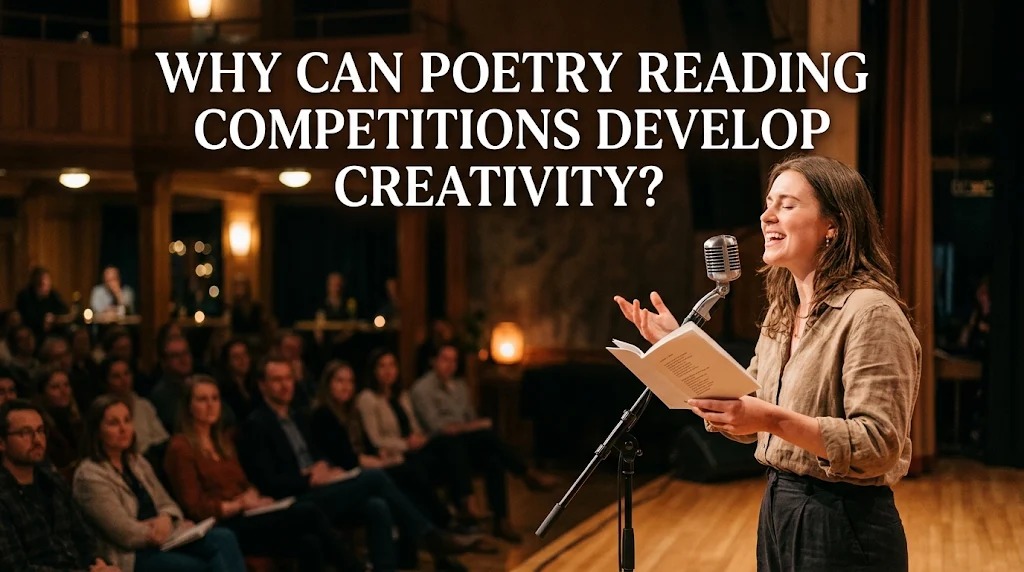
Poetry reading competitions are valuable activities that allow students to express their thoughts, emotions, and imagination through spoken words. These competitions are not only about reading poems correctly but also about understanding their meanings and presenting them in an interesting way. Participants need to explore different expressions, emotions, vocal techniques, and interpretations to deliver meaningful performances. This process encourages students to think creatively and develop their ability to communicate ideas. Through regular participation, poetry reading competitions can help students discover their artistic potential and become more confident in expressing themselves.
DEVELOPING IMAGINATION AND CREATIVE THINKING
Poetry reading competitions encourage students to use their imagination when interpreting a poem. Every poem contains different messages, emotions, and descriptions that can be understood in various ways. Participants need to imagine the situations, characters, and feelings presented through the words. This activity helps them develop creative thinking because they must explore how to bring written poetry to life through their voices.
Students can also discover different ways to present the same poem. Some may emphasize emotional expressions, while others focus on storytelling and dramatic delivery. These different interpretations teach students that creativity does not always have one correct form. By exploring various possibilities, participants become more open to new ideas and artistic approaches.
ENCOURAGING EMOTIONAL EXPRESSION
Poetry often contains emotions such as happiness, sadness, disappointment, hope, and love. During a competition, participants must understand these emotions before expressing them through their performances. They learn how to adjust their voices, facial expressions, and gestures to match the message of a poem. This process encourages them to explore different ways of expressing feelings creatively.
Emotional expression also helps students communicate more naturally. They become more aware of how words can influence the feelings and understanding of an audience. By practicing different emotional interpretations, students can develop their artistic sensitivity. These experiences allow them to express personal ideas and emotions through creative performances.
IMPROVING VOCAL AND PERFORMANCE SKILLS
Creative poetry reading requires more than simply pronouncing words correctly. Participants need to experiment with intonation, rhythm, pauses, volume, and pronunciation to create an engaging performance. Each technique can change how the audience understands the meaning of a poem. Learning to combine these elements helps students develop their creativity in presenting written works.
Body language and facial expressions are also important parts of poetry performances. Students can use appropriate gestures and expressions to strengthen the emotions behind their words. They learn to balance vocal techniques with physical movements without distracting the audience. This combination encourages them to develop their own performance style and become more expressive speakers.
BUILDING CONFIDENCE TO SHARE ORIGINAL IDEAS
Poetry reading competitions provide opportunities for students to express their interpretations in front of an audience. At first, some participants may feel nervous about performing or making mistakes. However, regular practice helps them become more comfortable presenting their ideas and emotions. As their confidence improves, they become more willing to explore creative approaches without being afraid of judgment.
Confidence also encourages students to appreciate their individual abilities. Every participant may have a different way of understanding and presenting a poem. These differences show that creative expression can come from personal experiences and perspectives. By respecting their own ideas, students can become more independent and confident in developing their artistic abilities.
DEVELOPING APPRECIATION FOR LITERATURE AND ART
Participating in poetry reading competitions can increase students' interest in literature. They become more familiar with poetic language, metaphors, symbolism, and different writing styles. Understanding these elements helps students recognize how writers communicate complex ideas through carefully selected words. This knowledge can inspire them to explore literature more deeply and develop their own creative perspectives.
Furthermore, listening to other participants provides opportunities to discover different artistic interpretations. Students can learn new techniques and understand how the same poem can create different impressions. These experiences encourage them to appreciate diverse forms of creativity. They may also become interested in writing their own poems, short stories, or other literary works.
CONCLUSION
Poetry reading competitions can develop creativity by encouraging students to use their imagination, express emotions, improve performance skills, and share personal interpretations. These activities also build confidence and increase appreciation for literature and art. Through preparation and participation, students learn that poetry is not simply about reading words but also about communicating ideas and feelings in meaningful ways. Therefore, poetry reading competitions can become valuable learning experiences that support students' artistic, emotional, and communication development.
Recent Posts

How Does Technology Make Daily Evaluation... 21.11.2026/62 View

Apa Strategi Menghadapi Kesenjangan antara Kompetensi... 21.11.2026/63 View

Mengapa Inventaris Aset Penting bagi Kelancaran... 21.11.2026/59 View

When Should Musicians Join a Record... 21.11.2026/58 View

Daily Evaluation or Daily Planning Which... 21.11.2026/66 View
