

Why Can Political Bribery Threaten the Quality of Democracy in Developing Countries?
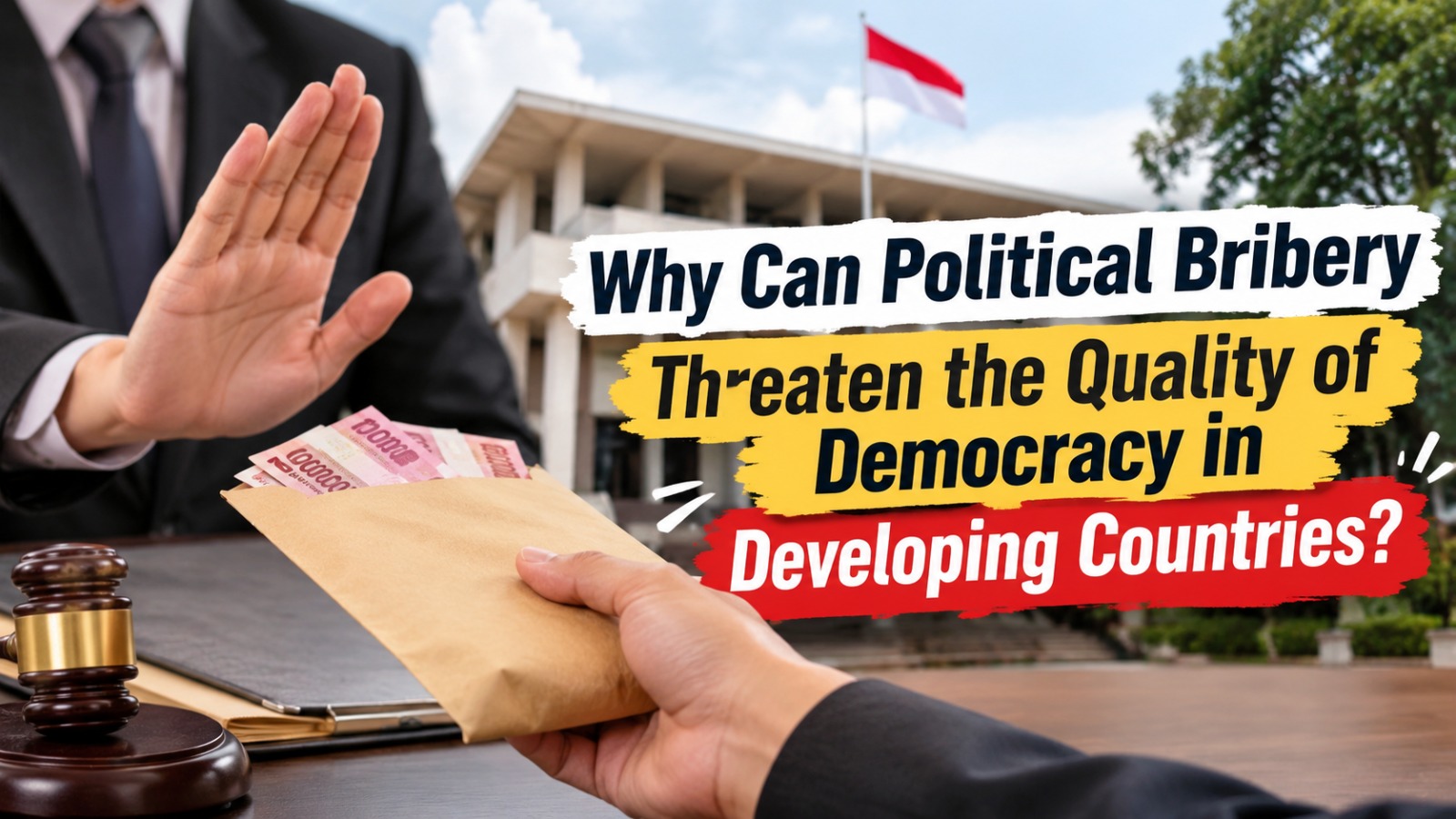
Political bribery is one of the major challenges that can weaken democracy, especially in developing countries. Democracy is supposed to provide equal opportunities for citizens to participate in government, express their opinions, and choose leaders through fair elections. However, these principles can be threatened when political decisions are influenced by money, personal interests, or illegal agreements. Political bribery does not only affect election results but also influences government policies, public services, and the distribution of national resources. If this practice continues, democratic institutions may lose their independence and public trust. Therefore, understanding how political bribery threatens the quality of democracy is important for building a fair, transparent, and accountable government.
THE MEANING OF POLITICAL BRIBERY IN DEVELOPING COUNTRIES
Political bribery refers to the practice of offering, giving, receiving, or requesting money, gifts, or other benefits to influence political decisions for personal or group interests. This practice can involve politicians, government officials, political parties, business representatives, and other individuals with political influence. In developing countries, political bribery may occur because of weak supervision, limited transparency, and inadequate law enforcement. It can also develop when individuals use their positions to obtain financial advantages or secure political support.
Political bribery can take different forms, including illegal campaign funding, payments to influence public policies, and agreements involving government contracts. These actions create unfair advantages for individuals or groups with greater financial resources. As a result, political decisions may no longer represent the interests of the wider population. Democratic principles, such as equality, fairness, and accountability, can gradually become weaker when political power is used for private benefits.
HOW POLITICAL BRIBERY WEAKENS DEMOCRATIC INSTITUTIONS
One major reason political bribery threatens democracy is its negative influence on government institutions. Democratic institutions are expected to operate independently, follow established laws, and protect the rights of citizens. However, bribery can interfere with these responsibilities by encouraging officials to make decisions based on personal interests rather than public needs. When government officials accept illegal payments, their professional integrity and independence can become compromised.
Political bribery can also weaken the effectiveness of law enforcement agencies, legislative institutions, and public administration. For example, officials involved in bribery may attempt to influence investigations or prevent legal action against individuals connected to their political networks. This situation creates opportunities for institutional corruption and makes it difficult to enforce laws fairly. If institutions cannot perform their duties properly, citizens may lose confidence in the democratic system and question whether their government truly represents them.
THE IMPACT OF POLITICAL BRIBERY ON CITIZENS AND PUBLIC TRUST
Political bribery has serious consequences for ordinary citizens because it can reduce the quality of public services and create unequal access to government resources. Public budgets that should support education, healthcare, infrastructure, and social welfare may be misused for private or political interests. Consequently, communities with limited economic opportunities may experience greater difficulties in obtaining essential services. This condition increases social inequality and prevents citizens from receiving the benefits of democratic governance.
Another important consequence is the decline of public trust in political leaders and government institutions. When citizens discover that politicians are involved in bribery, they may believe that elections and government decisions are controlled by wealthy individuals or powerful groups. This perception can reduce public participation, discourage voters, and weaken confidence in democratic processes. Furthermore, political bribery can damage political accountability because officials may prioritize protecting their supporters instead of answering to the people they serve. In the long term, these conditions can make democracy less meaningful for society.
STRATEGIES TO PREVENT POLITICAL BRIBERY AND PROTECT DEMOCRACY
Preventing political bribery requires cooperation between governments, law enforcement agencies, political parties, civil society organizations, and citizens. Governments need to strengthen anti-corruption regulations and ensure that every individual is treated equally under the law. Independent institutions must also have sufficient authority to investigate suspicious financial activities and punish individuals involved in bribery. In addition, transparent political funding systems can help the public monitor campaign donations and prevent illegal financial influence.
Citizens also have an important responsibility in protecting democracy by understanding their political rights and refusing money or gifts offered in exchange for political support. Political education can help voters recognize bribery practices and make decisions based on policies, leadership quality, and public interests. Meanwhile, journalists and civil society organizations can support transparency by monitoring government activities and reporting suspected corruption. Through stronger regulations, public awareness, and active citizen participation, developing countries can build democratic institutions that are more transparent, responsible, and trustworthy.
CONCLUSION
Political bribery threatens the quality of democracy in developing countries because it weakens government institutions, damages public trust, and creates unequal opportunities for citizens. This practice allows personal and financial interests to influence political decisions that should prioritize the welfare of society. It can also encourage institutional corruption, reduce the effectiveness of public services, and weaken the principles of equality and accountability. Therefore, preventing political bribery requires strong law enforcement, transparent political funding, responsible leadership, and active public participation. A healthy democracy can only develop when political power is used honestly and government decisions genuinely represent the interests of the people.
Recent Posts

How Does Technology Make Daily Evaluation... 21.11.2026/58 View

Apa Strategi Menghadapi Kesenjangan antara Kompetensi... 21.11.2026/60 View

Mengapa Inventaris Aset Penting bagi Kelancaran... 21.11.2026/56 View

When Should Musicians Join a Record... 21.11.2026/55 View

Daily Evaluation or Daily Planning Which... 21.11.2026/63 View
