

Why Can Political Literacy Help Prevent Political Hoaxes?
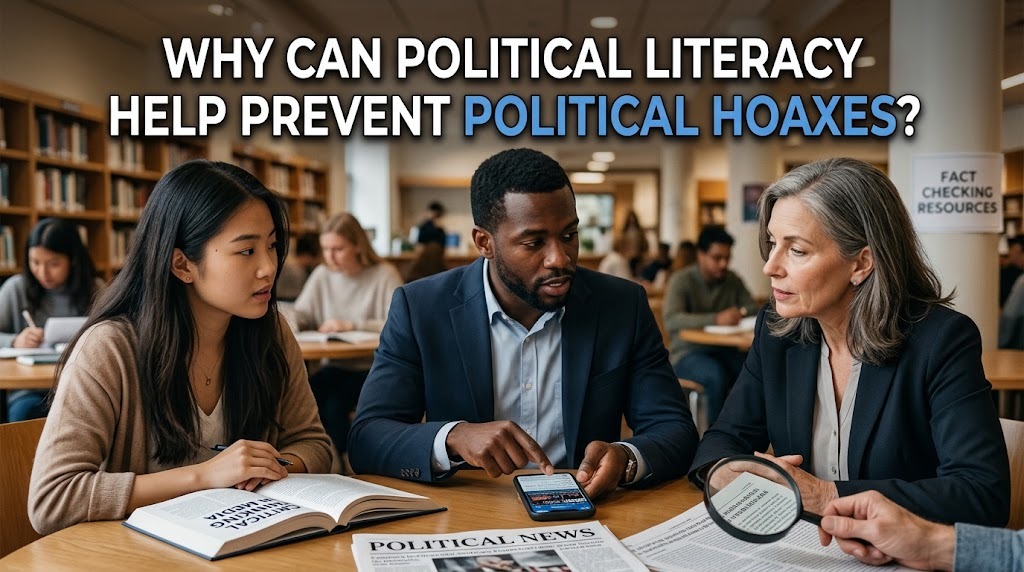
Political literacy helps people understand political issues, public institutions, civic responsibilities, and the information they encounter about public affairs. In the digital era, political content can spread rapidly through social media, websites, messaging platforms, and other online channels.
Developing political literacy skills can help people become more careful when receiving political claims. It does not guarantee that every false claim will be identified, but it can provide useful skills for checking sources, examining evidence, understanding context, and distinguishing factual information from opinions or misleading claims.
HELPING PEOPLE CHECK THE SOURCE OF INFORMATION
One way political literacy can help address political hoaxes is by encouraging people to check the source of information. A political claim may appear convincing because it uses a headline, image, video, or statement that looks credible, even when the original context is unclear.
People can examine who published the information, when it was published, and whether the source provides evidence. Checking the original document or statement can also help determine whether the information has been presented accurately.
Media and information literacy emphasizes the ability to access and critically analyze media content. The Council of Europe identifies these skills as important for making informed decisions about information and media use.
ENCOURAGING PEOPLE TO VERIFY POLITICAL CLAIMS
Political literacy can encourage individuals to avoid immediately accepting or sharing a political claim. Instead, they can look for supporting evidence and compare the information with other credible sources.
Verification may involve checking official documents, reliable news reports, statements from relevant institutions, or other sources that can provide evidence about the claim. The amount of verification needed can depend on the type and importance of the information.
UNESCO highlights the importance of media and information literacy in helping people engage critically with information and navigate the online environment. Developing these habits can make it easier to recognize when a claim requires further checking.
UNDERSTANDING CONTEXT AND DIFFERENT TYPES OF INFORMATION
A political hoax can sometimes rely on information that has been taken out of context. An old photograph, incomplete quotation, edited video, or statistic without its original explanation may create a different impression from the original material.
Political literacy can encourage people to examine when and where information was produced and what the complete context was. This is especially important when content is presented as breaking news or when it encourages an immediate emotional reaction.
People can also learn to distinguish facts, opinions, interpretations, misinformation, and disinformation. UNESCO's media and information literacy materials address misinformation and disinformation as part of the broader information environment and examine their potential effects on individuals and society.
DEVELOPING CRITICAL THINKING BEFORE SHARING
Critical thinking is another important part of preventing the spread of political hoaxes. Instead of asking only whether a claim supports a person's existing opinion, individuals can ask what evidence supports it and whether credible sources provide additional context.
People can also be cautious with content that uses highly emotional language or pressures them to share information immediately. Taking time to verify a claim can reduce the chance of unintentionally spreading inaccurate information.
The Council of Europe has identified media literacy, quality journalism, fact-checking, and other measures as part of broader efforts to strengthen resilience against disinformation. These approaches focus on improving the information environment as well as individual skills.
BUILDING A MORE RESPONSIBLE INFORMATION ENVIRONMENT
Preventing political hoaxes is not solely the responsibility of individual users. Journalists, educational institutions, public institutions, technology companies, civil society organizations, and other actors can also contribute to a healthier information environment.
Political literacy can complement these broader efforts by helping people understand political information and develop responsible information habits. UNESCO notes that accurate and accessible information is important for democratic processes, while digital platforms and AI also create challenges for elections and public information.
The goal is not to make everyone reach the same political conclusion. Instead, political literacy can give individuals tools to evaluate information independently, recognize uncertainty, and make their own informed judgments before accepting or sharing political content.
CONCLUSION
Political literacy can help prevent political hoaxes by encouraging people to check sources, verify claims, understand context, distinguish different types of information, and think critically before sharing content.
However, political literacy is one part of a broader response to misinformation and disinformation. Reliable journalism, education, fact-checking, responsible digital practices, and access to trustworthy information can also contribute to a healthier information environment.
Recent Posts

Bagaimana Sistem SKS pada Program Kuliah... 22.11.2026/33 View

How Does Technology Make Daily Evaluation... 21.11.2026/67 View

Apa Strategi Menghadapi Kesenjangan antara Kompetensi... 21.11.2026/67 View

Mengapa Inventaris Aset Penting bagi Kelancaran... 21.11.2026/65 View

When Should Musicians Join a Record... 21.11.2026/66 View
