

Why Can Poor Concentration Affect Workplace Productivity?
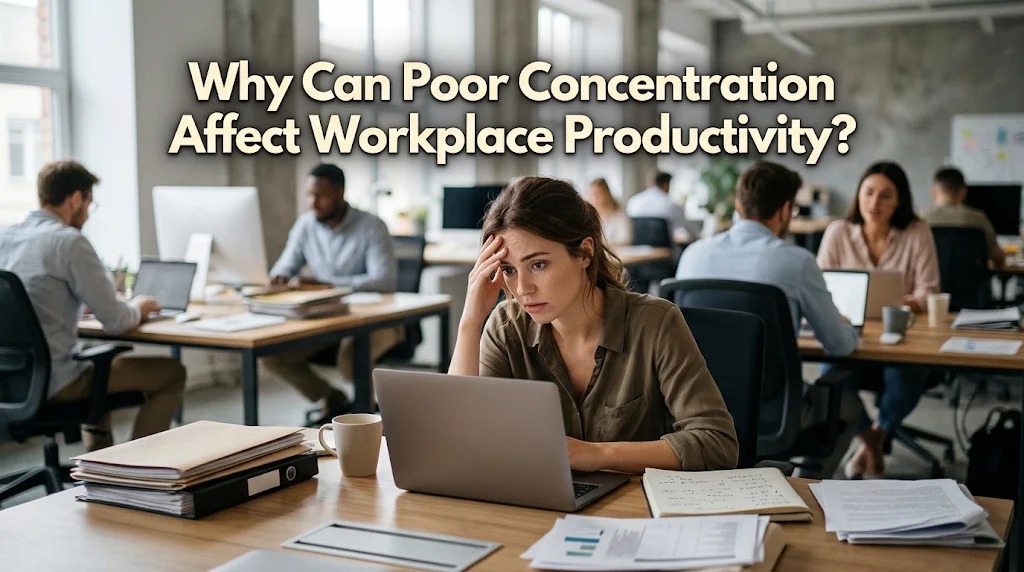
Concentration is an important skill in the workplace because employees need to maintain attention, process information, solve problems, and complete responsibilities efficiently. When employees struggle to concentrate, even simple tasks can become more difficult and take longer than expected. Poor concentration can also increase the possibility of mistakes, missed deadlines, and communication problems.
Workplace productivity depends on several factors, including employee skills, motivation, working conditions, and time management. However, the ability to stay focused plays a major role in determining how effectively employees perform their daily responsibilities. Understanding the effects of poor concentration can help employees and organizations create a healthier and more productive working environment.
REDUCED WORK EFFICIENCY AND PERFORMANCE
Poor concentration can reduce work efficiency because employees may struggle to complete tasks within the expected time. When attention frequently shifts to unrelated activities, employees need additional time to return to their original responsibilities. This can interrupt their workflow and make daily tasks more difficult to manage.
For example, employees who frequently check their phones, respond to unnecessary notifications, or become distracted by conversations may take longer to finish reports and administrative work. Even when they understand their responsibilities, repeated interruptions can reduce the amount of work they complete.
Over time, these difficulties may affect overall performance and make it harder to achieve workplace targets. Maintaining a structured schedule, organizing priorities, and reducing unnecessary distractions can help employees work more efficiently.
INCREASED MISTAKES AND POOR DECISION-MAKING
Concentration is essential for maintaining accuracy and making appropriate decisions at work. Employees need to pay attention to details when reviewing documents, handling financial information, communicating with customers, or operating equipment. When their attention is limited, they may overlook important information or misunderstand instructions.
Poor concentration can also affect decision-making because employees may struggle to evaluate information carefully. They might respond too quickly, miss important details, or choose solutions without considering possible consequences. In jobs that require accuracy and responsibility, these mistakes can create additional problems for individuals and organizations.
Developing careful working habits can help reduce these risks. Reviewing completed tasks, following clear procedures, and taking short breaks when necessary can support better attention and accuracy.
DELAYED DEADLINES AND POOR TIME MANAGEMENT
Employees who experience concentration problems may find it difficult to organize their workload and manage their time. They might spend too much time on minor activities, postpone important responsibilities, or struggle to determine which tasks should be completed first.
When attention is frequently interrupted, unfinished assignments can accumulate. Employees may eventually experience pressure when several deadlines approach at the same time. This situation can create unnecessary stress and reduce the quality of their work.
Using a daily task list, setting realistic deadlines, and dividing large projects into smaller activities can make responsibilities easier to manage. Employees can also schedule focused working periods to complete important tasks without unnecessary interruptions.
WEAKER COMMUNICATION AND TEAMWORK
Workplace productivity does not depend only on individual performance. Employees also need to communicate effectively, listen to colleagues, understand instructions, and cooperate when completing shared responsibilities. Poor concentration can interfere with these activities and create misunderstandings within a team.
For instance, employees who do not pay attention during meetings may miss important decisions or forget assigned responsibilities. They may also misunderstand messages from colleagues, resulting in repeated explanations and unnecessary delays.
These communication difficulties can affect teamwork and make collaborative projects less efficient. Practicing active listening, taking meeting notes, and asking questions when instructions are unclear can help employees maintain better communication.
INCREASED STRESS AND REDUCED WORK MOTIVATION
Poor concentration can contribute to workplace stress, especially when employees repeatedly struggle to complete their responsibilities. Unfinished tasks, missed deadlines, and frequent mistakes may create feelings of frustration and pressure. Employees may also become worried about their performance and how colleagues or supervisors evaluate their work.
When these difficulties continue, work motivation can gradually decrease. Employees may feel overwhelmed, lose interest in their responsibilities, or become less confident in their abilities. Stress can also make concentration more difficult, creating a cycle in which reduced attention and workplace pressure influence each other.
Organizations can help by providing reasonable workloads, supportive supervision, and opportunities for employees to take breaks. Employees should also maintain healthy routines, get sufficient sleep, and seek support when work-related stress becomes difficult to manage.
CONCLUSION
Poor concentration can affect workplace productivity by reducing work efficiency, increasing mistakes, delaying deadlines, weakening communication, and contributing to employee stress. These problems can influence both individual performance and the overall effectiveness of an organization.
Improving concentration requires consistent effort and a supportive working environment. Employees can benefit from better time management, organized workspaces, regular breaks, and healthy daily habits. Meanwhile, organizations can support productivity by reducing unnecessary distractions and encouraging balanced workloads. With better attention management, employees can complete their responsibilities more effectively and contribute positively to workplace performance.
Recent Posts

Bagaimana Sistem SKS pada Program Kuliah... 22.11.2026/4 View

How Does Technology Make Daily Evaluation... 21.11.2026/63 View

Apa Strategi Menghadapi Kesenjangan antara Kompetensi... 21.11.2026/64 View

Mengapa Inventaris Aset Penting bagi Kelancaran... 21.11.2026/61 View

When Should Musicians Join a Record... 21.11.2026/59 View
