

Why Can Sustainable Transportation Help Fight Global Warming?
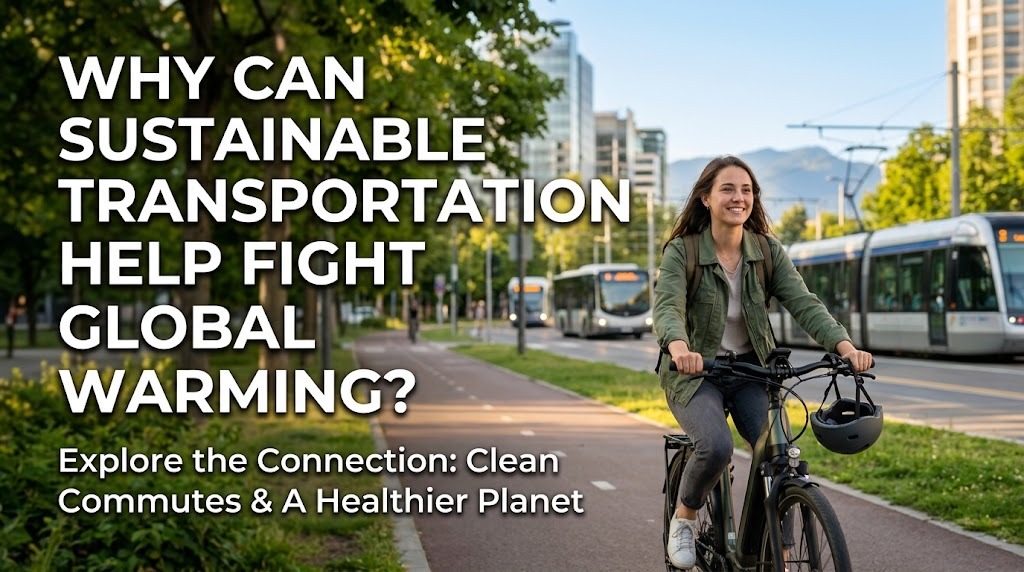
Transportation is an essential part of daily life, allowing people to travel to school, work, markets, and other destinations. However, many forms of transportation rely on fossil fuels such as petrol and diesel, which release carbon dioxide when burned. As these emissions accumulate in the atmosphere, they contribute to global warming and increase the risks associated with climate change.
Sustainable transportation offers ways to meet mobility needs while reducing environmental impacts. Options such as walking, cycling, public transportation, and suitable low-emission vehicles can help reduce greenhouse gas emissions when they replace more carbon-intensive journeys. Understanding the relationship between transportation and global warming can encourage individuals, communities, and governments to develop cleaner and more efficient travel systems.
REDUCING GREENHOUSE GAS EMISSIONS FROM VEHICLES
One of the main reasons sustainable transportation helps fight global warming is its potential to reduce greenhouse gas emissions. Cars, motorcycles, buses, and trucks that burn fossil fuels release carbon dioxide directly through their exhaust systems. The amount emitted depends on factors such as fuel type, vehicle efficiency, distance traveled, and the number of passengers.
Walking and cycling produce no direct exhaust emissions during travel. Public transportation can also reduce emissions per passenger when buses or trains carry many people who might otherwise travel separately in private vehicles. However, the actual benefit depends on passenger numbers, energy sources, and the emissions involved in operating each transport system. By choosing lower-emission travel options when practical, people can help reduce transportation-related carbon emissions.
ENCOURAGING PUBLIC TRANSPORTATION AND SHARED MOBILITY
Public transportation is an important component of a sustainable transportation system. Buses, trains, and other shared services can move many passengers using less energy per person than individual vehicles under suitable conditions. When public transportation is reliable, accessible, and convenient, more people may choose it instead of driving private cars or motorcycles.
Shared mobility, including carpooling, can also reduce the number of vehicles needed for certain journeys. Fewer vehicles on the road may help reduce fuel consumption, traffic congestion, and some forms of air pollution. Nevertheless, the environmental benefit depends on whether shared services replace private trips or create additional journeys. Investment in well-connected public transit, safe walking routes, and convenient transfer points can make low-emission travel a more practical choice for everyday activities.
SUPPORTING WALKING, CYCLING, AND HEALTHIER COMMUNITIES
Walking and cycling are among the simplest ways to reduce emissions from short-distance travel. These activities do not require fossil fuels for movement and can replace some trips that would otherwise be made by motorized vehicles. They can also support physical activity and reduce the need for parking space in busy areas.
Communities can encourage active transportation by providing safe sidewalks, protected cycling lanes, crossings, lighting, and secure bicycle parking. These facilities are particularly important because people are less likely to walk or cycle when roads are unsafe or destinations are difficult to reach. Urban planning can also place homes, schools, shops, and public services closer together, reducing the need for long journeys. When supported by safe infrastructure, walking and cycling can contribute to lower emissions and more accessible neighborhoods.
PROMOTING ELECTRIC VEHICLES AND CLEANER ENERGY
Electric vehicles can help reduce transportation emissions, particularly when they replace petrol- or diesel-powered vehicles and use electricity generated from relatively low-emission sources. Unlike conventional vehicles, electric vehicles do not produce exhaust emissions while driving. They can also improve local air quality by reducing tailpipe pollution.
However, electric vehicles are not entirely emission-free throughout their life cycle. Manufacturing vehicles and batteries requires energy and raw materials, while electricity generation may still produce greenhouse gas emissions if it relies heavily on fossil fuels. The overall climate benefit therefore depends on electricity sources, vehicle efficiency, manufacturing, and how long the vehicle is used. Combining electric vehicles with cleaner electricity, efficient public transportation, and reduced unnecessary travel can support a broader low-carbon transportation transition.
DEVELOPING TRANSPORTATION POLICIES AND INFRASTRUCTURE
Individual travel choices become more effective when governments and communities create systems that make sustainable transportation accessible. Public investment can improve bus and rail services, expand pedestrian areas, develop cycling infrastructure, and connect residential areas with essential destinations. These improvements can reduce dependence on private vehicles and help people travel more efficiently.
Governments can also establish vehicle emissions standards, encourage cleaner technologies, and support better urban planning. Businesses and institutions can contribute by improving public transport access, supporting shared commuting, and providing facilities for people who walk or cycle. Progress can be evaluated through measures such as transport emissions, public transit use, and access to safe mobility options. Coordinated sustainable transportation policies can help reduce emissions while improving mobility and the quality of urban life.
CONCLUSION
Sustainable transportation helps fight global warming by reducing fossil fuel consumption and greenhouse gas emissions from everyday travel. Public transportation, carpooling, walking, cycling, and suitable electric vehicles can all contribute to lower-emission mobility when used in appropriate circumstances.
However, sustainable transportation requires more than individual decisions. Reliable public transit, safe infrastructure, cleaner energy, and effective government policies are also necessary to make low-emission travel practical for more people. By combining responsible travel habits with long-term transportation planning, societies can reduce carbon emissions and move toward a more sustainable future.
Recent Posts

Bagaimana Sistem SKS pada Program Kuliah... 22.11.2026/49 View

How Does Technology Make Daily Evaluation... 21.11.2026/77 View

Apa Strategi Menghadapi Kesenjangan antara Kompetensi... 21.11.2026/78 View

Mengapa Inventaris Aset Penting bagi Kelancaran... 21.11.2026/74 View

When Should Musicians Join a Record... 21.11.2026/79 View
