

Why Did Town Squares Matter in City History?
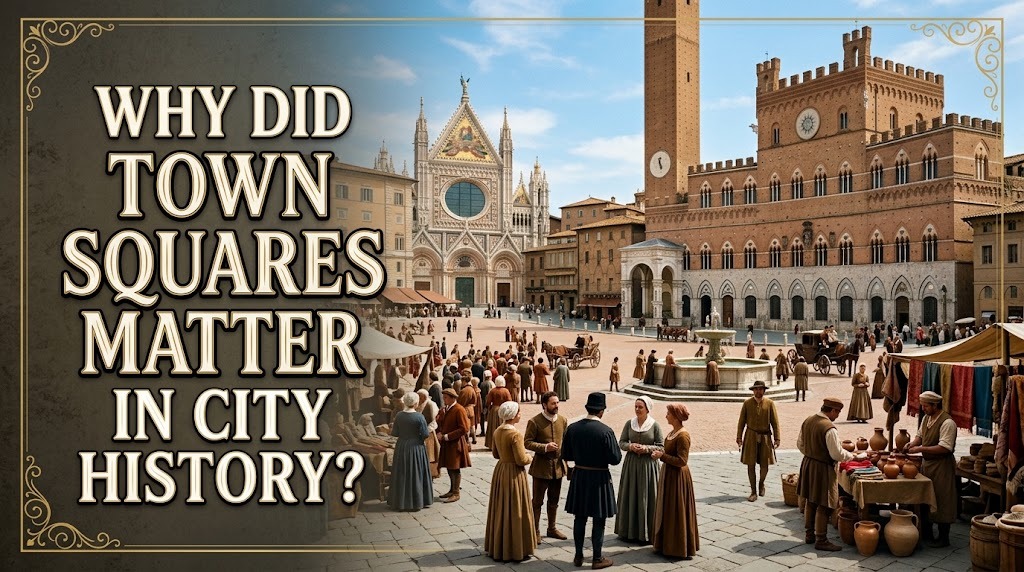
Town squares have played an important role in the history of cities by providing central spaces for trade, government activities, public gatherings, and cultural events. Throughout history, these open areas often developed near important buildings such as town halls, royal palaces, religious institutions, and marketplaces. Their central locations made them accessible places where residents could meet, exchange information, and participate in community life. As cities expanded, town squares continued to reflect changes in political authority, economic activity, and social relationships. Understanding their historical importance helps explain how public spaces contributed to the development of urban communities.
TOWN SQUARES SERVED AS CENTERS OF PUBLIC LIFE
Town squares often functioned as gathering places where residents met for everyday activities and important community events. People visited these spaces to socialize, exchange news, attend celebrations, and participate in public discussions. Because town squares were usually located in accessible areas, they connected different neighborhoods and brought together people from various backgrounds. Their open layouts also allowed communities to organize activities that required large spaces. Over time, these squares became important symbols of shared urban life and community identity.
MARKETS AND TRADE DEVELOPED AROUND TOWN SQUARES
In many historical cities, town squares supported commercial activities by providing space for markets, merchants, and temporary stalls. Farmers brought agricultural products, craftspeople sold handmade goods, and traders exchanged commodities with local residents and visitors. These activities encouraged economic interaction and helped surrounding businesses attract customers. Shops, inns, workshops, and warehouses sometimes developed near busy squares to serve merchants and shoppers. As commercial activities increased, town squares contributed to the growth of surrounding urban districts.
TOWN SQUARES REFLECTED POLITICAL POWER
Town squares frequently occupied prominent positions near government buildings, royal residences, or administrative offices. Their locations allowed authorities to communicate decisions, organize public ceremonies, and demonstrate political influence. In some historical societies, rulers used squares for official announcements, military parades, and public celebrations. These spaces could also become locations for demonstrations and collective expressions of public opinion. Their changing uses reveal how relationships between governments and urban communities developed over time.
RELIGIOUS AND CULTURAL ACTIVITIES STRENGTHENED COMMUNITIES
Town squares often supported religious celebrations, traditional festivals, performances, and other cultural gatherings. In some cities, squares developed near churches, mosques, temples, or other important religious institutions. Their central locations allowed residents to gather for ceremonies and events that strengthened shared traditions. Musicians, performers, and artists could also use these spaces to present their work to the public. Through these activities, town squares helped preserve cultural practices and encouraged interaction between generations.
TOWN SQUARES INFLUENCED URBAN PLANNING
The location and design of town squares influenced how surrounding cities developed. Roads often connected important neighborhoods, markets, and public buildings to the central square, making it a key point in the urban layout. Buildings facing the square frequently housed administrative offices, shops, residences, or religious institutions. In some cities, the square became the starting point for expanding streets and commercial districts. These arrangements helped establish recognizable urban centers and influenced later approaches to public-space planning.
TOWN SQUARES REFLECTED SOCIAL STRUCTURES
Town squares provided opportunities for people to interact, but their accessibility and use often reflected the social conditions of their time. In some historical societies, public gatherings were influenced by differences in social status, occupation, gender, or legal rights. Wealthier merchants and political authorities sometimes controlled important activities, while certain groups faced restrictions on participation. Over time, changes in laws and social expectations influenced how these spaces were used. Today, inclusive public-space planning aims to make town squares accessible to people from different backgrounds and abilities.
TOWN SQUARES SUPPORTED CIVIC IDENTITY
Town squares often became recognizable landmarks that represented a city's identity and historical experience. Monuments, fountains, public buildings, and traditional architectural features helped distinguish one square from another. Important ceremonies and historical events also created memories associated with particular locations. Residents may continue to use these spaces for celebrations, festivals, and public gatherings long after their original functions have changed. This continuity helps connect modern communities with earlier generations.
TOWN SQUARES IN INDONESIAN CITY HISTORY
Indonesia has several public squares that illustrate the historical importance of central gathering spaces. In Java, the traditional alun-alun often formed part of the urban arrangement near a royal palace, mosque, or government center. These spaces supported public gatherings, ceremonies, markets, and other community activities, although their functions varied between locations and periods. Examples can be found in cities such as Yogyakarta and Surakarta, where central squares remain connected to local traditions and civic life. Their continued use demonstrates how historical public spaces can adapt to modern urban needs while retaining cultural significance.
MODERN TOWN SQUARES AND PUBLIC SPACE PRESERVATION
Modern town squares continue to serve as places for recreation, public events, and community interaction. Many have incorporated pedestrian areas, seating, landscaping, lighting, and facilities for cultural performances. Historic squares may also attract visitors interested in architecture and local heritage. However, excessive commercialization, traffic, neglect, and poorly planned redevelopment can reduce their public value. Preserving their historical features while improving accessibility and comfort helps ensure that town squares remain useful to present and future generations.
CONCLUSION
Town squares mattered in city history because they connected economic activity, political authority, cultural traditions, and everyday social life. They provided spaces for markets, public ceremonies, community gatherings, and civic expression. Their locations and designs also influenced the growth of surrounding neighborhoods and the organization of urban centers. Although their functions have changed over time, town squares remain important places where cities preserve historical identity and support community interaction.
Recent Posts

Bagaimana Sistem SKS pada Program Kuliah... 22.11.2026/51 View

How Does Technology Make Daily Evaluation... 21.11.2026/81 View

Apa Strategi Menghadapi Kesenjangan antara Kompetensi... 21.11.2026/81 View

Mengapa Inventaris Aset Penting bagi Kelancaran... 21.11.2026/77 View

When Should Musicians Join a Record... 21.11.2026/82 View
