

Why Do Content Creators Receive Online Hate?
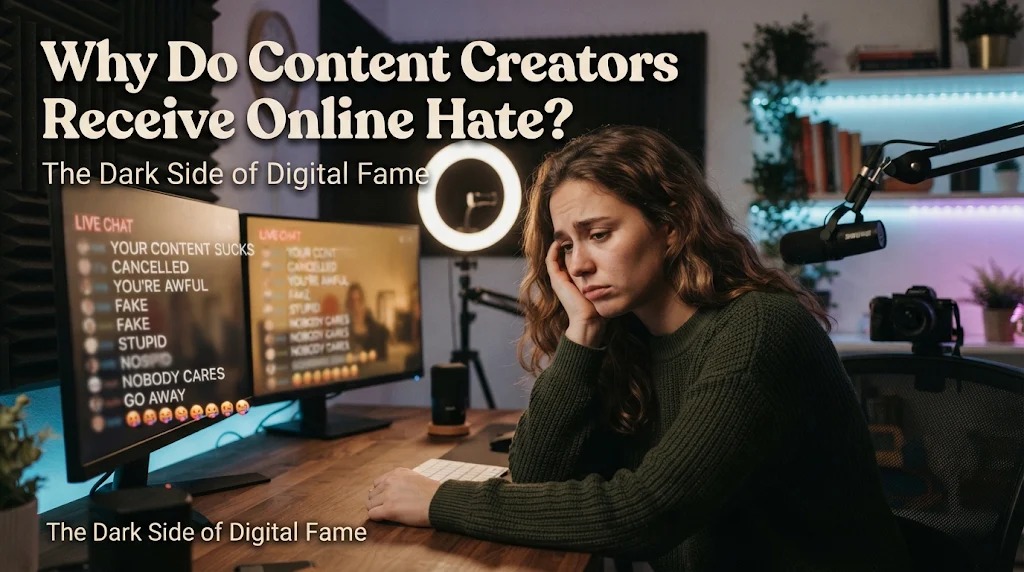
Content creators regularly share videos, photographs, opinions, and personal experiences through social media platforms. Their content can reach thousands or even millions of people, creating opportunities to build communities, develop careers, and influence audiences. However, greater online visibility can also expose creators to criticism, personal attacks, and hateful comments from strangers.
Online hate can come from different sources and may involve jealousy, misunderstandings, disagreements, unrealistic expectations, or deliberate attempts to provoke reactions. Even creators who produce helpful or entertaining content may become targets of negative attention. Understanding why this happens can help content creators manage online criticism, protect their emotional well-being, and maintain a healthy relationship with their audiences.
HIGH PUBLIC VISIBILITY ATTRACTS DIFFERENT OPINIONS
One major reason content creators receive online hate is their public visibility. Unlike people who rarely share their activities online, creators regularly publish content that can be viewed, discussed, and evaluated by large audiences. The more people encounter their content, the more likely they are to receive different reactions.
Some viewers appreciate their work, while others may disagree with their opinions, presentation, or creative choices. Because online audiences have different backgrounds and expectations, it is impossible to satisfy everyone. Unfortunately, some individuals express disagreement through personal insults rather than respectful discussion.
JEALOUSY TOWARD SUCCESS AND POPULARITY
Some content creators experience negative comments when their popularity, achievements, or income become more visible. Viewers may compare their own circumstances with a creator's lifestyle, opportunities, or professional progress. These comparisons can sometimes produce feelings of envy or dissatisfaction.
In certain situations, people respond by questioning the creator's achievements, making sarcastic remarks, or attempting to minimize their success. However, not every negative comment comes from jealousy. Some reactions may reflect genuine disagreement, concerns about content quality, or other personal opinions.
DIFFERENCES IN OPINIONS AND PERSONAL VALUES
Content creators often discuss subjects that encourage different perspectives, including education, entertainment, lifestyle, beauty, business, and social issues. Their opinions may not match the beliefs or preferences of every viewer. As a result, certain posts can generate heated discussions.
Disagreement is a normal part of public communication, but problems arise when discussions become personal attacks. Instead of explaining why they disagree, some users criticize the creator's appearance, intelligence, background, or character. This shifts attention away from the actual topic and creates an unhealthy online environment.
MISUNDERSTANDING THE CREATOR'S CONTENT
Not every negative reaction is intentional harassment. Sometimes viewers misunderstand a creator's message because they lack context, interpret a joke literally, or only watch a short section of a longer video. A statement taken out of context can quickly create confusion and criticism.
Short-form content can make this problem more noticeable because important explanations may be missing from short clips. When viewers form conclusions without understanding the complete message, they may spread inaccurate interpretations. Creators can reduce some misunderstandings by communicating clearly and providing relevant context, although they cannot control every interpretation.
ANONYMOUS ACCOUNTS MAKE HATE EASIER
Some users hide behind anonymous profiles or accounts that do not reveal their real identities. This can make them feel less exposed when posting insults, mocking creators, or making aggressive statements. The distance between the commenter and the person receiving the message may reduce their sense of personal responsibility.
Anonymous accounts are not automatically harmful because many people use them for legitimate privacy reasons. However, anonymity can sometimes be misused to avoid accountability for harassment. Creators should evaluate the behavior itself rather than assuming every anonymous account has negative intentions.
THE SEARCH FOR ATTENTION AND REACTIONS
Some individuals post hateful comments because they want attention from creators or other viewers. Provocative messages may attract replies, arguments, and reactions from people who disagree with them. For certain users, becoming part of a heated discussion may feel rewarding.
This behavior can encourage repeated negativity when creators respond emotionally to every provocation. Other users may also join the discussion, making the situation more difficult to manage. Although creators have the right to defend themselves, they do not need to give every hostile comment their attention.
UNREALISTIC EXPECTATIONS FROM AUDIENCES
Viewers sometimes develop strong expectations about how their favorite creators should behave. They may expect creators to maintain a particular image, follow certain trends, share personal information, or always produce content that matches their preferences. When creators make different choices, some viewers react negatively.
This can happen when creators change their content style, collaborate with different people, discuss controversial topics, or decide to keep parts of their lives private. Audiences may feel disappointed, but creators are still individuals who have the right to develop, change, and establish personal boundaries.
NEGATIVE COMMENTS SPREAD THROUGH ONLINE COMMUNITIES
Online discussions can influence how people respond to content creators. When a negative opinion receives attention, other users may repeat it without checking whether it is accurate. This can turn an individual criticism into a larger wave of negative comments.
Group behavior may also encourage users to participate because they want to fit in or gain approval from others. In some situations, repeated criticism develops into coordinated harassment or targeted bullying. Understanding this pattern helps creators recognize when a situation goes beyond ordinary disagreement.
HOW ONLINE HATE AFFECTS CONTENT CREATORS
Receiving repeated hateful comments can affect creators emotionally and professionally. Although some people may appear confident in their videos, that does not mean negative interactions have no impact on their well-being.
Possible effects include:
- Reduced self-confidence: Repeated personal attacks may cause creators to question their abilities, appearance, or creative decisions.
- Emotional exhaustion: Constantly dealing with criticism can create frustration, sadness, and stress.
- Creative pressure: Fear of negative reactions may make creators hesitant to experiment with new ideas.
- Social withdrawal: Some creators may reduce online interactions or avoid discussing personal experiences.
- Reduced motivation: Repeated hostility can make content production feel less enjoyable.
- Privacy concerns: Harassment may sometimes involve attempts to expose personal information or contact creators outside public platforms.
The effects vary from person to person. Creators who experience persistent harassment should not feel obligated to manage everything alone.
HOW CONTENT CREATORS CAN HANDLE ONLINE HATE
Managing online hate requires a combination of emotional awareness, digital safety, and professional boundaries. Creators should understand that constructive criticism can support improvement, while personal attacks do not need to become the center of their attention.
Several practical strategies can help:
- Evaluate comments objectively: Identify whether feedback contains useful information or simply aims to insult and provoke.
- Avoid unnecessary arguments: Do not spend excessive time responding to accounts that repeatedly create conflict.
- Use moderation tools: Block, mute, filter, or report accounts that engage in harassment.
- Protect personal information: Avoid exposing private addresses, contact details, or sensitive daily activities.
- Maintain a supportive community: Encourage respectful discussions and establish clear rules for audience interactions.
- Take breaks when necessary: Reduce social media exposure when online negativity begins affecting emotional well-being.
- Keep creating meaningful content: Continue developing ideas based on personal goals and audience needs rather than trying to satisfy every critic.
If harassment includes threats, stalking, impersonation, or the sharing of private information, creators should preserve evidence and seek appropriate assistance.
CONCLUSION
Content creators receive online hate for various reasons, including public visibility, jealousy, differences in opinions, misunderstandings, anonymity, attention-seeking behavior, and unrealistic audience expectations. While criticism is a natural part of sharing content publicly, personal attacks and harassment should not be treated as normal feedback.
Creators can protect themselves by setting boundaries, using moderation tools, evaluating criticism carefully, and maintaining supportive relationships. Most importantly, they should remember that online popularity does not require pleasing everyone. Building a meaningful digital presence involves creativity, consistency, and the ability to communicate responsibly without allowing hateful comments to determine personal value.
Recent Posts

Bagaimana Sistem SKS pada Program Kuliah... 22.11.2026/25 View

How Does Technology Make Daily Evaluation... 21.11.2026/64 View

Apa Strategi Menghadapi Kesenjangan antara Kompetensi... 21.11.2026/65 View

Mengapa Inventaris Aset Penting bagi Kelancaran... 21.11.2026/62 View

When Should Musicians Join a Record... 21.11.2026/61 View
