

Why Do Digital Libraries Matter in the Digital Education Era?
THE ROLE OF DIGITAL LIBRARIES IN DIGITAL EDUCATION
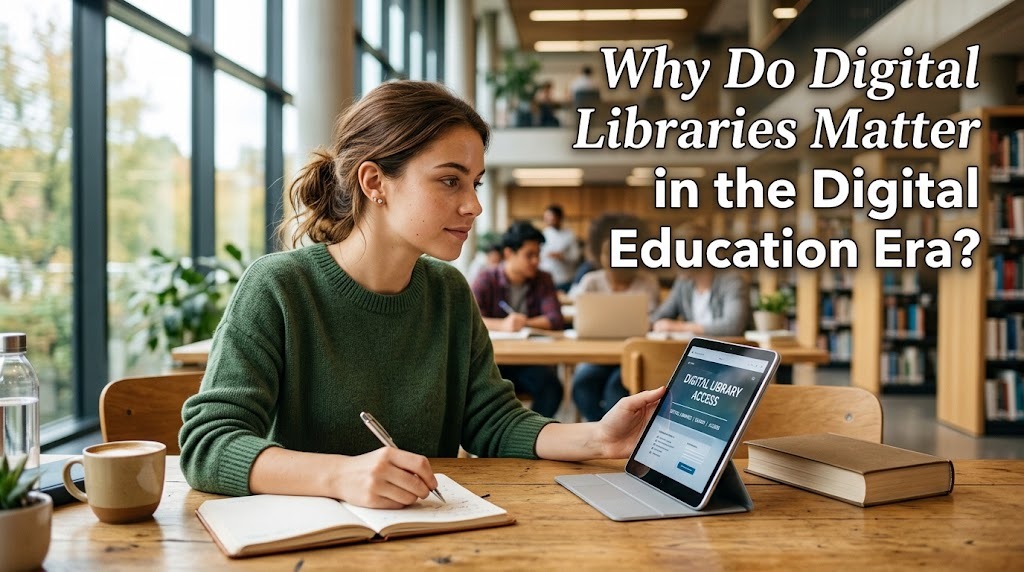
The development of technology has changed the way students access information and participate in learning. In this environment, digital libraries provide an important connection between learners and educational resources. Instead of depending only on physical books, students can access electronic books, journals, research papers, and other academic materials through digital platforms. This makes libraries more relevant to the needs of modern education.
Digital libraries also support the growing use of online and technology assisted learning. Students can search for information while studying at home, attending online classes, or completing assignments on campus. The ability to access resources electronically makes learning more flexible. As education continues to become more digital, digital libraries can help ensure that access to knowledge develops alongside educational technology.
PROVIDING EASY ACCESS TO EDUCATIONAL RESOURCES
One of the most important reasons digital libraries matter is their ability to provide convenient access to educational resources. Students can search for relevant materials without always needing to visit a physical library. Depending on institutional subscriptions and access policies, users may find books, scholarly journals, research publications, and other resources online. This can make academic information easier to reach.
Digital access is particularly useful for students who have limited time or live far from a physical library. A student can search for references from home or another location with internet access. Digital collections can also contain specialized materials that may not be available in a local physical collection. These advantages can help create a more accessible learning environment.
SUPPORTING FLEXIBLE AND ONLINE LEARNING
Modern education increasingly includes online learning, blended learning, and independent study. Digital libraries support these approaches by providing resources that students can access electronically. Learners can use library materials before, during, or after online lessons to strengthen their understanding of a subject. This allows library resources to become part of the broader digital learning process.
Flexible access can also help students manage different academic schedules. They may need to study outside normal library operating hours or complete assignments from locations away from campus. Digital libraries can provide access to available materials without requiring students to travel to a library building. This flexibility makes them particularly valuable in an education system that increasingly supports different learning arrangements.
IMPROVING RESEARCH AND INFORMATION LITERACY
Digital libraries can make academic research more efficient by providing search tools that help users locate relevant information. Students can search by keywords, authors, subjects, titles, or publication details. Filters can help narrow results and make it easier to identify materials related to a specific research topic. These tools can reduce the time required to find potential references.
However, easy access to information also creates a need for strong information literacy. Students must learn how to determine whether a source is credible, relevant, current, and appropriate for academic use. They should examine authorship, publication details, evidence, and the purpose of each source. Digital libraries can therefore support not only access to information but also the development of responsible research habits.
ENCOURAGING INDEPENDENT AND CONTINUOUS LEARNING
Digital libraries can encourage students to become more independent learners. Instead of relying entirely on information provided by teachers, students can explore additional resources based on their academic interests and needs. They can investigate unfamiliar concepts, compare different viewpoints, and read materials beyond the required curriculum. This can strengthen curiosity and encourage deeper learning.
The benefits can extend beyond formal education. Digital access to knowledge can support continuous learning when people want to develop new skills or understand new subjects. Graduates, professionals, and lifelong learners can use digital resources to continue expanding their knowledge. In this way, digital libraries can contribute to a culture where learning continues beyond classrooms and academic institutions.
CONCLUSION
Digital libraries matter in the digital education era because they provide accessible resources, flexible learning support, efficient research tools, and opportunities for independent learning. They connect students with academic information through technologies that are already part of modern educational environments. By making resources easier to discover and access, digital libraries can complement classroom teaching and online education. Their role is therefore becoming increasingly important as education continues to evolve.
Nevertheless, technology alone cannot guarantee effective learning. Students need appropriate digital skills, critical thinking, and responsible research habits to use digital library resources effectively. Educational institutions should also maintain quality collections, reliable systems, and suitable user support. When these elements work together, digital libraries can become a strong foundation for accessible and sustainable digital education.
Recent Posts

Bagaimana Sistem SKS pada Program Kuliah... 22.11.2026/35 View

How Does Technology Make Daily Evaluation... 21.11.2026/69 View

Apa Strategi Menghadapi Kesenjangan antara Kompetensi... 21.11.2026/70 View

Mengapa Inventaris Aset Penting bagi Kelancaran... 21.11.2026/67 View

When Should Musicians Join a Record... 21.11.2026/69 View
