

Why Do Employers Use Numerical Reasoning Tests During Recruitment?
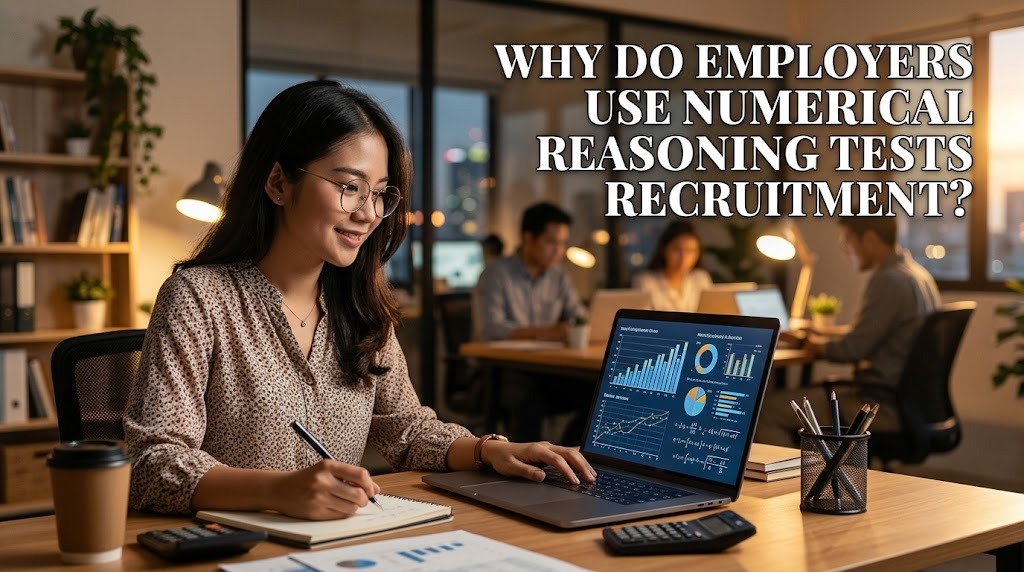
Recruitment is an important process for finding candidates who have the skills and abilities required for a particular position. Besides reviewing educational backgrounds, work experience, and interview responses, employers often use assessment methods to evaluate candidates more objectively. One common method is the numerical reasoning test, which measures how well individuals understand, interpret, and analyze numerical information.
Employers use numerical reasoning tests because many workplace responsibilities involve numbers, calculations, reports, and data-based decisions. These assessments help recruiters understand whether candidates can process numerical information accurately and solve problems logically. The results can provide additional insight into a candidate's potential suitability for specific job responsibilities.
MEASURING NUMERICAL PROBLEM-SOLVING SKILLS
One major reason employers use numerical reasoning tests is to evaluate candidates' ability to solve problems involving numbers. Many professional tasks require employees to calculate costs, compare figures, interpret percentages, and understand financial information.
Through these assessments, recruiters can observe how candidates approach numerical problems and identify relevant information. This helps employers evaluate whether applicants have the mathematical reasoning skills needed to perform certain responsibilities effectively.
EVALUATING DATA INTERPRETATION ABILITIES
Modern workplaces frequently use data to monitor performance and support business decisions. Employees may need to understand sales reports, financial statements, production statistics, or customer information presented in charts and tables.
Numerical reasoning tests help employers assess whether candidates can interpret this information correctly. Applicants who can identify trends, compare figures, and understand numerical relationships may be better prepared for roles that involve regular data analysis.
IDENTIFYING ATTENTION TO DETAIL
Accuracy is important in many workplace activities, especially those involving financial records, inventory calculations, and administrative reports. Small numerical mistakes can create larger problems when information is used for important business decisions.
Numerical reasoning assessments can reveal how carefully candidates read questions, select relevant figures, and perform calculations. Employers can use the results as one indicator of a candidate's attention to detail, although a single test cannot fully determine how accurately someone will perform in a real working environment.
SUPPORTING OBJECTIVE CANDIDATE SCREENING
Recruiters often receive applications from many candidates with different educational backgrounds and professional experiences. Comparing applicants using interviews and resumes alone can make the selection process more difficult.
Numerical reasoning tests provide standardized assessment results that can be compared using consistent criteria. This gives employers additional information when reviewing candidates, although test scores should not be the only factor used to determine recruitment outcomes.
PREDICTING JOB-RELATED PERFORMANCE
Some positions require employees to work with numerical information regularly. Examples include accounting, finance, business analysis, sales administration, inventory management, and operations.
Employers may use numerical reasoning tests to evaluate abilities that are relevant to these responsibilities. The results can help recruiters understand whether candidates have the foundational skills needed for tasks such as analyzing financial figures, calculating performance indicators, and interpreting business reports. However, actual job performance also depends on experience, technical knowledge, communication, and other competencies.
ASSESSING DECISION-MAKING ABILITIES
Employees sometimes need to make decisions based on numerical information. For example, a sales employee may compare monthly revenue, while a financial administrator may review expenses and identify differences between planned and actual spending.
Numerical reasoning tests can show how candidates analyze information before selecting an answer. This helps employers evaluate their ability to recognize relevant data, compare possible outcomes, and apply logical thinking to numerical situations.
SAVING TIME DURING THE RECRUITMENT PROCESS
Recruitment teams often work with limited time and resources, particularly when vacancies attract a large number of applications. Assessments can help organize the selection process by providing additional information about candidates' abilities.
Online numerical reasoning tests can be administered to multiple applicants within a defined period. Recruiters can then review the results alongside application documents and interview performance. This may make the initial screening process more structured and efficient.
MATCHING CANDIDATES WITH JOB REQUIREMENTS
Different positions require different levels of numerical ability. An accounting role may involve detailed financial calculations, while a customer service position may require basic numerical understanding to process payments or explain product prices.
Employers can select numerical reasoning assessments that reflect the requirements of a particular position. This helps ensure that candidates are evaluated according to relevant skills rather than being assessed using identical expectations for every job.
SUPPORTING EMPLOYEE DEVELOPMENT
Numerical reasoning assessments are not only useful during recruitment. Organizations can also use similar evaluations to identify employee training needs and support professional development.
For example, employees who struggle with interpreting financial data may benefit from additional training in basic mathematics, spreadsheet applications, or business reporting. Understanding these skill gaps helps organizations prepare more relevant development programs and improve workforce capabilities.
CONCLUSION
Employers use numerical reasoning tests during recruitment to evaluate problem-solving skills, data interpretation, attention to detail, and the ability to work with numerical information. These assessments also support candidate screening, job matching, and more structured recruitment decisions.
However, numerical reasoning scores should be considered alongside other selection criteria, including work experience, technical qualifications, communication skills, and interview performance. By combining different assessment methods, employers can develop a more complete understanding of each candidate's abilities and suitability for a position.
Recent Posts

Bagaimana Sistem SKS pada Program Kuliah... 22.11.2026/42 View

How Does Technology Make Daily Evaluation... 21.11.2026/72 View

Apa Strategi Menghadapi Kesenjangan antara Kompetensi... 21.11.2026/74 View

Mengapa Inventaris Aset Penting bagi Kelancaran... 21.11.2026/70 View

When Should Musicians Join a Record... 21.11.2026/73 View
