

Why Do Ethics Matter So Much for Professional Accountants?
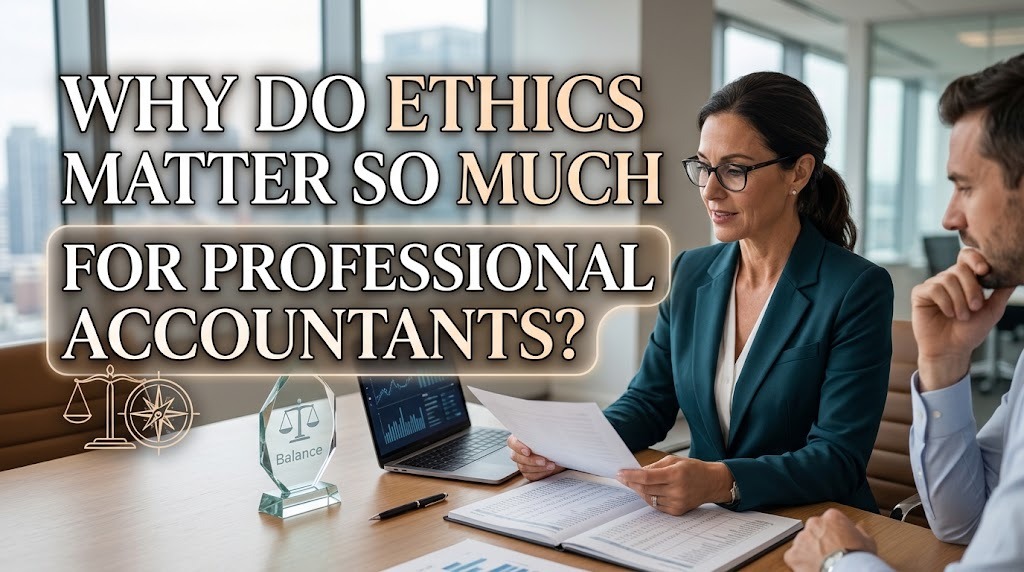
Ethical integrity serves as the absolute cornerstone of the accounting profession and the stability of global financial markets. A professional accountant is entrusted with sensitive corporate data, confidential financial records, and the validation of major economic assets. Because investors, banking institutions, and regulatory agencies rely heavily on published corporate reports, intentional misrepresentation destroys market trust. Upholding uncompromising moral standards protects corporate stakeholders, employees, and the general public from catastrophic financial failures and fraudulent schemes. Ethical behavior is not merely a legal checkbox, but the vital moral obligation that sustains global commercial confidence.
In today's interconnected business environment, maintaining public trust is essential for ensuring capital flows smoothly across international markets. When financial scandals occur due to accounting negligence or corporate fraud, public faith in economic institutions erodes rapidly. Professional accountancy bodies enforce strict codes of conduct to ensure that all licensed practitioners maintain absolute objectivity, honesty, and professional skepticism. Committing to rigorous ethical principles ensures that every financial statement published reflects true and fair commercial performance. Unblemished moral character remains the ultimate hallmark of true accounting professionalism.
WHAT ARE THE CORE ETHICAL PRINCIPLES GOVERNING ACCOUNTANTS?
The global accounting profession is governed by a universally recognized framework of core ethical principles established by international standards boards. These foundational pillars include integrity, objectivity, professional competence, confidentiality, and professional behavior across all business engagements. Integrity requires accountants to be straightforward and honest in all professional and business relationships without exception. Objectivity mandates that practitioners prevent bias, conflict of interest, or undue influence of others from overriding professional judgments. Upholding these core values ensures that financial reporting remains accurate, reliable, and completely transparent.
Furthermore, professional competence and due care require accountants to maintain their technical knowledge and skill at a level ensuring clients receive competent service. Confidentiality prohibits practitioners from disclosing sensitive financial information acquired during professional relationships without proper specific authorization. Professional behavior requires accountants to comply with relevant laws and regulations while avoiding any actions that discredit the profession. Adhering strictly to these fundamental principles protects the public interest and reinforces the credibility of financial services. Ethically grounded practitioners form the bedrock of sustainable business governance.
HOW DOES UNETHICAL ACCOUNTING HARM BUSINESSES AND SOCIETY?
Unethical accounting practices—such as cooking the books, inflating revenue figures, or concealing massive corporate liabilities—cause devastating societal and economic damage. When financial statements are manipulated to project false profitability, investors make misguided capital allocations that result in massive financial losses. Corporate bankruptcies triggered by accounting fraud frequently lead to widespread job losses, retirement fund destruction, and severe market downturns. History shows that major corporate collapses often trace back to a systematic breakdown of internal ethical oversight. Fraudulent reporting undermines fair market competition and penalizes honest enterprises severely.
In addition to financial devastation, corporate accounting scandals carry severe legal consequences, including heavy criminal penalties and mandatory prison sentences for culpable executives. Accountants who compromise their ethical standards risk permanent revocation of their professional licenses, public disgrace, and lifelong career destruction. Regulatory agencies across global jurisdictions have intensified enforcement mechanisms to catch financial fraud and punish unethical behavior swiftly. Protecting enterprise value requires fostering a corporate culture where ethical pushback is encouraged and rewarded. Unethical shortcuts always result in catastrophic long-term consequences.
WHY IS OBJECTIVITY AND INDEPENDENCE CRITICAL IN AUDITING?
Objectivity and independence are paramount when professional accountants conduct external statutory audits or provide independent financial assurance services. An auditor must maintain mental independence from corporate client management to evaluate financial records without fear, favor, or bias. If an auditor develops financial or personal conflicts of interest with a client company, their ability to spot reporting irregularities becomes compromised. Independent oversight ensures that published financial statements provide an honest, unvarnished depiction of corporate solvency and operational performance. Investor confidence depends entirely on the verified independence of external audit professionals.
To preserve strict independence, professional regulations prohibit accountants from providing certain non-audit services to audit clients that could create self-review threats. Auditors must maintain professional skepticism throughout every examination, continuously questioning management assumptions and verifying source documents rigorously. Exercising moral courage when discovering financial discrepancies prevents fraudulent statements from reaching public stock markets. Independent auditing acts as the primary shield protecting shareholders and creditors from misleading corporate disclosures. Objectivity guarantees the authenticity of global financial reporting.
HOW DO CERTIFICATIONS ENFORCE STRICT ETHICAL COMPLIANCE?
Earning professional credentials—such as the certified public accountant (CPA) designation—requires signing binding agreements to adhere to mandatory ethical codes. Professional associations possess statutory authority to investigate member conduct, audit professional practices, and discipline practitioners who violate ethical standards. To ensure continuous awareness, certified accountants must complete annual ethics training hours as part of their continuing professional development requirements. These structured educational programs review real-world ethical dilemmas, regulatory updates, and compliance protocols. Formal oversight structures ensure that credentialed accountants remain accountable to the public.
Furthermore, professional ethics committees maintain confidential reporting channels where accountants can report corporate misconduct or pressure to manipulate ledgers safely. Whistleblower protection frameworks encourage financial professionals to expose corporate fraud without fear of professional retaliation. Enforcing rigorous ethical compliance elevates the entire industry's reputation and reassures clients that certified experts operate with absolute integrity. Certification represents verifiable proof that a practitioner has pledged to uphold the highest moral standards. Ethical accountability safeguards the long-term prestige of the accounting profession.
HOW CAN ACCOUNTANTS NAVIGATE COMPLEX ETHICAL DILEMMAS?
Professional accountants frequently encounter challenging ethical dilemmas, such as executive pressure to accelerate revenue recognition or overlook minor expense discrepancies. Navigating these difficult situations requires a systematic, step-by-step ethical decision-making framework rather than emotional reactions. Practitioners should first identify the specific ethical conflict, determine the relevant professional standards, and consult internal corporate governance policies. Seeking confidential guidance from trusted mentors, ethics hotlines, or professional association advisors helps clarify the correct course of action. Structured problem-solving protects accountants from being manipulated into unethical compromises.
In situations where executive leadership insists on fraudulent reporting despite professional warnings, accountants must be prepared to document their objections formally. If the corporation refuses to correct illegal financial statements, ethical practitioners have a professional duty to resign from the engagement or report the violations. Maintaining absolute moral resolve preserves your personal integrity and professional reputation above any single corporate client. Ethical courage is what transforms an accountant from a technical scorekeeper into a respected guardian of financial trust. Moral resilience guarantees long-term career fulfillment.
CONCLUSION
Ethics remain paramount for a professional accountant to maintain public trust, ensure accurate financial statements, execute thorough bank reconciliation, uphold rigorous tax compliance, and honor certified public accountant standards.
Recent Posts

Bagaimana Sistem SKS pada Program Kuliah... 22.11.2026/53 View

How Does Technology Make Daily Evaluation... 21.11.2026/82 View

Apa Strategi Menghadapi Kesenjangan antara Kompetensi... 21.11.2026/81 View

Mengapa Inventaris Aset Penting bagi Kelancaran... 21.11.2026/77 View

When Should Musicians Join a Record... 21.11.2026/82 View
