

Why Do Fossil Fuels Make Climate Change Worse?
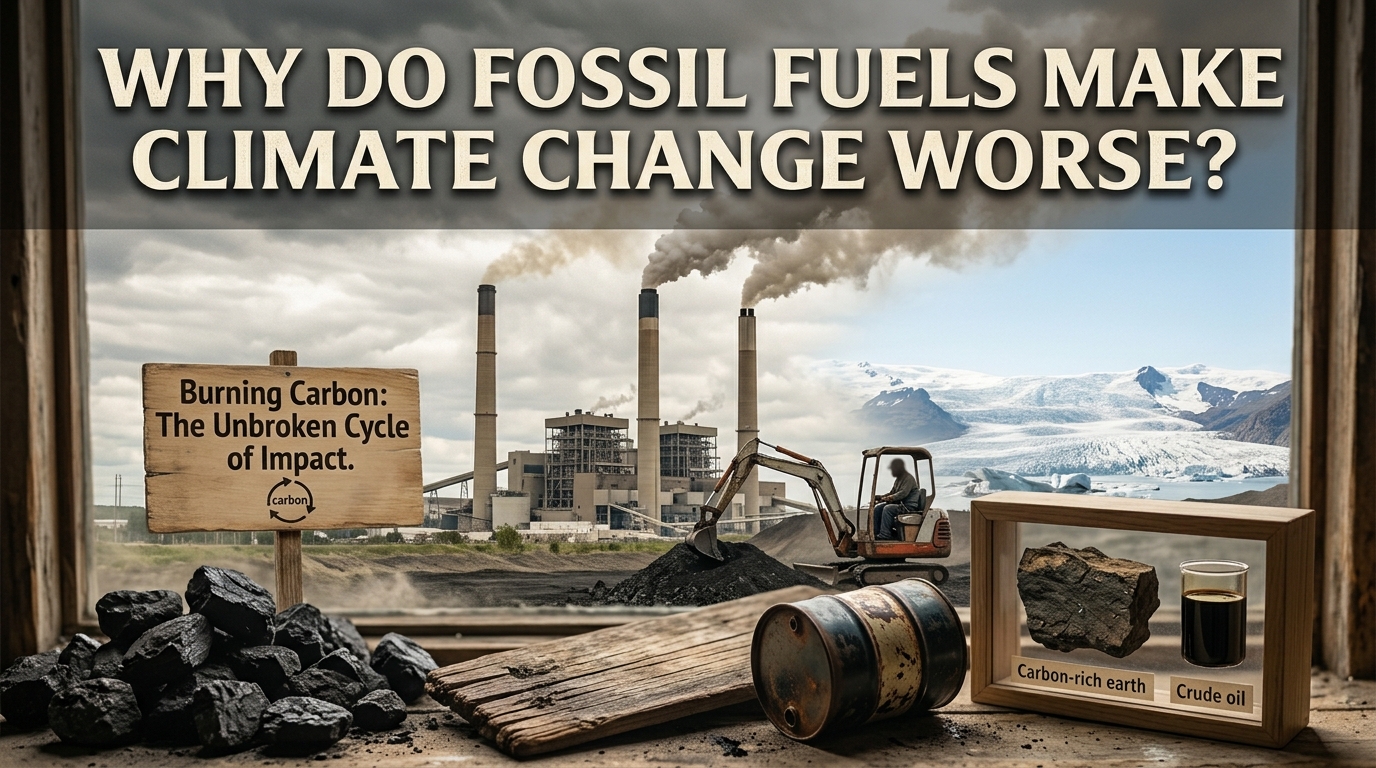
Fossil fuels are among the main contributors to climate change because burning coal, oil, and natural gas releases large amounts of greenhouse gases into the atmosphere. These fuels power vehicles, generate electricity, support industries, and provide energy for everyday activities. However, their widespread use increases the concentration of gases that trap heat around Earth, causing global temperatures to rise.
Understanding why fossil fuels worsen climate change is essential for finding effective ways to reduce global warming. Their environmental impact goes beyond rising temperatures, affecting weather patterns, sea levels, ecosystems, and human health. By learning how fossil fuels contribute to this problem, individuals, businesses, and governments can make better decisions about energy use and environmental protection.
WHAT ARE FOSSIL FUELS?
Fossil fuels are energy sources formed from the remains of ancient plants and organisms that were buried and transformed by heat and pressure over millions of years. The three main types are coal, oil, and natural gas. Coal is widely used to generate electricity and supply energy for certain industrial processes, while oil is a major fuel for transportation. Natural gas is used for heating, electricity generation, cooking, and industrial production. Although these fuels provide reliable energy, extracting and burning them creates environmental challenges.
Fossil fuels are classified as nonrenewable resources because they take millions of years to form and cannot be replenished quickly enough to match modern consumption. When people burn these fuels, their stored chemical energy is released as heat, which can be used to power machines and produce electricity. This process also releases carbon dioxide, a major greenhouse gas responsible for human-caused global warming. Some fossil fuel operations also release methane, particularly during the extraction, processing, and transportation of natural gas. Their widespread use increases greenhouse gas emissions, making the transition to cleaner energy sources increasingly important.
HOW FOSSIL FUELS CONTRIBUTE TO GLOBAL WARMING
The main reason fossil fuels worsen climate change is that burning them releases carbon dioxide (CO2) into the atmosphere. Carbon dioxide absorbs and re-emits infrared radiation, helping retain heat within Earth's climate system. This natural greenhouse effect keeps the planet warm enough to support life, but human activities have strengthened it by adding excessive greenhouse gases. As fossil fuel consumption increases, more carbon dioxide accumulates in the atmosphere and contributes to rising global temperatures. This process is a major driver of human-caused global warming.
The effects develop over time because carbon dioxide can remain in the climate system for a long period. Even if emissions decrease, temperatures do not immediately return to earlier levels because the atmosphere and oceans respond slowly to changes in greenhouse gas concentrations. Continued fossil fuel use adds more heat-trapping gases and increases the risk of severe climate impacts. Other human activities, including deforestation and certain agricultural practices, also contribute to climate change. However, reducing fossil fuel emissions is one of the most important steps toward limiting future warming.
THE ROLE OF GREENHOUSE GASES IN CLIMATE CHANGE
Greenhouse gases are gases in the atmosphere that absorb and re-emit heat. Carbon dioxide is released when coal, oil, and natural gas are burned, while methane can escape from fossil fuel production and distribution systems. Methane traps more heat than carbon dioxide over a given period, although it remains in the atmosphere for a shorter time. Leaks from natural gas infrastructure can therefore contribute significantly to near-term warming. Reducing both carbon dioxide emissions and methane leaks is essential for slowing climate change.
The increasing concentration of greenhouse gases changes Earth's energy balance by causing more heat to remain in the climate system. As a result, average global temperatures rise, and many regions experience changes in rainfall, seasonal patterns, and extreme weather risks. Oceans absorb much of the excess heat, contributing to warmer seawater and the expansion of ocean water. Carbon dioxide also dissolves into seawater, causing ocean acidification, which threatens organisms such as corals and shell-forming animals. These connected effects demonstrate why greenhouse gas emissions have consequences far beyond the atmosphere.
ENVIRONMENTAL IMPACTS OF FOSSIL FUELS
The environmental effects of fossil fuels extend beyond global warming. Mining coal, drilling for oil, and extracting natural gas can damage habitats, disturb landscapes, and pollute nearby water sources if operations are poorly managed. Oil spills can harm marine wildlife, while coal mining may create waste that contaminates soil and water. Burning fossil fuels also releases air pollutants, including fine particles and nitrogen oxides, which can harm human health and contribute to other environmental problems. Fossil fuel production and use can damage ecosystems at multiple stages, from extraction to final consumption.
Climate change driven by fossil fuel emissions creates additional pressure on natural environments. Rising temperatures can contribute to glacier loss, sea-level rise, heat stress, and changes in the distribution of plant and animal species. Some areas face greater risks of drought, while others may experience heavier rainfall and flooding. Coral reefs are especially vulnerable to warmer oceans and acidification, which can disrupt marine ecosystems and the communities that depend on them. These impacts show that reducing fossil fuel use can benefit both the climate and the wider environment.
HOW FOSSIL FUELS AFFECT HUMAN HEALTH AND DAILY LIFE
Fossil fuel use affects human health through both air pollution and climate change. Burning coal, oil, and gas can release pollutants that worsen asthma, contribute to heart and lung disease, and increase the risk of premature death. People living near busy roads, power plants, and industrial facilities may face higher exposure to certain pollutants. The health effects vary depending on pollution levels, exposure duration, and individual circumstances. Cleaner energy can reduce harmful air pollution and help create healthier communities.
Climate change also affects daily life through extreme heat, flooding, drought, and disruptions to food and water supplies. Heat waves can increase the risk of heat-related illness, especially for older adults, outdoor workers, and people without adequate cooling. Droughts and changing rainfall patterns can reduce crop yields in some regions, while floods may damage homes, roads, and essential services. These disruptions can increase living costs and place additional pressure on vulnerable communities. Reducing greenhouse gas emissions can help limit future risks, although some climate impacts will continue because of past emissions.
WHY RENEWABLE ENERGY CAN HELP REDUCE CLIMATE CHANGE
Renewable energy comes from sources that naturally replenish, such as sunlight, wind, flowing water, and geothermal heat. Solar panels and wind turbines generate electricity without burning fossil fuels during operation, resulting in much lower direct greenhouse gas emissions. Hydropower can also provide low-emission electricity, although its environmental effects depend on how a project is designed and where it is built. Replacing fossil fuel electricity with renewable power can significantly reduce emissions when the full energy system is considered. This transition is an important part of efforts to limit global warming.
However, renewable energy systems also require materials, land, infrastructure, and careful planning. Electricity grids and energy storage can help manage changes in solar and wind generation, while energy efficiency reduces the amount of power needed in the first place. Cleaner transportation, including electric vehicles powered by low-emission electricity, can reduce reliance on petroleum. Governments and businesses can support this shift through investment, practical policies, and improvements to energy infrastructure. Combining renewable energy, energy efficiency, and cleaner technologies offers a stronger approach than relying on a single solution.
PRACTICAL WAYS TO REDUCE FOSSIL FUEL USE
Individuals can help reduce fossil fuel consumption by making more efficient choices in daily life. Using public transportation, walking, cycling, or sharing rides can reduce fuel use, particularly when these options replace trips made by individual cars. Improving home insulation, choosing energy-efficient appliances, and switching off unnecessary lighting can also lower electricity demand. Where practical and available, households can consider renewable electricity or more efficient heating and cooling systems. Small individual actions can contribute to wider emissions reductions, especially when supported by broader changes in energy systems.
Larger changes from governments, industries, and communities are equally important because energy infrastructure determines many available choices. Governments can expand renewable power, improve public transportation, establish effective emissions policies, and support research into low-carbon technologies. Businesses can reduce energy waste, improve industrial efficiency, and replace high-emission energy sources where feasible. Protecting forests and restoring damaged ecosystems can also help remove carbon dioxide from the atmosphere, although these actions cannot fully replace the need to cut fossil fuel emissions. Long-term climate progress requires cooperation between individuals, businesses, and governments.
CONCLUSION
Fossil fuels make climate change worse because burning coal, oil, and natural gas releases greenhouse gases that trap additional heat in Earth's climate system. These emissions drive global warming and contribute to rising sea levels, changing weather patterns, ecosystem damage, and health risks. Fossil fuel extraction and combustion can also cause air and water pollution, creating environmental problems beyond climate change itself. Reducing greenhouse gas emissions, expanding renewable energy, and improving energy efficiency are essential steps toward a more sustainable future. By making informed choices and supporting effective climate policies, society can reduce its dependence on fossil fuels and help limit the severity of future climate impacts.
Recent Posts

Bagaimana Sistem SKS pada Program Kuliah... 22.11.2026/50 View

How Does Technology Make Daily Evaluation... 21.11.2026/80 View

Apa Strategi Menghadapi Kesenjangan antara Kompetensi... 21.11.2026/79 View

Mengapa Inventaris Aset Penting bagi Kelancaran... 21.11.2026/75 View

When Should Musicians Join a Record... 21.11.2026/80 View
