

Why Do Major Cities Have High Population Density?
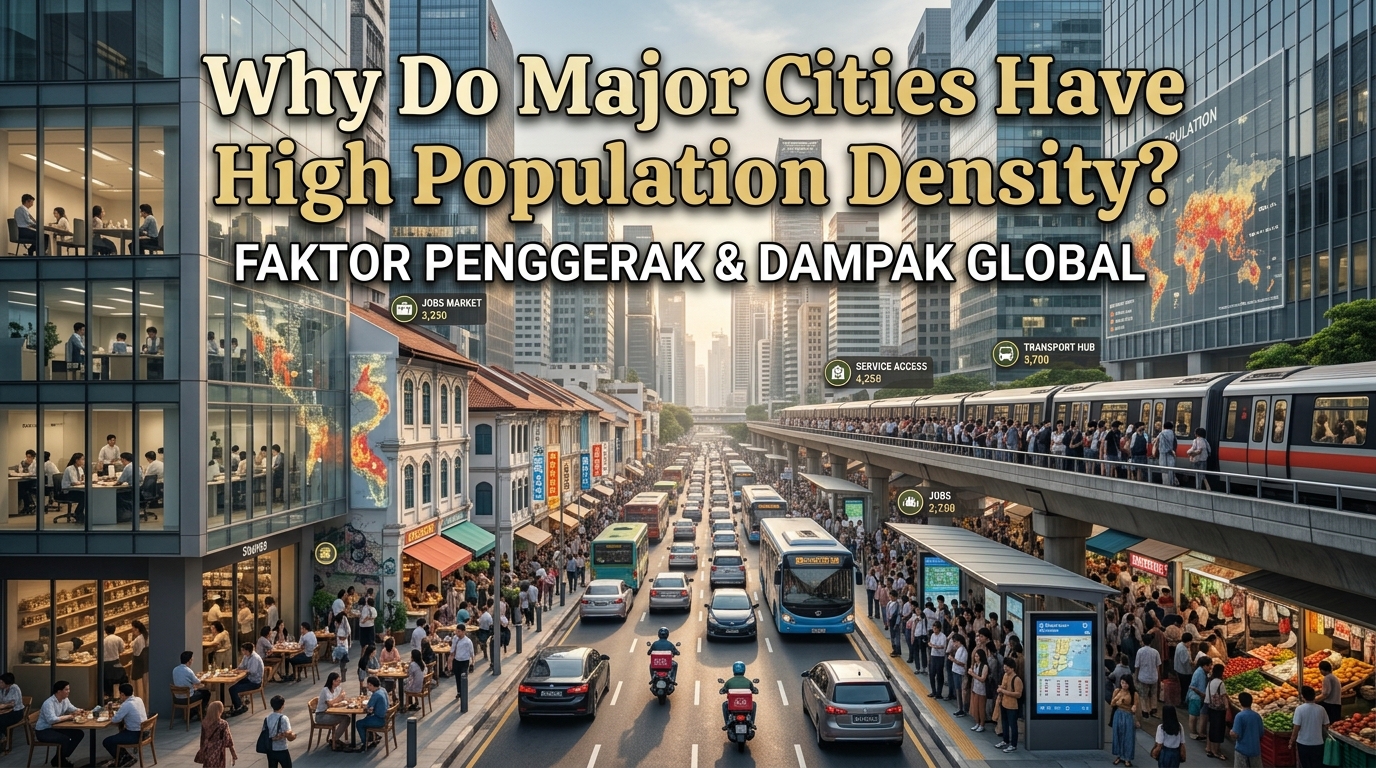
Major cities often have higher population density than rural areas because they offer more opportunities, better facilities, and easier access to essential services. People from different regions move to urban centers to find employment, pursue education, access healthcare, and improve their quality of life. As a result, large numbers of residents live within relatively limited areas of land. This condition can encourage economic growth and urban development, but it can also create challenges such as traffic congestion, housing shortages, pollution, and pressure on public facilities. Understanding why major cities have high population density helps explain urban growth and the importance of effective city planning.
WHAT IS POPULATION DENSITY IN MAJOR CITIES?
Population density refers to the average number of people living within a specific unit of land area, commonly measured in people per square kilometer. Major cities usually have higher population density because residential buildings, workplaces, businesses, and public facilities are concentrated within limited spaces. Unlike rural areas, where houses and settlements may be spread across larger territories, urban communities often live closer together. This creates a higher concentration of residents in city centers and surrounding neighborhoods.
However, population density is not always evenly distributed throughout a city. Business districts, apartment neighborhoods, and areas near transportation hubs may have more residents or daily visitors than suburban locations. Some cities also have large industrial or commercial areas with relatively few permanent residents. Therefore, understanding urban population density requires considering both the number of residents and how land is used.
MORE EMPLOYMENT OPPORTUNITIES IN URBAN AREAS
One major reason cities have high population density is the availability of employment opportunities. Large cities usually contain offices, factories, shopping centers, restaurants, financial institutions, and technology companies. These businesses create jobs for people with different educational backgrounds and professional skills. Many individuals move to urban areas because they believe they can find better careers and earn higher incomes.
Employment opportunities also attract workers from surrounding towns and rural communities. As businesses expand, they require more employees, which can encourage further migration into cities. This continuous movement increases demand for housing and other facilities. Consequently, major employment centers often become highly populated areas.
BETTER EDUCATION AND HEALTHCARE FACILITIES
Major cities generally provide greater access to educational institutions, including universities, colleges, vocational schools, and professional training centers. Students from different regions move to cities to pursue higher education and develop skills for their future careers. The presence of educational facilities can also attract lecturers, researchers, and other professionals. This creates additional demand for residential housing and public services.
Healthcare facilities also influence where people choose to live. Large cities often have more hospitals, specialist clinics, laboratories, and medical professionals than remote areas. Residents may prefer locations where they can access healthcare services more easily. These educational and healthcare advantages contribute to population concentration in major urban centers.
BETTER INFRASTRUCTURE AND PUBLIC TRANSPORTATION
Infrastructure development makes major cities attractive places to live and work. Urban areas usually have established road networks, electricity systems, clean water facilities, communication networks, and public services. These facilities support residential activities and allow businesses to operate more efficiently. As infrastructure improves, cities can attract more residents, investors, and economic activities.
Public transportation also plays an important role in urban population growth. Buses, trains, commuter railways, and other transportation services help people travel between residential neighborhoods and workplaces. Areas with convenient transportation connections often attract more residents because daily activities become easier to manage. However, rapid population growth can place pressure on transportation systems if their capacity does not increase accordingly.
URBANIZATION AND RURAL TO URBAN MIGRATION
Urbanization is the process through which an increasing proportion of a country's population lives in urban areas. It commonly occurs when people move from rural communities to cities in search of better employment, education, healthcare, and living conditions. Major cities become attractive destinations because they offer a wider range of economic and social opportunities. This movement gradually increases the number of people living in urban areas.
Rural-to-urban migration can also occur because of limited opportunities in smaller communities. Some rural residents move because agricultural employment is seasonal or local industries cannot provide enough jobs. When migration continues over many years, cities may experience significant population growth. This process contributes to higher population density and greater demand for urban housing and infrastructure.
BUSINESS ACTIVITIES AND ECONOMIC DEVELOPMENT
Major cities are important centers of economic activity because they bring together businesses, investors, workers, and consumers. Companies often establish offices and commercial operations in cities to access larger markets and skilled employees. The concentration of businesses creates opportunities in trade, manufacturing, finance, technology, tourism, and other industries. These activities encourage people to move closer to urban economic centers.
Economic development can also create supporting industries and new residential areas. When a company opens a factory or office, other businesses such as restaurants, transportation providers, and retail stores may develop nearby. This creates a wider employment network and attracts additional residents. As economic activities become more concentrated, population density can increase in surrounding neighborhoods.
LIMITED LAND AND HIGH HOUSING DEMAND
Another important reason major cities have high population density is the limited availability of land in developed urban areas. Cities often have established boundaries, while the number of people seeking housing continues to increase. This creates strong demand for residential properties, especially in locations close to workplaces, schools, and transportation facilities. As a result, many cities develop apartments and multi-story residential buildings to accommodate more people within limited spaces.
High housing demand can also increase property prices and rental costs. Some residents may choose smaller homes or shared accommodation because affordable housing is difficult to find. In certain cities, rapid population growth can contribute to overcrowded residential neighborhoods. Proper housing policies and land-use planning are therefore necessary to support growing urban populations.
THE ROLE OF GOVERNMENT POLICIES AND URBAN PLANNING
Government policies can influence population concentration by determining where infrastructure, public facilities, and economic development projects are located. Investments in transportation, education, healthcare, and industrial zones can attract people to particular urban areas. In some countries, major cities also serve as administrative and political centers, creating additional employment and business opportunities. These factors can strengthen population concentration.
Effective urban planning is necessary to manage this growth. Governments need to provide sufficient housing, public transportation, green spaces, drainage systems, and waste management facilities. They should also encourage development in smaller cities to reduce excessive dependence on major urban centers. Good planning can help cities accommodate larger populations without sacrificing environmental quality and residents' well-being.
THE IMPACT OF HIGH POPULATION DENSITY ON CITY LIFE
High population density can provide several economic and social advantages. Businesses have access to larger markets, public transportation can serve more passengers, and residents may find schools, hospitals, and shopping facilities closer to their homes. Dense urban areas can also encourage innovation because people from different professional and cultural backgrounds interact more frequently. These conditions can support productivity and economic growth.
However, high population density can create serious challenges when urban development cannot keep pace with population growth. Traffic congestion, air pollution, housing shortages, overcrowded public facilities, and increasing waste production may affect residents' quality of life. Limited green spaces can also reduce environmental comfort in some neighborhoods. Therefore, high population density needs to be supported by sustainable infrastructure and responsible urban management.
CONCLUSION
Major cities have high population density because they offer more employment opportunities, better education and healthcare facilities, developed infrastructure, and diverse economic activities. Urbanization and rural-to-urban migration further increase the number of people living in these areas. Limited land availability and growing housing demand also contribute to the concentration of residents in urban environments.
Although high population density can support economic growth and improve access to services, it must be managed carefully. Governments need effective urban planning, affordable housing, reliable transportation, and balanced regional development. With appropriate strategies, major cities can accommodate growing populations while maintaining a healthy, comfortable, and sustainable living environment.
Recent Posts

Bagaimana Sistem SKS pada Program Kuliah... 22.11.2026/33 View

How Does Technology Make Daily Evaluation... 21.11.2026/67 View

Apa Strategi Menghadapi Kesenjangan antara Kompetensi... 21.11.2026/67 View

Mengapa Inventaris Aset Penting bagi Kelancaran... 21.11.2026/65 View

When Should Musicians Join a Record... 21.11.2026/66 View
