

Why Do Old Cities Reflect Changes Through Time?
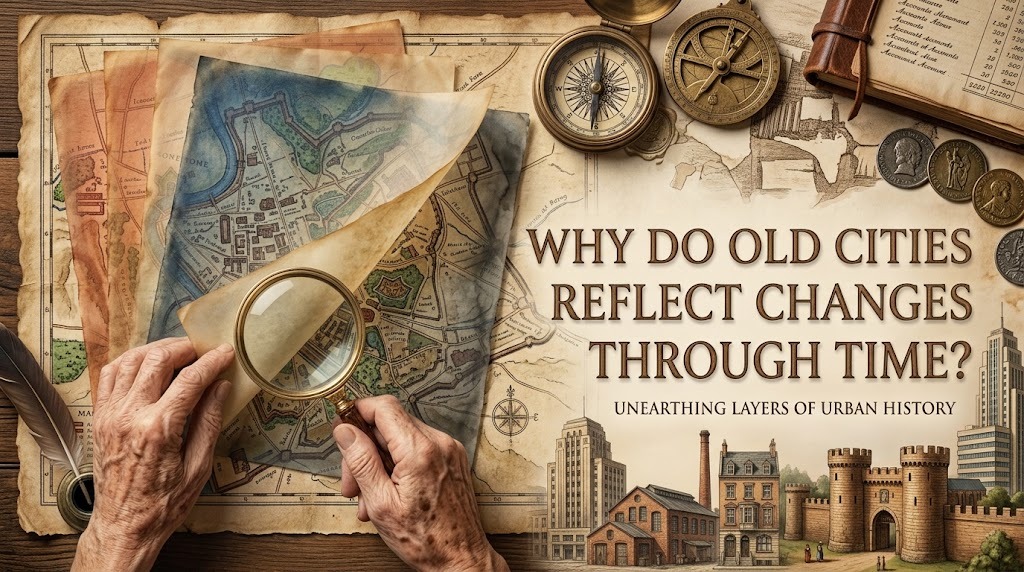
Old cities are more than collections of historic buildings. They contain evidence of how communities have changed because their streets, architecture, neighborhoods, and public spaces develop over many generations. Political events, economic growth, technological advances, migration, and cultural changes can all leave visible marks on an urban landscape. As a result, walking through an old city can reveal different periods of history within the same place.
ARCHITECTURE PRESERVES HISTORICAL PERIODS
Buildings are among the clearest examples of how cities reflect changes through time. Different periods often produce distinctive architectural styles, construction materials, and building techniques. Older structures may stand beside buildings constructed during later periods, creating a physical record of architectural development.
Changes in architecture can also reflect changing social needs. A building originally used as a residence may later become a shop, office, museum, or public facility. The continued adaptation of old structures demonstrates how urban communities respond to new requirements while preserving elements of their past.
STREET PATTERNS SHOW URBAN DEVELOPMENT
The layout of streets can reveal how an old city expanded. Narrow streets may reflect an early settlement that developed before modern transportation became common. Wider roads, planned districts, and new transportation routes may indicate later periods of population growth and urban modernization.
Some historic street patterns remain even after surrounding areas have changed significantly. Roads that once served markets, defensive structures, or local neighborhoods may later become major urban routes. Their continued presence connects the modern city with its earlier development.
POLITICAL CHANGES LEAVE URBAN MARKS
Political changes can significantly influence the appearance and organization of a city. New governments may construct administrative buildings, monuments, public squares, or other structures that represent their authority and priorities.
Wars, changes in government, and shifts in territorial control can also affect urban development. Buildings may be destroyed, rebuilt, renamed, or given new functions after major political events. These changes allow historians to identify how political developments influenced everyday urban life.
ECONOMIC GROWTH TRANSFORMS CITIES
Economic activity is another major force behind urban change. When trade, manufacturing, tourism, or other industries expand, cities often develop new markets, warehouses, factories, offices, and transportation facilities.
Economic decline can produce different changes. Former industrial areas may become abandoned or later be converted into housing, cultural spaces, or commercial districts. These transformations show how the economic purpose of a city can change while parts of its earlier landscape remain visible.
MIGRATION CHANGES URBAN CULTURE
The arrival of different groups of people can influence neighborhoods, languages, foods, traditions, religious buildings, and businesses. Over time, migration can create distinctive cultural districts within an old city.
These communities contribute new customs while also interacting with existing traditions. As generations pass, the combination of different cultural influences becomes part of the city's identity. Historic neighborhoods can therefore provide evidence of long-term population movement and cultural exchange.
TECHNOLOGY AND TRANSPORTATION CREATE NEW SPACES
Technological development often changes how people move, work, and communicate. The introduction of railways, automobiles, electricity, and modern communication systems has influenced the physical structure of many cities.
New transportation technologies can require stations, bridges, roads, tunnels, and expanded urban districts. Older infrastructure may then be replaced, modified, or given new purposes. The coexistence of old and modern infrastructure demonstrates how technological changes gradually reshape urban environments.
NATURAL EVENTS AND RECONSTRUCTION
Natural disasters can also leave visible evidence of change. Earthquakes, floods, fires, and other events may damage buildings and force communities to rebuild parts of a city.
Reconstruction often introduces new building standards, materials, and urban planning approaches. Some historic structures may be restored, while others are replaced with modern buildings. The resulting landscape can preserve evidence of both the original city and the response to later disasters.
PRESERVATION CONNECTS THE PAST WITH THE PRESENT
Historic preservation allows important buildings, streets, monuments, and neighborhoods to remain part of a modern city. Preservation does not necessarily mean preventing all change. Instead, it can involve maintaining historically significant features while allowing buildings and districts to serve contemporary purposes.
Museums, heritage districts, restored markets, and protected landmarks can help residents and visitors understand earlier periods. Successful preservation can therefore create a connection between historical identity and modern urban needs.
CONCLUSION
Old cities reflect changes through time because every generation leaves physical, cultural, economic, and political influences on the urban environment. Architecture, street patterns, infrastructure, neighborhoods, and public spaces can reveal different stages of development. Some features disappear while others are preserved or adapted for new purposes. By studying these layers, people can better understand how cities evolved and how the past continues to influence modern urban life.
Recent Posts

Bagaimana Sistem SKS pada Program Kuliah... 22.11.2026/50 View

How Does Technology Make Daily Evaluation... 21.11.2026/79 View

Apa Strategi Menghadapi Kesenjangan antara Kompetensi... 21.11.2026/79 View

Mengapa Inventaris Aset Penting bagi Kelancaran... 21.11.2026/75 View

When Should Musicians Join a Record... 21.11.2026/80 View
