

Why Do Regional Government Owned Enterprises Experience Financial Losses and How Can They Recover?
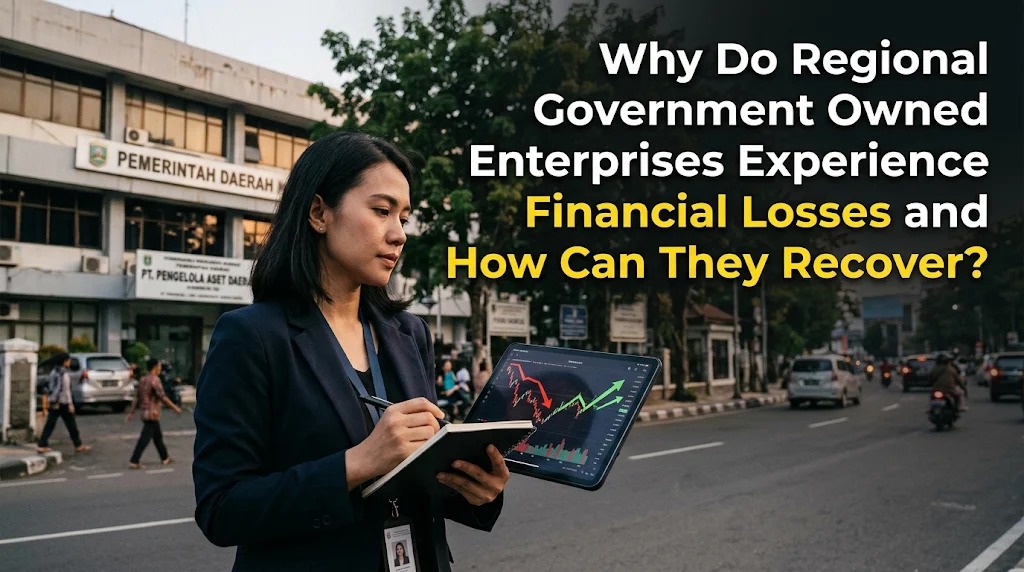
Regional Government Owned Enterprises (BUMD) play an important role in supporting local economic development and providing essential services to communities. These enterprises operate in various sectors, including banking, transportation, clean water supply, energy, and regional trade. However, despite their important responsibilities, some BUMD experience financial losses that affect their business performance and ability to contribute to regional revenue.
Financial losses can occur because of poor management, high operational costs, weak business strategies, limited market demand, and ineffective financial planning. These problems can reduce company income and create difficulties in maintaining daily operations. To recover, BUMD need to identify the causes of their financial problems, improve management practices, and develop sustainable business strategies.
UNDERSTANDING THE CAUSES OF FINANCIAL LOSSES IN BUMD
Financial losses occur when a company's total expenses exceed its income over a specific period. For Regional Government Owned Enterprises, this situation can result from several internal and external factors. Internal problems may include inefficient operations, poor financial management, excessive employee expenses, and weak business planning. Meanwhile, external factors may involve economic uncertainty, market competition, inflation, and changes in customer demand.
Some BUMD also face challenges because their business activities must balance commercial objectives with public service responsibilities. For example, an enterprise may need to maintain affordable service prices even when operational costs increase. Without proper financial planning and support, these conditions can create pressure on company finances. Understanding the causes of financial losses is essential before management decides which recovery strategies should be implemented.
POOR MANAGEMENT AND INEFFICIENT OPERATIONAL COSTS
One major reason BUMD experience financial losses is ineffective management. Poor decision-making, weak supervision, unclear responsibilities, and inappropriate investment choices can negatively affect company performance. When management does not establish clear business targets, enterprises may struggle to control expenses and generate sufficient revenue.
High operational costs can also reduce profitability. Expenses related to employee salaries, equipment maintenance, energy, administration, and business operations need to be managed carefully. If these costs continue increasing without improvements in productivity or service quality, financial losses may become more serious. Therefore, BUMD need professional leadership, regular performance evaluations, and effective cost management to maintain financial stability.
WEAK BUSINESS STRATEGIES AND MARKET COMPETITION
Another factor that can cause financial difficulties is the inability to develop business strategies that match market conditions. Some BUMD may continue using outdated business models without considering changes in customer preferences, technology, and industry competition. As a result, their products or services may become less attractive to consumers.
Market competition can also reduce customer demand and company revenue. Private businesses may offer more efficient services, competitive prices, or better customer experiences. To respond to these challenges, BUMD need to conduct market research, understand customer needs, and identify opportunities for business development. Improving service quality and adapting to technological changes can help enterprises remain competitive and increase their income.
IMPROVING FINANCIAL MANAGEMENT AND BUSINESS EFFICIENCY
Recovering from financial losses requires BUMD to improve their financial management systems. Management should examine financial reports, identify unnecessary expenses, evaluate outstanding debts, and establish realistic budgets. These steps help enterprises understand their financial conditions and determine which activities require immediate improvement.
Operational efficiency should also become a priority. BUMD can use digital technology to simplify administrative processes, improve financial reporting, and monitor business performance. They can also review procurement procedures, improve employee productivity, and manage company assets more effectively. With better financial control and efficient operations, enterprises can reduce unnecessary expenses and gradually improve their financial positions.
DEVELOPING NEW BUSINESS OPPORTUNITIES AND STRENGTHENING SUPERVISION
BUMD can also recover by exploring new business opportunities that match regional economic potential and community needs. For example, enterprises may develop digital services, improve distribution networks, establish partnerships with local businesses, or expand services into promising market segments. Business development should be based on careful research and realistic financial assessments to avoid creating additional financial risks.
Strong supervision is equally important for long-term recovery. Regional governments, company management, and relevant supervisory bodies should regularly evaluate financial performance and ensure accountability. Clear performance targets, transparent reporting, and professional management can help prevent repeated financial problems. Cooperation between regional governments and BUMD should also focus on sustainable business development rather than relying only on additional capital injections.
CONCLUSION
Regional Government Owned Enterprises can experience financial losses because of poor management, inefficient operational costs, weak business strategies, market competition, and external economic challenges. These problems can reduce profitability and limit their ability to provide services and contribute to regional revenue.
Recovery requires comprehensive improvements in financial management, operational efficiency, business development, and corporate supervision. By identifying the main causes of financial difficulties and implementing appropriate strategies, BUMD can gradually improve their financial performance. With professional management and sustainable planning, these enterprises can strengthen their business operations and continue supporting regional economic development.
Recent Posts

Bagaimana Sistem SKS pada Program Kuliah... 22.11.2026/35 View

How Does Technology Make Daily Evaluation... 21.11.2026/69 View

Apa Strategi Menghadapi Kesenjangan antara Kompetensi... 21.11.2026/70 View

Mengapa Inventaris Aset Penting bagi Kelancaran... 21.11.2026/67 View

When Should Musicians Join a Record... 21.11.2026/69 View
