

Why Do Regional Languages Differ Even Within the Same Province?
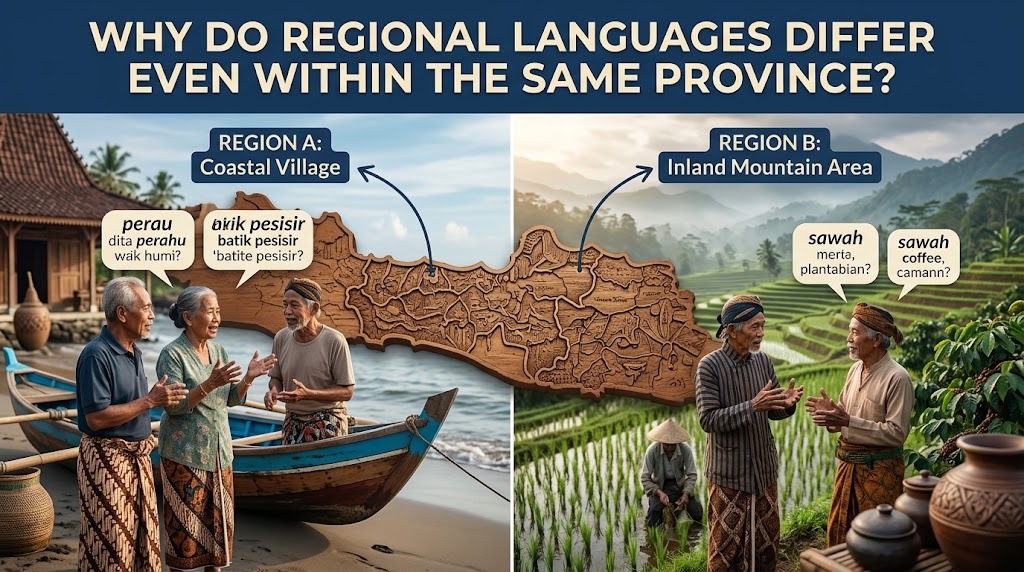
Regional languages can differ significantly even among communities living within the same province. People in neighboring towns or villages may use different words, pronunciation patterns, expressions, and sentence structures when communicating. These differences develop through historical events, geographical conditions, cultural practices, migration, and interactions between communities. Linguistic diversity does not stop at provincial boundaries because languages develop naturally through the experiences of the people who speak them. Understanding these variations helps explain how regional languages evolve and why local speech patterns are valuable parts of cultural identity.
HISTORICAL DEVELOPMENT OF LOCAL COMMUNITIES
Historical events play an important role in shaping language differences within a province. Communities may have developed their own speech patterns over generations because they experienced different migrations, political changes, trading relationships, or cultural influences. Some villages may preserve older vocabulary, while other areas adopt new words through contact with outside communities. Over time, these changes can create noticeable differences in the way people speak. The history of each community helps shape the vocabulary and expressions used by its speakers.
Even communities that currently share the same administrative region may have different historical backgrounds. One area may have been an important trading center, while another developed around agriculture, fishing, or traditional crafts. These different experiences can influence the words people use to describe their surroundings and daily activities. Family traditions can also help preserve particular expressions for many generations. Studying local history therefore provides useful context for understanding why language varieties differ within a province.
GEOGRAPHICAL CONDITIONS AND NATURAL BARRIERS
Geographical conditions can limit communication between neighboring communities. Mountains, rivers, forests, and other natural features may make travel difficult, especially before modern transportation became widely available. When communities interact less frequently, their pronunciation and vocabulary can gradually develop in different ways. Natural barriers can encourage local language variations by reducing regular contact between speakers.
The influence of geography depends on the location and the history of the communities involved. Some villages may be physically close but separated by difficult terrain, while others may communicate frequently because they share roads, markets, or transportation routes. These differences in interaction can affect how quickly words and expressions spread. Modern transportation and digital communication may reduce some barriers, but older speech patterns can remain strong. Geography is therefore one factor among several that influence linguistic diversity within a province.
DIFFERENCES IN CULTURE AND DAILY ACTIVITIES
Communities within the same province may have different customs, occupations, foods, and social traditions. These differences often appear in their vocabulary because people develop words and expressions suited to their daily experiences. For example, communities with different traditional dishes may use distinct names for ingredients and cooking methods. Areas with specialized crafts or agricultural practices may also maintain vocabulary that is less common elsewhere. Local culture influences language by creating expressions that reflect the activities and values of a community.
Cultural differences can also affect greetings, forms of respect, and expressions used during traditional ceremonies. One community may prefer a particular expression when addressing older people, while another may use a different form. These variations can reflect local expectations about politeness, family relationships, and social responsibilities. Learning the vocabulary of another community can therefore reveal important details about its cultural practices. Preserving these expressions helps maintain both linguistic diversity and local cultural knowledge.
MIGRATION AND INTERACTION BETWEEN COMMUNITIES
Migration can introduce new vocabulary and speech patterns into a community. When people move for work, education, marriage, trade, or other reasons, they bring their language habits with them. Through regular interaction, local speakers may adopt new words, adjust their pronunciation, or develop expressions influenced by other varieties. Contact between different groups can gradually create new language variations within the same province.
Markets, schools, workplaces, and community gatherings provide opportunities for people from different areas to communicate. In some places, frequent interaction encourages speakers to develop a shared way of communicating. In others, communities retain their distinctive speech patterns while borrowing selected words from their neighbors. Migration can also introduce languages from outside the province, adding further diversity to local communication. These processes show that language differences are not fixed but continue to develop as communities interact.
DIALECTS AND LOCAL PRONUNCIATION
Many regional languages contain several dialects or local varieties. A dialect may differ from another variety in vocabulary, pronunciation, grammar, and common expressions. Even when speakers understand one another easily, they may notice differences in the words they choose or the way they pronounce them. Local dialects are natural forms of linguistic variation rather than evidence that one community speaks incorrectly.
Pronunciation differences can be especially noticeable between neighboring areas. Speakers may pronounce certain sounds differently, emphasize different syllables, or use distinct speech rhythms. Vocabulary may also vary, with different words referring to the same object or activity. Some variations are associated with particular towns, villages, age groups, or social settings. Recognizing these patterns can help learners understand local speech more accurately and communicate respectfully with people from different communities.
EDUCATION AND MODERN COMMUNICATION
Education and modern communication can influence how language varieties develop within a province. Schools may teach a commonly recognized form of a regional language, while students continue to use local expressions at home. Television, radio, social media, and online videos can spread vocabulary between communities more quickly than before. These influences may encourage some speakers to adopt widely used expressions while retaining features of their local variety. Education and digital communication can connect language communities, but they do not automatically eliminate local differences.
Schools can help students appreciate linguistic variation by explaining how dialects reflect regional history and cultural identity. Teachers can introduce examples of vocabulary and pronunciation from different parts of the province without presenting one variety as inherently superior. Digital dictionaries and recordings can also document local speech patterns for future generations. Community members should be involved to ensure that the examples are accurate and representative. By combining education with documentation, communities can preserve local varieties while helping people communicate across regional boundaries.
CONCLUSION
Regional languages differ within the same province because communities have distinct histories, geographical conditions, cultural practices, migration patterns, and communication experiences. These influences shape vocabulary, pronunciation, grammar, and everyday expressions over time. Local language variations are an important part of linguistic diversity and reflect the identity of individual communities. Understanding these differences can strengthen cultural appreciation and reduce misunderstandings between speakers. Through education, documentation, and continued use, communities can preserve their unique language varieties for future generations.
Recent Posts

Bagaimana Sistem SKS pada Program Kuliah... 22.11.2026/49 View

How Does Technology Make Daily Evaluation... 21.11.2026/77 View

Apa Strategi Menghadapi Kesenjangan antara Kompetensi... 21.11.2026/78 View

Mengapa Inventaris Aset Penting bagi Kelancaran... 21.11.2026/74 View

When Should Musicians Join a Record... 21.11.2026/79 View
