

Why Do Regional Languages Have Different Vocabulary Across Regions?
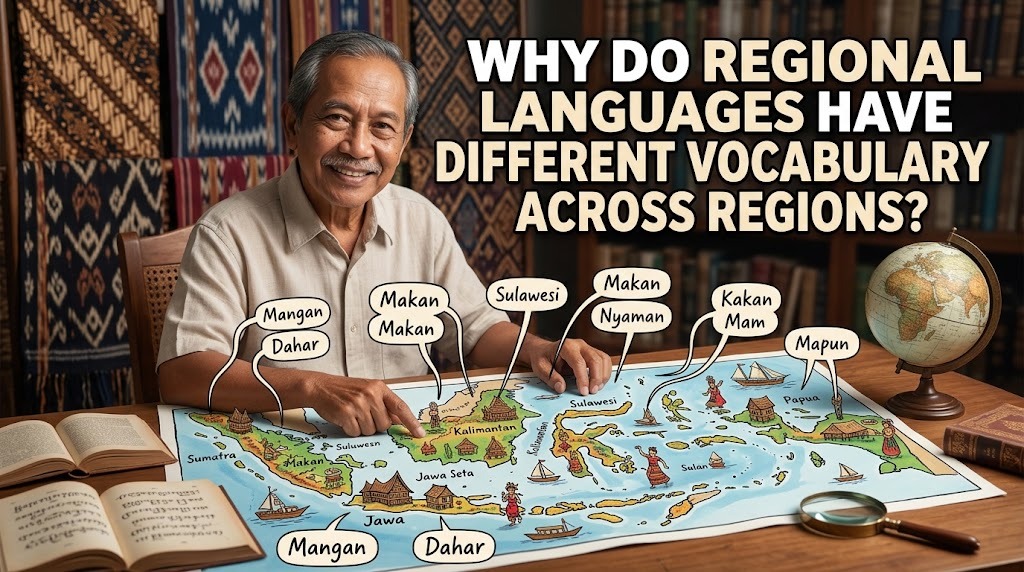
Regional languages often have different vocabulary even when they are spoken in neighboring areas. These differences develop through history, geography, cultural practices, migration, and contact with other languages. A word used in one region may have a different meaning or an entirely different form in another region. Vocabulary differences reflect the unique experiences and identities of the communities that use a language. Understanding why these differences exist can help people appreciate linguistic diversity and communicate more effectively across regions.
HISTORICAL DEVELOPMEaNT OF REGIONAL LANGUAGES
Regional languages develop over long periods as communities pass words and expressions from one generation to another. Over time, pronunciation, word meanings, and vocabulary can change according to local usage. Communities that become separated may develop different words for the same object or activity. Meanwhile, some communities preserve older words that have disappeared from everyday speech elsewhere. Historical development is one of the main reasons vocabulary differs between regions.
Indonesia has experienced centuries of migration, trade, cultural exchange, and social change. These historical processes influenced how local languages developed and how their speakers adopted or modified words. For example, regional communities may use different traditional terms for household objects, agricultural tools, or social relationships because their vocabulary developed through different historical experiences. Some words also survive in particular areas because they are associated with local traditions. Studying these differences can help researchers understand how languages and communities have changed over time.
GEOGRAPHICAL DISTANCE AND COMMUNITY ISOLATION
Geography can influence how languages develop. Mountains, forests, rivers, islands, and long travel distances may limit regular communication between communities. When people have fewer opportunities to interact, their vocabulary can gradually develop in different directions. One community may create a new word for a local object, while another may retain an older expression or adopt a different term. Geographical separation can encourage vocabulary differences by reducing frequent contact between speakers.
Indonesia's archipelagic geography provides many examples of communities developing distinct linguistic characteristics. People living on different islands or in remote areas may have developed vocabulary suited to their local environments and ways of life. However, geographical distance does not automatically create different languages or vocabularies. Trade routes, transportation, education, and digital communication can connect distant communities and spread words between them. Vocabulary differences therefore depend on both geographical conditions and the amount of contact between speakers.
LOCAL CULTURE AND DAILY ACTIVITIES
Vocabulary often reflects the customs, occupations, and experiences of a community. People who work in agriculture, fishing, crafts, or traditional markets may use specialized words related to their activities. Communities may also develop unique expressions for ceremonies, family relationships, traditional foods, and social responsibilities. These words can be difficult to translate directly because they may refer to cultural practices that are unfamiliar elsewhere. Local culture shapes vocabulary by creating words that express a community's specific experiences and values.
For example, communities with different culinary traditions may use distinct names for ingredients, cooking methods, and traditional dishes. Areas with strong fishing traditions may have specialized terms for boats, fishing equipment, or sea conditions. Similarly, traditional ceremonies may include expressions that are meaningful only within a particular cultural context. When these practices are passed down through generations, their vocabulary often continues alongside them. Learning regional words can therefore provide valuable insight into local culture and daily life.
CONTACT WITH OTHER LANGUAGES
Regional languages frequently borrow words from languages spoken by neighboring communities or groups involved in trade, education, religion, and migration. These borrowed words may be adapted to local pronunciation, spelling, or grammatical patterns. As a result, communities speaking related languages can develop different vocabulary depending on which languages have influenced them. Some borrowed words become so common that speakers no longer recognize them as foreign in origin. Language contact can introduce new vocabulary and create differences between regional varieties.
In Indonesia, regional languages have interacted with Indonesian and various languages from other parts of the world. The words adopted by a community depend on its history, social relationships, and patterns of communication. One region may use a borrowed term from a particular language, while another may retain a traditional word for the same concept. Differences can also emerge when the same borrowed word develops different meanings in separate communities. These processes demonstrate that languages are dynamic systems that continue to respond to social and cultural change.
DIFFERENCES IN MEANING AND LOCAL USAGE
Vocabulary differences do not always involve completely different words. Sometimes, the same word has different meanings depending on the region where it is used. A word may refer to one object in a particular community but describe a broader concept or another object elsewhere. Pronunciation and context can also influence how listeners interpret a word. Understanding local meaning is essential for avoiding misunderstandings when communicating across regional language varieties.
Regional vocabulary may also differ according to age, social setting, or level of formality. Older speakers might use traditional expressions that younger people rarely hear, while younger generations may introduce words influenced by popular culture or digital communication. In some communities, people use particular expressions when speaking with elders but choose different words among close friends. These differences can exist within a single region as well as between distant areas. Paying attention to context and asking native speakers for clarification can help learners understand how words are used naturally.
THE ROLE OF EDUCATION AND MODERN COMMUNICATION
Education and modern communication influence how regional vocabulary is learned, shared, and standardized. Schools may teach a particular form of a regional language, especially when developing textbooks or other learning materials. However, the vocabulary used in everyday conversations may differ from the version presented in educational resources. Social media, online videos, and messaging applications can spread words between communities more quickly than in the past. Modern communication can both preserve local vocabulary and introduce new expressions across regions.
Digital dictionaries, recordings, and online language archives can help document vocabulary differences before less commonly used words disappear from everyday speech. Teachers can explain that regional variations are natural features of language rather than signs that one community speaks incorrectly. Learners should understand both commonly recognized forms and the local expressions used in their own communities. Collaboration with native speakers can also improve the accuracy of educational resources. By documenting and respecting vocabulary variations, communities can preserve linguistic diversity while making communication easier across regions.
CONCLUSION
Regional languages have different vocabulary across regions because of historical development, geographical separation, local culture, contact with other languages, changing meanings, and modern communication. These factors influence how communities create, adopt, and use words in everyday life. Vocabulary differences are a natural part of linguistic diversity and reflect the unique histories and experiences of local communities. Learning about these differences can improve communication, strengthen cultural understanding, and encourage respect for regional languages. Through education, documentation, and continued language use, communities can preserve their vocabulary for future generations.
Recent Posts

Bagaimana Sistem SKS pada Program Kuliah... 22.11.2026/49 View

How Does Technology Make Daily Evaluation... 21.11.2026/76 View

Apa Strategi Menghadapi Kesenjangan antara Kompetensi... 21.11.2026/78 View

Mengapa Inventaris Aset Penting bagi Kelancaran... 21.11.2026/74 View

When Should Musicians Join a Record... 21.11.2026/78 View
