

Why Do Students Have Difficulty Maintaining Learning Concentration?
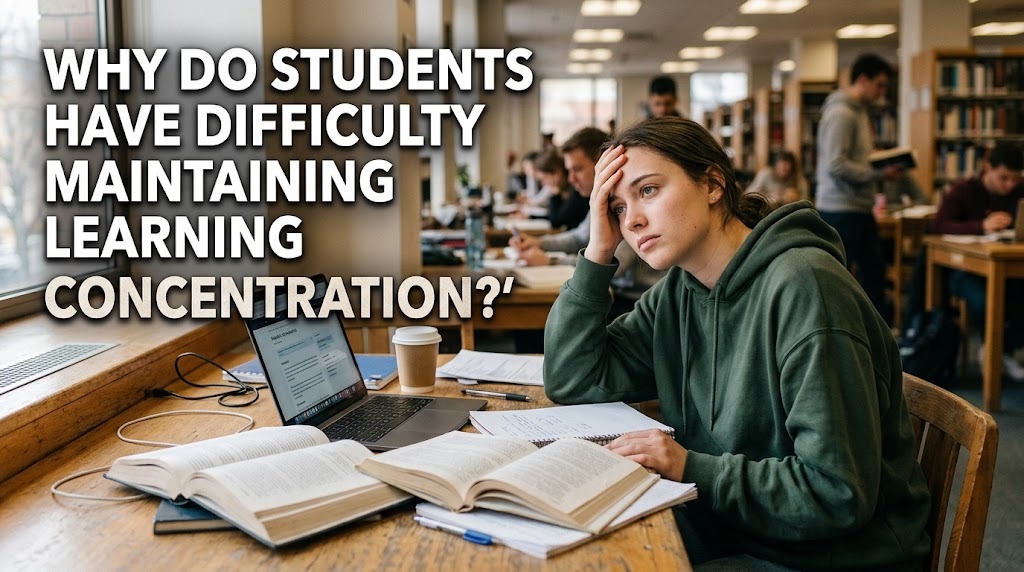
Learning concentration plays an important role in helping students understand lessons, complete assignments, and participate in academic activities. However, maintaining attention for an extended period is not always easy. Students may experience moments when their attention shifts from the material they are studying to other thoughts, activities, or distractions.
Difficulty maintaining concentration can have several causes and may differ from one student to another. Lack of sleep, distractions, unclear goals, emotional conditions, an unsuitable environment, and ineffective study habits can all contribute to reduced focus. Understanding these factors can help students identify ways to create more supportive learning conditions.
LACK OF SLEEP AND INADEQUATE REST
One common factor that can make it difficult for students to maintain concentration is insufficient rest. When students are tired, they may find it harder to pay attention to explanations, read carefully, or complete tasks that require sustained focus. Fatigue can also make the learning process feel more demanding.
Sleep and rest are therefore important parts of a healthy study routine. Students can organize their schedules so that learning does not consistently replace necessary rest. Maintaining a regular sleep pattern and taking appropriate breaks can help students approach learning activities in a more prepared condition.
DISTRACTIONS FROM MOBILE PHONES AND THE ENVIRONMENT
Students may encounter distractions from mobile phones, social media, messages, games, conversations, or surrounding activities. A notification can quickly redirect attention away from a lesson or assignment. Repeated interruptions may make it harder to return to the original task.
The physical learning environment can also affect learning concentration. Noise, an uncomfortable workspace, frequent interruptions, or an untidy study area may make sustained attention more difficult. Creating a study environment with fewer unnecessary distractions can help students direct their attention toward the material.
LACK OF CLEAR LEARNING GOALS
Students may have difficulty concentrating when they begin studying without knowing what they want to accomplish. A broad goal such as "study mathematics" does not provide a clear indication of what should be completed during a particular session. As a result, students may move between different tasks without making clear progress.
Setting specific and realistic learning goals can provide better direction. For example, students can decide to understand a particular concept, complete a set of practice questions, or review a specific section of material. Breaking a large task into smaller activities can make the learning process more manageable.
STRESS, WORRY, AND LOW MOTIVATION
Emotional conditions can also influence a student's ability to maintain attention. Worry about assignments, examinations, relationships, or other situations may occupy mental attention that would otherwise be directed toward learning. Academic stress can therefore make concentration more difficult for some students.
Motivation can also affect how willing students are to remain engaged with a subject. Material that feels difficult, repetitive, or unrelated to personal goals may be harder to focus on. Connecting lessons with practical examples or personal learning goals can sometimes make the material feel more relevant and encourage greater engagement.
INEFFECTIVE STUDY HABITS
Study habits can influence how easily students maintain concentration. Studying for too long without breaks, frequently switching between tasks, or attempting to memorize everything without understanding the material may make learning less effective. Poorly structured study routines can contribute to mental fatigue and reduced engagement.
Students can experiment with different learning methods to discover what works best for a particular subject. Taking notes, practicing questions, explaining concepts in their own words, and studying in manageable sessions can encourage active participation. Reviewing the effectiveness of these methods can help students gradually develop better concentration habits.
CONCLUSION
Students may have difficulty maintaining learning concentration because of insufficient rest, digital and environmental distractions, unclear learning goals, emotional pressure, low motivation, or ineffective study habits. These factors can occur individually or at the same time, so difficulty concentrating does not necessarily have one single cause.
Students can begin by identifying which conditions most often interfere with their attention. Adequate rest, clear goals, a supportive study environment, appropriate learning methods, and healthy routines can help create better conditions for concentration. Building these habits gradually can make it easier to maintain focus during academic activities.
Recent Posts

Bagaimana Sistem SKS pada Program Kuliah... 22.11.2026/28 View

How Does Technology Make Daily Evaluation... 21.11.2026/65 View

Apa Strategi Menghadapi Kesenjangan antara Kompetensi... 21.11.2026/65 View

Mengapa Inventaris Aset Penting bagi Kelancaran... 21.11.2026/62 View

When Should Musicians Join a Record... 21.11.2026/63 View
