

Why Do Surgical Robots Require Specialized Surgeon Training?
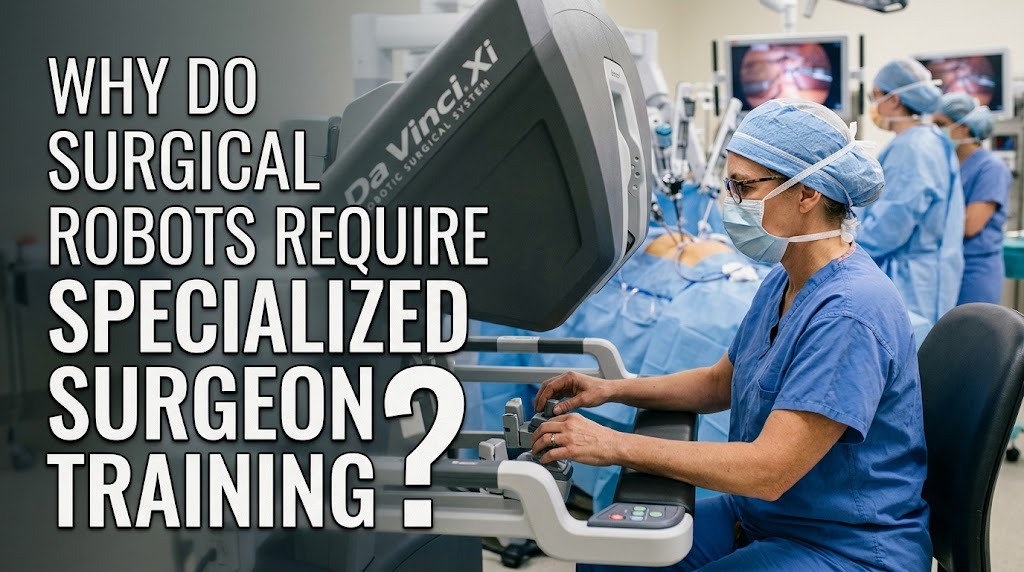
Surgical robots have become an important technology in modern medicine, supporting surgeons during complex procedures with advanced instruments and computer-assisted systems. Although these systems can provide greater precision, improved visualization, and enhanced instrument control, they do not perform surgery independently in the usual clinical setting. Surgeons must understand how to operate the robotic system safely and effectively. Specialized training is therefore necessary to develop the technical skills, clinical judgment, and emergency responses required for robotic-assisted procedures.
LEARNING HOW THE ROBOTIC SYSTEM WORKS
Surgeons need to understand the components and functions of a robotic surgical system before using it in an actual procedure. Training introduces them to the surgeon console, robotic arms, instruments, cameras, and other system controls. They learn how movements at the console are translated into instrument actions inside the patient's body. Understanding these functions helps surgeons use the technology appropriately and recognize potential equipment problems. This technical knowledge is an essential foundation for safe robotic-assisted surgery.
DEVELOPING PRECISE ROBOTIC SKILLS
Operating a surgical robot requires skills that differ from conventional open or laparoscopic surgery. Surgeons must learn how to control robotic instruments, manipulate tissue, and coordinate movements while viewing the surgical field through the system's visualization technology. Training allows them to practice these skills in controlled environments before performing procedures on patients. Repeated practice can improve coordination and familiarity with the system. Surgeons also need to understand the capabilities and limitations of robotic instruments rather than assuming that greater technological precision automatically eliminates surgical risk.
UNDERSTANDING THREE-DIMENSIONAL VISUALIZATION
Many robotic surgical systems provide enhanced visualization that can help surgeons observe anatomical structures during procedures. Surgeons must learn how to interpret this visual information and coordinate it with their instrument movements. The viewing system may provide a different perspective from traditional surgical approaches, requiring adaptation to the technology. Specialized training gives surgeons opportunities to become comfortable with camera control, depth perception, and the visual presentation of the operating field. Effective use of visualization can support accurate surgical decision-making.
RESPONDING TO TECHNICAL PROBLEMS
Robotic surgery involves sophisticated equipment, so surgeons must know how to respond when technical problems occur. Training can include procedures for dealing with instrument malfunctions, system interruptions, loss of visualization, or other unexpected situations. Surgeons also need to understand when it is appropriate to stop using the robotic system and continue with another surgical approach. Practicing these situations can help reduce hesitation during emergencies. Technical preparedness is particularly important because patient safety remains the primary consideration throughout the procedure.
MAKING SAFE CLINICAL DECISIONS
Robotic technology does not replace a surgeon's medical judgment. Surgeons must still determine whether robotic-assisted surgery is appropriate for a particular patient and procedure. They need to understand the patient's anatomy, medical condition, surgical risks, and potential limitations of the technology. Specialized training helps surgeons integrate robotic techniques with their existing clinical knowledge. This ensures that the technology is used as a surgical tool within a broader clinical decision-making process.
BUILDING TEAMWORK IN THE OPERATING ROOM
Robotic-assisted surgery involves more than the surgeon operating at the console. Surgical assistants, nurses, anesthesiology professionals, and technical staff may all have important responsibilities during the procedure. Training helps team members understand their roles, communication procedures, and responses to unexpected situations. Effective teamwork can improve coordination and reduce misunderstandings during complex operations. A well-trained team can also respond more efficiently when equipment or clinical conditions change.
MAINTAINING SKILLS THROUGH CONTINUOUS TRAINING
Learning to use a robotic surgical system is not necessarily a one-time process. Surgeons may need continued practice, assessment, and education as technologies, instruments, and surgical techniques develop. Regular training can help maintain technical competence and familiarize surgeons with system updates or new procedures. Institutions may also establish credentialing and competency requirements before allowing surgeons to perform particular robotic procedures independently. Continuous development helps ensure that technological capabilities are matched by appropriate surgical expertise.
CONCLUSION
Surgical robots require specialized surgeon training because operating these systems involves technical skills, clinical judgment, teamwork, and knowledge of emergency procedures. Training helps surgeons understand robotic controls, develop precise movements, interpret enhanced visualization, and respond appropriately to technical problems. It also helps them recognize when robotic assistance is suitable and when another surgical approach may be safer. With structured training, ongoing practice, and effective operating-room teamwork, surgeons can use robotic technology more safely and effectively.
Recent Posts

Bagaimana Sistem SKS pada Program Kuliah... 22.11.2026/48 View

How Does Technology Make Daily Evaluation... 21.11.2026/76 View

Apa Strategi Menghadapi Kesenjangan antara Kompetensi... 21.11.2026/78 View

Mengapa Inventaris Aset Penting bagi Kelancaran... 21.11.2026/73 View

When Should Musicians Join a Record... 21.11.2026/78 View
