

Why Do Young Indonesians Prefer Indonesian Over Their Regional Languages?
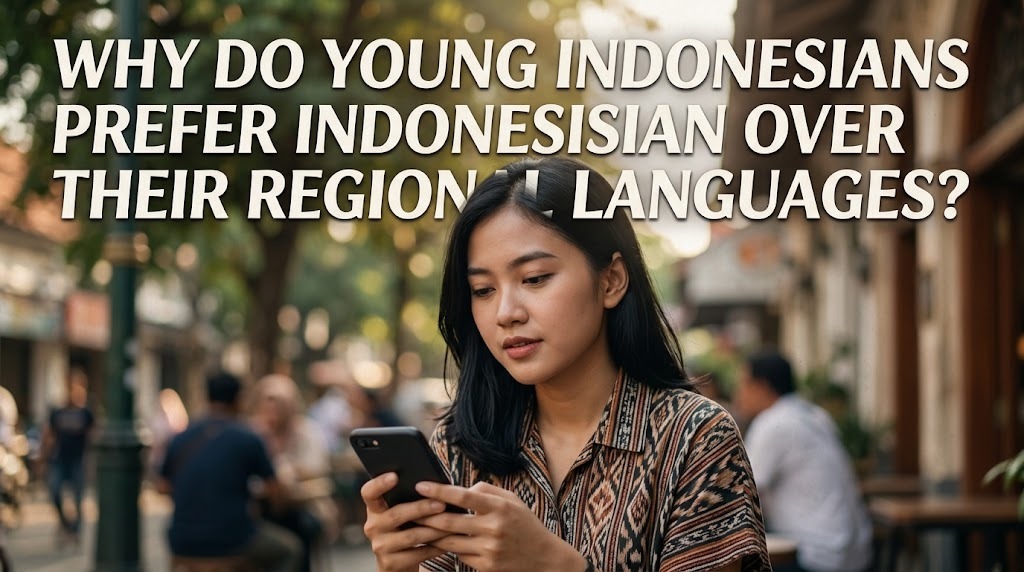
Regional languages are an important part of Indonesia’s cultural heritage, reflecting the history, traditions, and identity of different communities. However, many young Indonesians increasingly prefer Indonesian when communicating with friends, classmates, and family members. This change is influenced by education, social media, urbanization, and the growing need for a common language across different regions. Although Indonesian helps people communicate easily, the declining use of regional languages can create challenges for cultural preservation. Understanding why young Indonesians prefer Indonesian over their regional languages is an important step toward encouraging younger generations to maintain their linguistic heritage.
INDONESIAN IS WIDELY USED IN EDUCATION AND FORMAL COMMUNICATION
Indonesian is the primary language used in most schools, universities, government institutions, and formal workplaces. From an early age, students become accustomed to using Indonesian to understand lessons, complete assignments, and communicate with teachers. This regular exposure makes Indonesian an essential part of their daily lives. Many young people also find it easier to express academic ideas in Indonesian because they have learned most formal vocabulary through the language. As a result, Indonesian often becomes their most comfortable language for education and formal communication.
In addition, students from different ethnic backgrounds often use Indonesian to communicate with one another. For example, a student from Central Java can easily interact with a classmate from South Sulawesi without needing to understand the other person's regional language. This shared language supports cooperation and social relationships in diverse educational environments. Over time, frequent use of Indonesian may reduce opportunities for young people to practice their local languages. Nevertheless, education can also help preserve regional languages when schools provide opportunities to learn and use them.
SOCIAL MEDIA AND DIGITAL CONTENT INFLUENCE LANGUAGE CHOICES
Social media platforms expose young Indonesians to a wide range of content, including entertainment, education, news, and popular trends. Much of this content uses Indonesian because it can reach audiences from different parts of the country. Young people often adopt expressions, slang, and communication styles that they encounter in videos, comments, and online conversations. As these habits become part of their daily routines, Indonesian may feel more natural than their regional languages in digital spaces. The language used in online environments can strongly influence how younger generations communicate offline.
However, social media does not always contribute to the decline of regional languages. Some creators produce humorous videos, educational content, music, and cultural stories using local languages. These materials can introduce regional expressions to young audiences in entertaining and accessible ways. The main challenge is ensuring that regional languages remain visible alongside Indonesian in digital spaces. By creating and sharing more local-language content, young Indonesians can use technology to strengthen their connection with their cultural roots.
URBANIZATION AND DIVERSE SOCIAL ENVIRONMENTS ENCOURAGE INDONESIAN
Many young Indonesians move to cities to pursue education, find employment, or access better opportunities. Urban environments often bring together people from different regions who speak different regional languages. In these situations, Indonesian becomes the most practical choice because it allows people to communicate without learning several local languages. Young people who live in cities may also spend less time with relatives or community members who regularly speak their regional language. Living in a linguistically diverse environment can increase the use of Indonesian while reducing daily exposure to local languages.
Migration can also affect language habits within families. Parents who move to another region may use Indonesian at home so that their children can adapt more easily to school and their surrounding community. Children who grow up in this environment may understand their parents' regional language but struggle to speak it fluently. Over time, passive understanding may replace active communication in the language. Families can reduce this risk by continuing to use their regional language during conversations, family gatherings, and cultural activities.
REGIONAL LANGUAGES MAY FEEL LESS PRACTICAL TO SOME YOUNG PEOPLE
Some young Indonesians consider Indonesian more useful because it can be understood by people throughout the country. They may rarely need their regional language when studying, working, or communicating with friends from different backgrounds. If a language is used only during occasional family gatherings, young speakers may have fewer opportunities to develop confidence and fluency. This can gradually weaken their vocabulary, pronunciation, and understanding of traditional expressions. A regional language can become less familiar when young people do not see enough opportunities to use it in everyday life.
Another factor is the perception that regional languages belong mainly to older generations or traditional settings. Some young people may worry that using a local language in certain social environments will make them seem less modern or less connected to current trends. These perceptions do not reflect the actual value of regional languages, but they can influence language choices. Regional languages can be used in contemporary conversations, creative projects, music, and digital communication without losing their cultural meaning. Encouraging young people to see these languages as relevant to modern life can help increase their willingness to use them.
FAMILY HABITS SHAPE THE LANGUAGE OF THE NEXT GENERATION
Families play a major role in determining which languages children learn and use regularly. When parents consistently speak a regional language at home, children have more opportunities to develop vocabulary, understand expressions, and communicate naturally. However, some parents choose Indonesian because they believe it will help their children succeed academically or interact more easily with people from different backgrounds. Although this intention may be positive, it can reduce children's exposure to their regional language. Regular communication at home is one of the most effective ways to help children maintain a regional language.
Family language habits are especially important because children often learn their first languages through daily interaction rather than formal lessons. Simple activities such as discussing school, preparing meals, telling stories, and speaking with grandparents can create meaningful learning opportunities. Parents do not necessarily need to stop using Indonesian to preserve a regional language. Instead, they can use both languages according to the situation and encourage children to respond in their regional language whenever possible. This balanced approach helps children maintain their cultural connection while developing strong Indonesian communication skills.
REGIONAL LANGUAGES CAN REMAIN RELEVANT THROUGH CREATIVE PRESERVATION
Preserving regional languages requires cooperation among families, schools, communities, media creators, and government institutions. Young Indonesians are more likely to use a regional language when they encounter it in activities that interest them. Music, films, podcasts, digital games, short videos, and online dictionaries can make regional languages more accessible to younger audiences. Schools can also organize storytelling competitions, local-language performances, and cultural projects that encourage students to practice speaking. Regional languages are more likely to survive when they are actively used rather than treated only as historical symbols.
Communities can support preservation by creating welcoming spaces where young people can learn without being embarrassed about mistakes. Older speakers can share traditional expressions, stories, songs, and local knowledge with younger generations. At the same time, young people can contribute by documenting vocabulary, interviewing family members, and creating digital content in their regional languages. These activities allow regional languages to develop alongside modern communication habits. With consistent support, Indonesian and regional languages can complement each other instead of competing for a place in everyday life.
CONCLUSION
Young Indonesians often prefer Indonesian over their regional languages because of education, social media, urbanization, diverse social environments, and family communication habits. Indonesian provides an effective shared language for people across the country, but its widespread use can reduce opportunities to practice regional languages. This does not mean young people must choose one language over the other. By using regional languages at home, creating local-language digital content, and participating in cultural activities, younger generations can help preserve their linguistic heritage. Maintaining both Indonesian and regional languages supports national communication while protecting Indonesia's cultural diversity.
Recent Posts

Bagaimana Sistem SKS pada Program Kuliah... 22.11.2026/49 View

How Does Technology Make Daily Evaluation... 21.11.2026/77 View

Apa Strategi Menghadapi Kesenjangan antara Kompetensi... 21.11.2026/78 View

Mengapa Inventaris Aset Penting bagi Kelancaran... 21.11.2026/74 View

When Should Musicians Join a Record... 21.11.2026/79 View
